Industrial Pallet Racking & Heavy-Duty Warehouse Storage Solutions
Explore our custom OEM product line engineered for maximum static rigidity, dynamic load resistance, and universal teardrop interoperability. Fabricated in-house with structural cold-rolled steel and dual electrostatic powder finishes.
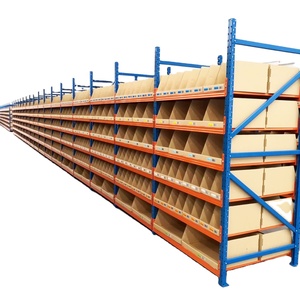
China Factory Heavy Duty Industrial Steel Racking Shelf Warehouse Storage Rack with Powder Coating High Capacity
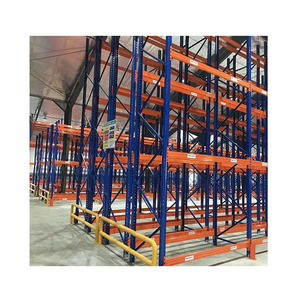
industrial galvanized steel rack heavy duty pallet racking system VNA/double deep high density warehouse storage racks
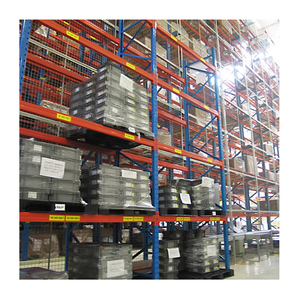
Beam Uprights Warehouse Rack Storage Racking Called Pallet Rack Racking
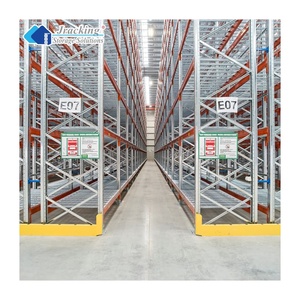
CE Certified Steel Pallet Storage Shelving System Warehouse AU Pallet Racking for Australia Warehouse Use
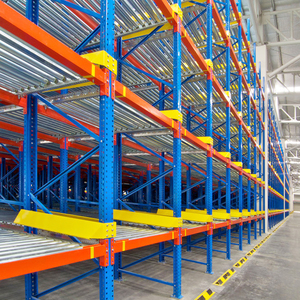
Hot Sale Huisen Customized OEM ODM Gravity Flow Roller Racking Systems Heavy Duty Pallet Flow Rack Q235b Steel SGS Certified
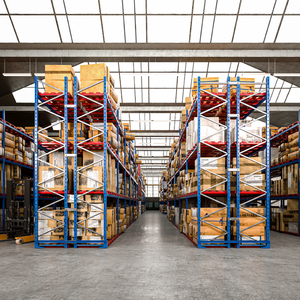
Steel Rack System Heavy Duty Pallet Racking 4000kg Warehouse Storage Rack System 5-Tier Adjustable Industrial Racks
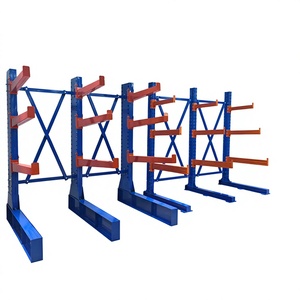
Single/Double Side Heavy Duty Cantilever Rack System Warehouse Storage Long Item Pipes Lumber Steel with Adjustable Arm Rack
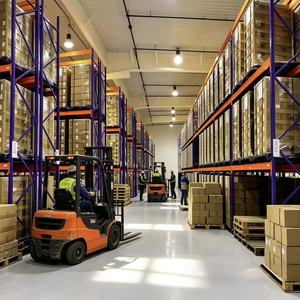
Drive-in Racking System High Density Warehouse Storage Rack Custom Industrial Heavy Duty Metal Adjustable Pallet Rack
The Structural Mechanics of Industrial Teardrop Racking
Why the inverted teardrop punched profile remains the dominant intralogistics standard across the Americas and global supply chains. A deep dive into connection stiffness, dynamic safety coefficients, and roll-forming tolerances.
Interlocking Punch Geometry
The hallmark of genuine teardrop shelving is the CNC-punched keyhole pattern along the upright face on standardized 2-inch (50.8mm) vertical increments. When beam end-connectors with tapered rivets settle into the slot, gravitational load creates an immediate mechanical wedge, multiplying horizontal shear resistance without requiring manual bolted torque.
- Universal compatibility with major North American teardrop profiles.
- Tool-less vertical adjustment for dynamic inventory reconfiguration.
- Self-seating gravity lock mechanism resistant to forklift vibration.
Auto-Engaging Spring Safety Locks
Structural failure in high-bay pallet racking predominantly initiates from accidental upward beam displacement during forklift extraction. Our OEM teardrop systems incorporate heavy-duty patented spring-loaded steel safety pins (or J-bolts) that automatically snap into place upon beam seating, providing up to 1,000 lbs of upward shear dislodgement resistance per end-plate.
- Visual engagement verification through high-contrast zinc safety pins.
- Zero-risk of clip loss during high-speed forklift warehouse cycling.
- Exceeds OSHA and ANSI MH16.1 upward force specifications.
High-Yield Cold-Rolled Forming
By engineering continuous cold-roll forming lines utilizing high-strength structural grade Q235B and Q355B strip coil steel (equivalent to ASTM A1011 Grade 50), our teardrop columns achieve optimized strength-to-weight ratios. Multiple returned stiffening ribs along the column throat prevent torsional twisting and localized buckling under intense static and seismic moments.
- Column sections engineered from 12-gauge to 16-gauge thickness.
- Automated robotic seam welding across closed step-beam sections.
- Tension tests verified per EN 10002-1 and ASTM E8 frameworks.
| Structural Parameter | OEM Teardrop Roll-Formed | Structural Bolted C-Channel | European Hook / Slotted Racks |
|---|---|---|---|
| Pitch Increment | 50.8 mm (2.00 Inches Universal) | 76.2 mm (3.00 Inches Fixed) | 50 mm / 75 mm Non-Standard |
| Assembly Velocity | Rapid (Tool-less Clip & Lock) | Slow (Pneumatic Bolting Required) | Moderate (Wedge & Tab Lock) |
| Beam Deflection Limit | L/180 standard (L/240 available) | L/240 - L/300 standard | L/200 standard |
| Secondary Market Adaptability | Highest (Universal NA Standard) | Low (Proprietary Hole Spacing) | Regional Proprietary Limitations |
| Seismic Damping Performance | High ductility under moment-load | Rigid frame, higher anchor shear | Moderate rotational slip factor |
| Initial Capital Cost ($/Pallet) | Most Cost-Effective | 35% - 50% Higher Capital Cost | 15% - 25% Higher Capital Cost |
Enterprise-Scale Racking Manufacture Since 2001
Operating from our 30,000 square meter modern manufacturing hub in Guangzhou, HEDA Shelves integrates complete vertical manufacturing from slit coil decoiling to advanced robotic surface finishing. We eliminate middleman surcharges, delivering tier-1 factory pricing and engineering precision worldwide.
10-Stage Precision Manufacturing Workflow
Raw Steel Assay
Certified Q235B/Q355B coils with ultrasonic thickness verification.
Slitting & Cut
High-speed decoiling and precision edge-trimming to ±0.1mm.
CNC Punching
Continuous automated matrix punching for accurate teardrop pitch.
Cold Roll Forming
24-station progressive rolling dies ensuring uniform cross-sections.
Step Beam Welding
Automated robotic CO2 shielded continuous welding on beam collars.
Acid Pickling
Immersion degreasing and oxide scale neutralization baths.
Zinc Phosphating
Chemical micro-crystalline bonding layer for anti-corrosion grip.
Powder Coating
Dual electrostatic spray lines delivering 60-80μm polymer film.
Curing Oven
High-temp baking at 200°C for enhanced impact and scratch defense.
Load QC & Crate
Batch yield deflection tests and maritime container bundling.
Future Procurement & Technological Trends in Warehouse Storage
Warehouse operational models are shifting rapidly under the pressures of automated throughput, ESG mandates, and regional seismic safety regulations. Here is how advanced teardrop systems are evolving to meet 2025-2030 facility requirements.
1. Hybrid AMR & Shuttle Interoperability
Traditional teardrop racking is no longer static. Modern logistics procurement mandates teardrop frameworks retrofitted with precision-punched guide rails for 4-way radio shuttles and Autonomous Mobile Robots (AMRs). The demand is driving tighter roll-forming tolerances (±0.5mm across 12-meter upright runs) to ensure sensor recognition without optical beam obstruction.
2. Performance-Based Seismic Engineering
Procurement directors in earthquake-prone belts (Chile, Peru, California, New Zealand) are moving away from baseline generic tables toward site-specific parametric seismic calculations. Racking configurations must calculate ground acceleration parameters, soil site classes, and ductility factors (such as NCh 2369, E.030, and FEMA 460) with heavy-gauge footplates and ductile back-bracing.
3. Sub-Zero Micro-Climate Finishes
With global cold-chain infrastructure booming for perishable foods and pharmaceuticals, cold-room racking faces condensation and ice micro-fracturing. Procurement is shifting toward duplex protection: hot-dip galvanization on base plates and lower columns paired with high-adhesion thermoplastic powder coating capable of surviving thermal cycling down to -30°C without micro-cracking.
4. Circular Steel & Scope 3 Decarbonization
Multinational corporate tenants now evaluate racking tenders based on embodied carbon. Modern Chinese manufacturing leaders are deploying low-emission EAF (Electric Arc Furnace) recycled steel options, non-heavy-metal phosphating alternatives, and flat-pack shipping algorithms that achieve 98% maritime container cubing efficiency to curb shipping emissions.
Frequently Asked Questions by Industrial Buyers & Engineers
Detailed technical answers to common queries regarding teardrop racking specifications, custom OEM manufacturing capabilities, seismic design codes, and overseas logistics.
Are your teardrop components interchangeable with other major brands?
Yes. Our custom OEM teardrop uprights and step beams are fabricated strictly to the classic 2-inch (50.8mm) inverted teardrop hole and rivet matrix standard. They integrate seamlessly with standard North American teardrop profiles, allowing warehouse owners to expand, replace, or reconfigure existing installations without buying entirely new framing.
What beam deflection criteria do you engineer to?
We engineer standard step beams to ANSI MH16.1 specifications, enforcing a maximum deflection under uniform load of L/180 (where L is the clear span distance). For sensitive automation, heavy carton picking, or narrow aisle systems, we can engineer custom reinforced beam geometries conforming to L/240 or tighter thresholds to eliminate sag under sustained loading.
How do you validate seismic compliance for specific regions?
Our dedicated engineering team reviews your site coordinates, geotechnical soil profile, seismic acceleration coefficients (Ss and S1), and building structural characteristics. We size the column cross-section, footplate surface area, chemical anchor diameter/embedment depth, and horizontal-diagonal bracing trusses according to regional codes (e.g., IBC, NCh 2369, NSR-10, E.030) before providing PE-ready calculation packets.
What surface treatments protect against coastal salt air & humidity?
Standard finishes include hot immersion pickling, microcrystalline phosphating, and electrostatic epoxy-polyester powder coating cured at 200°C (minimum 60-80 microns DFT), tested to 500+ hours ASTM B117 salt spray resistance. For coastal ports or open-air facilities, we offer pre-galvanized coils or full post-fabrication Hot-Dip Galvanizing (HDG) per ASTM A123.
What is your lead time and monthly production output?
With an active monthly output exceeding 30,000 metric tons and fully automated CNC rolling lines, standard project orders (1 to 5 full 40ft HQ containers) typically complete production within 15 to 25 business days following final CAD sign-off. Phased production and staggered container releases are readily scheduled for multi-tier warehouse developments.
How are components packed to prevent maritime freight transit damage?
All teardrop upright frames and step beams are bundled using structural steel strapping with corrugated cardboard edge protectors, cushioned with bubble wrap, and isolated with wooden dunage. Beam connectors and small hardware pieces are packed in heavy-duty wooden crates with desiccant packs to prevent transit rubbing, scratching, and condensation corrosion.
Request Free 3D CAD Layout & Seismic Load Engineering Analysis
Connect directly with HEDA Shelves' structural engineering team. Submit your architectural floor plan, clear ceiling height, pallet specifications, and forklift model to receive a comprehensive design packet within 24 hours.
Need urgent technical guidance or FOB/CIF pricing for upcoming project tenders?
Inquire Now