Industrial Warehouse Storage & Flow System Solutions
Engineered from premium Q235B and Q355B structural steel, our integrated flow-through and heavy-duty storage configurations deliver high volumetric utilization, certified rack deflection limits, and strict first-in, first-out (FIFO) operational control.
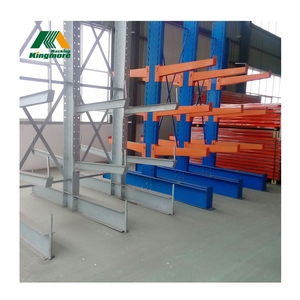 Long Profiles
Pallet Racking Storage Plywood Heavy Duty Cantilever Racks Shelves
Free-standing column construction with bolted arms rated up to 3,000 kg per level, eliminating front upright obstructions for extruded timber, PVC, steel bars, and heavy panels.
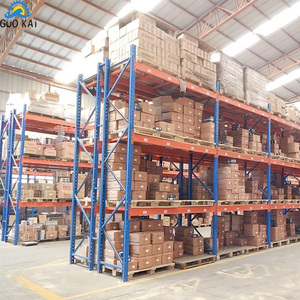 Narrow Aisle
High Bearing Heavy Duty Steel VNA Pallet Racking Narrow Rack
Ultra-narrow aisle framework engineered for wire-guided or rail-guided turret trucks, maximizing vertical clear height up to 15 meters while reducing aisle cross-sections by 45%.
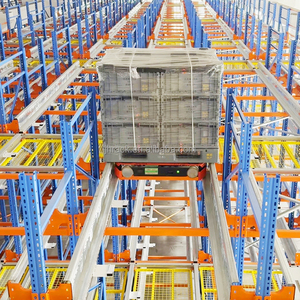 Automated Deep-Lane
Heavy Duty 4 Way Shuttle Racking System Radio Shuttle Pallet Rack
Next-generation bidirectional autonomous shuttle carrier interfacing with high-density deep-lane channels for low-temperature cold store facilities and intensive SKU consolidation.
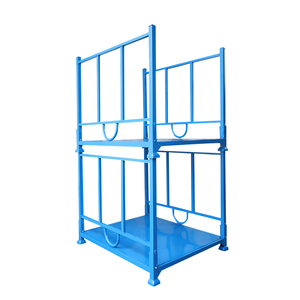 Modular Stacking
Warehouse Storage Metal Stackable Rack Foldable Pallet Stacking Frames
Collapsible structural steel frames supporting dynamic load stacking 4-high, delivering flexible staging during seasonal manufacturing peaks without permanent anchoring.
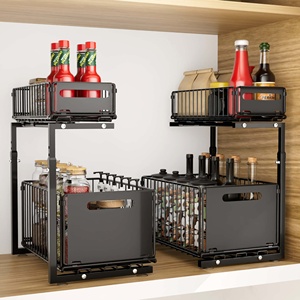 Slide Storage
2 Tier Under Sink Sliding Drawer Organizer Separately Slide Shelf
Precision stamped wire-formed and sheet-slide modular sub-assemblies demonstrating our fine-tolerance OEM tooling, robotic spot-welding, and anti-corrosive powder treatment.
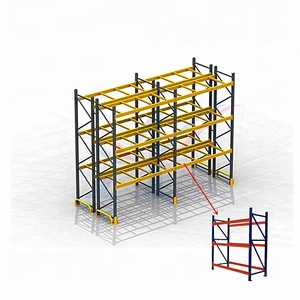 Heavy Duty Selective
High Quality Heavy Duty Steel Q235 Racking System 500-1500kg Capacity
Versatile box-beam configuration interlocking with 75mm-pitch punched omega upright columns, verified under FEM 10.2.02 deflection criteria for mixed distribution depots.
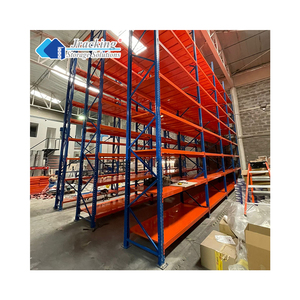 Universal Standards
Jracking Dexion Style Warehouse Shelving Heavy Duty Pallet Rack
Interchangeable teardrop/diamond slotted geometry engineered for global retrofit compatibility, allowing seamless expansion of legacy international logistics facilities.
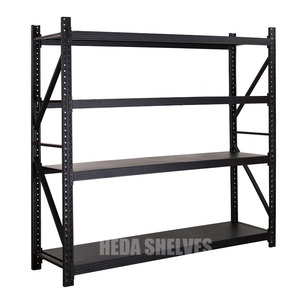 Manual Picking
Customizable Black Warehouse Medium Duty Steel Shelving Racks
Longspan multi-tier hand-loaded systems with steel, wire mesh, or phenolic resin decking, serving high-velocity e-commerce sorting hubs and carton-flow integration.
Guangzhou HEDA Shelves: 25 Years of Precision Engineering
Founded in 2001, Guangzhou Heda Shelves Co., Ltd. has evolved into an international supplier of certified racking structures. Operating a 30,000 m² state-of-the-art production complex with over 300 technical specialists, our monthly manufacturing throughput reaches 30,000 metric tons with export footprints spanning 120+ countries across North America, Europe, Southeast Asia, the Middle East, and Latin America.
Structural Compliance & Seismic Design
Every dynamic flow rack and high-bay structure is engineered to comply with EN 15512, RMI, and FEM specifications. In high-seismic zones across South America (Chile NCh 2369, Peru E.030, Colombia NSR-10), we reinforce upright moment capacities, cross-aisle portal ties, and anchor assemblies to counter dynamic shear forces.
Turnkey OEM / ODM Customization
We provide full drawing decomposition, 3D CAD stress modelling, and bespoke tooling for regional distributors and warehouse integrators. From custom beam connector tooth profiles to specialized roll tracks matching non-standard wooden or plastic skids, our engineering team handles full system development.
Comprehensive Surface Pretreatment
Components undergo an automated 9-stage immersion and spray pretreatment: alkaline degreasing, acid pickling, zinc phosphating, and deionized water rinsing, followed by electrostatic powder deposition cured at 200°C. For humid, coastal, or cryogenic atmospheres, hot-dip galvanizing provides decades of corrosion resistance.
Kinematics, Brake Rollers & Load Dynamics in Flow Through Racking
Flow through racking systems—frequently classified as gravity pallet flow or dynamic live storage—transform floor space economics by condensing storage into single-point loading and picking corridors. Achieving mechanical reliability requires understanding gravity slope dynamics, braking forces, and separator mechanisms.
Gravity Bed Gradient Dynamics
Dynamic pallet lanes require an engineered decline angle, typically calculated between 2.5% and 3.5% (approx. 1.5° to 2.0°), depending on pallet runner configuration, bottom deck deflection, and unit load weight. Under-pitching causes pallets to stall midway through long runs; over-pitching generates terminal impact velocities that can compromise rack stops and structural uprights.
Centrifugal & Hydraulic Speed Regulators
To restrict pallet travel velocity to a controlled speed of 0.2 to 0.3 m/s regardless of whether the pallet weighs 300 kg or 1,500 kg, our lanes integrate internal gear-driven centrifugal brake rollers. The counter-braking torque increases nonlinearly with linear velocity, eliminating uncontrolled surges and protecting goods across deep-lane channels up to 25 pallets deep.
Time-Delay Pallet Separator Technology
Line pressure accumulates rapidly when multiple heavy pallets rest consecutively down a decline plane. Our mechanical time-delay separators hold back upstream queue line pressure behind a safety stop. This isolates the lead pallet at the picking face, enabling forklift operators to extract it safely without friction-binding or rear-load compression hazards.
| Storage Topology | Rotation Principle | Space Utilization | SKU Selectivity | Handling Efficiency | Suitability & Application Profile |
|---|---|---|---|---|---|
| Pallet Flow Through Racking | Strict FIFO (100%) | 85% - 90% (Dense) | 1 SKU per Channel | Very High (Decoupled Aisle) | Perishables, food, pharma, cold chain & high-volume distribution |
| Selective Pallet Racking | Arbitrary / LIFO / FIFO | 40% - 50% (Standard) | 100% Immediate | Moderate (High Travel) | Broad multi-SKU retail hubs, low-volume distribution centers |
| Drive-In / Drive-Through | Strict LIFO / Weak FIFO | 70% - 80% (Dense) | Low per Tunnel | Slow (Forklift Enters Rack) | Homogeneous bulk raw inventory, cold storage buffers |
| Push-Back Cart Racking | Strict LIFO (Last-In) | 70% - 75% (Medium-Dense) | 1 SKU per 2-6 Pallet Lane | Moderate to High | Medium batch rotation, staging lanes, cross-dock consolidation |
| Automated Radio Shuttle | Flexible FIFO or LIFO | 85% - 92% (High-Dense) | 1 SKU per Lane/Level | High (Semi-Automated) | Automated cold stores, beverage production, intensive deep-lane hubs |
Global Procurement & Technology Trends in Flow Racking
Procurement directors and supply chain engineers face evolving warehouse dynamics. As labor costs rise and land prices climb, industrial storage procurement is shifting toward automated interfaces, resilient metallurgy, and ESG carbon tracking.
AGV/AMR Autonomous Interfacing
Modern flow through systems are increasingly integrated with Autonomous Mobile Robots (AMRs) and Automated Guided Forklifts (AGVs). This transition requires tighter fabrication tolerances, optical laser-reflective alignment plates on entry funnels, and precision-positioned drop tables to accommodate robotic gripper tolerances (±2.0mm).
Cryogenic Cold-Chain Optimization
With global cold chain volumes growing rapidly, sub-zero warehouse space operates at high kilowatt-per-cubic-meter costs. Pallet flow installations configured inside -25°C to -30°C facilities eliminate internal drive-in aisles, optimize evaporator airflow loops, and utilize impact-modified polyacetal rollers that resist embrittlement.
Seismic Ductility & Site-Specific Engineering
Standard static calculations no longer suffice for international project approvals. Global engineering tenders now mandate non-linear response spectrum analysis under local building codes (such as ASCE 7, Eurocode 8, and Latin American seismic standards). Racking configurations must feature heavy-gauge ductile base plates, high-tensile anchor studs, and calibrated joint stiffness.
Circular Steel Sustainability (Scope 3 Compliance)
Multinational warehouse operators are auditing embodied carbon footprints across rack manufacturing supply chains. HEDA Shelves utilizes recycled-content structural coil, clean electric-arc-furnace steel partners, low-VOC powder polymer coatings, and container cube nesting designs that reduce international ocean freight CO2 per pallet position.
10 Verified Production Steps Behind Every Rack
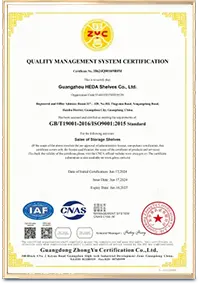
From raw coil verification to export-grade seaworthy container loading, our complete fabrication process runs in-house under strict ISO 9001:2015 quality surveillance, ensuring structural uniformity across all shipped components.
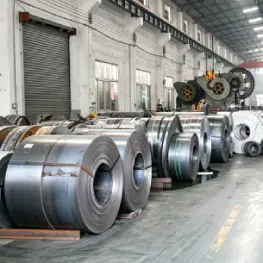
Raw Steel Inflow
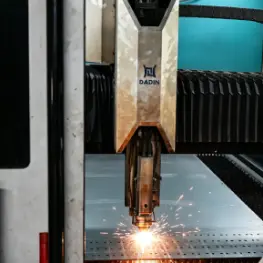
Precision Slitting
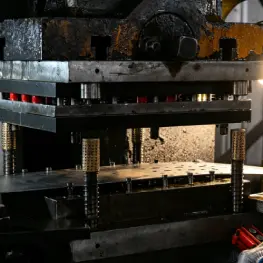
CNC Punching
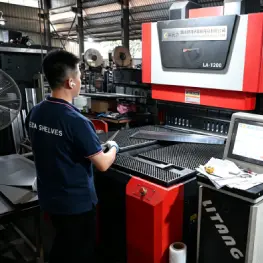
Cold Roll-Forming
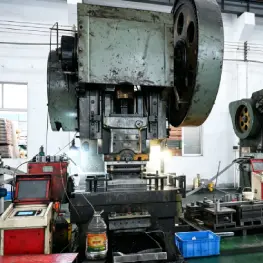
Profile Geometry
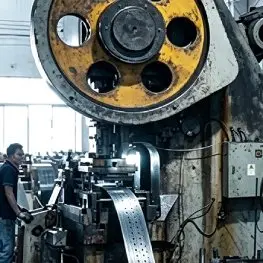
Deburring & Finish
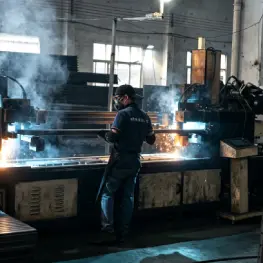
Robotic Welding
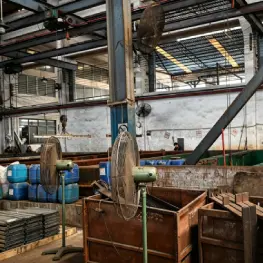
Phosphating Rinse
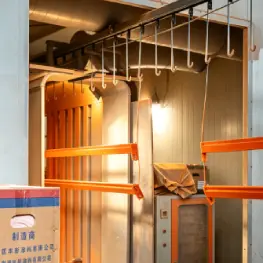
Powder Curing
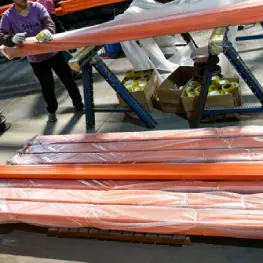
QC & Ocean Staging
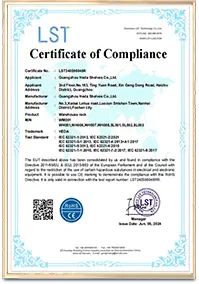
Third-Party Certified Manufacturing Infrastructure
For corporate procurement teams, municipal building officials, and risk underwriters, structural compliance documentation is non-negotiable. Our manufacturing processes hold active certification from leading European and international verification authorities.
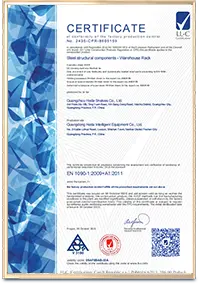 CE 2435-CPR
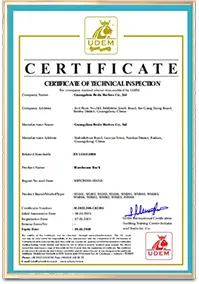 ISO 9001:2015
 Quality Audit
 Load Test Report
Frequently Asked Questions by Industrial Sourcing Teams
Key engineering, manufacturing, and operational considerations when evaluating, commissioning, and importing heavy-duty flow-through and dynamic racking systems.
How do you determine brake roller density and spacing in a pallet flow lane?
Brake roller spacing depends on pallet depth, bottom deck runner orientation, total system pitch (typically 2.8% to 3.2%), and unit load variation. In a standard 1,000 kg Euro or GMA pallet channel, one speed controller is positioned every one to two pallet positions along the lane. This ensures the pallet makes continuous, positive contact with at least one brake drum, maintaining a controlled terminal coasting speed below 0.3 m/s.
Can flow through systems accommodate non-standard, plastic, or poor-quality pallets?
Yes, but bottom surface geometry directly impacts lane dynamics. While standard hardwood three-runner skids travel smoothly on dual or triple roller tracks, plastic skids often exhibit variable deflection under heavy loads, and perimeter-base pallets can catch on individual rollers. We engineer full-width steel tube rollers, staggered roller beds, or specialized guide flanges to accommodate composite, plastic, or varying wooden skids.
What is the typical production lead time for an OEM/ODM container shipment?
Backed by our 30,000 ton monthly workshop output, standard roll-formed dynamic flow rack components and pallet rack orders are manufactured within 2 to 4 weeks following 3D CAD drawing and technical sign-off. High-volume distribution center orders involving multiple 40-foot high-cube containers (40HQ) are scheduled in phased production batches to align with the client’s on-site installation schedule.
How is international ocean freight container volume maximized for long uprights and beams?
Our engineering department prepares a 3D container packing and load plan before production begins. Heavy upright frames are shipped in knock-down (bolted) format where destination tariffs and container volume benefit, nested with precision wooden blocking. Box beams and flow beds are banded on custom-dimensioned dunnage, allowing efficient forklift unloading at destination ports without compromising the factory powder-coated finish.
How do your engineers address seismic site loads and local structural building codes?
We factor site-specific seismic parameters into each design (spectral acceleration values Ss and S1, ground response site class, and importance factors). Based on calculations, we upgrade column wall thickness (up to 2.5mm or 3.0mm), reinforce baseplates with dual stiffeners, implement heavy-duty floor anchor studs, and configure spine bracing to meet seismic standards (such as NCh 2369, NSR-10, E.030, or Eurocode 8).
What documentation and warranty coverage do you provide to project developers?
Every OEM shipment includes mill test certificates (MTC) verifying raw steel chemistry and tensile properties, batch powder dry-film-thickness (DFT) reports, step-by-step assembly drawings, and structural capacity load notices. HEDA Shelves provides a comprehensive structural warranty against manufacturing defects, alongside remote video engineering support throughout assembly.
Request a Complete Flow Racking Layout & Feasibility Analysis
Provide your warehouse dimensions, pallet profiles, throughput requirements, and seismic location. Our senior logistics engineers will deliver a comprehensive 3D CAD layout, load capacity calculations, and factory-direct pricing within 24 business hours.