Engineered Industrial Racking & Warehouse Storage Systems
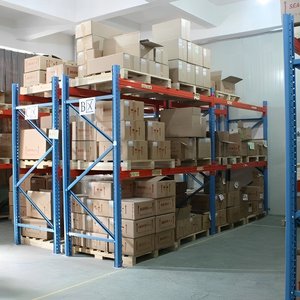
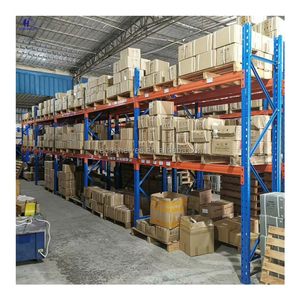
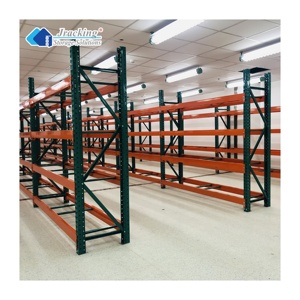
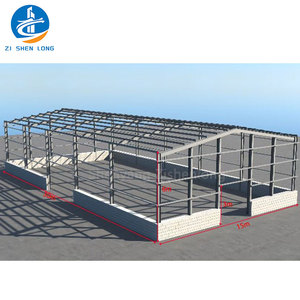
Every heavy-duty gravity flow lane, teardrop upright frame, and structural steel warehouse module is fabricated in-house to EN 15512, RMI, and ISO 9001:2015 specifications.
Engineering Whitepaper: Structural Mechanics & Kinematics of Gravity Flow Pallet Racking
Gravity flow pallet racking—commonly referred to as pallet flow racking—represents the pinnacle of high-density dynamic storage, executing the strict First-In, First-Out (FIFO) inventory rotation model purely via gravitational potential energy. By eliminating internal operating aisles, pallet flow architectures increase warehouse footprint utilization by up to 60% compared with conventional selective pallet racking, while simultaneously cutting forklift transit distances and cycle times by more than 40%.
Kinematics of Slope Optimization & Roller Engineering
The kinetic core of an OEM/ODM gravity flow system relies on an inclined roller track set at a calibrated slope gradient—typically between 3.0% and 4.0% (approx. 1:25 to 1:30 incline). Determining the exact gradient requires comprehensive evaluation of pallet bottom deck morphology (e.g., GMA wooden runners, EUR full-perimeter bottom boards, or rigid molded plastic decks), ambient working temperatures (ambient versus blast freezer cold rooms down to -30°C), and gross pallet weight deviations ranging from 300 kg to 1,500+ kg per unit.
If the slope is under-engineered, light pallets experience stalling (hydroplaning over roller friction boundaries); conversely, if the slope is over-engineered, heavy loads generate excessive kinetic impact forces upon deceleration. To maintain controlled velocity (consistently between 0.25 m/s and 0.35 m/s), our engineering designs incorporate centrifugal brake rollers spaced systematically along the lane length. These internal planetary gear-governed rollers dynamically expand friction pads against an outer steel drum as linear speed increases, arresting runaway loads without relying on external pneumatic or electrical feeds.
Load Relief Separator Mechanisms & Terminal Safety
A pervasive engineering challenge in deep-lane pallet flow systems (lanes extending 5 to 25 pallets deep) is accumulated hydrostatic line pressure. In a 15-pallet lane loaded with 1,000 kg pallets on a 3.5% incline, the terminal discharge pallet experiences a continuous downhill crushing force exceeding 5,000 N from uphill pallets. This pressure jams the front pallet against the exit stops, causing forklift tines to bind or causing mast deflection during picking.
Our factory integrates mechanical Pallet Load-Relief Separators at the discharge face. When a forklift extracts the lead pallet, the secondary pallet is held securely 150 mm behind the extraction line by a heavy-duty mechanical latch. Once the fork truck clears the pick zone, the separator resets automatically, allowing the queued train to glide forward at controlled velocity. This mechanism completely protects forklift operators, eliminates pallet structural splintering, and preserves long-term upright plumbness.
| Engineering Parameter | Standard Warehouse Specification | Cold Chain / Freezer Specification (-30°C) | Heavy Industrial / Foundry Specification |
|---|---|---|---|
| Structural Steel Grade | Q235B Cold-Rolled Carbon Steel | Q355B Low-Alloy High-Strength Steel | Q355B Structural Steel / Custom C-Sections |
| Incline Slope Gradient | 3.0% to 3.5% (1.7° to 2.0°) | 3.5% to 4.2% (Compensates for lubricant viscosity) | 2.8% to 3.2% (Calculated for high-inertia loads) |
| Roller Drum Spec | Ø50mm / Ø60mm Galvanized Steel | Ø60mm Electro-Galvanized with Low-Temp Grease | Ø76mm Heavy-Wall Seamless Steel Tube |
| Speed Controller Type | Centrifugal Direct-Drive Brake Roller | Synthetic Low-Temp Lubricated Centrifugal Brakes | Twin Heavy-Duty Magnetic/Centrifugal Dampers |
| Discharge Stop Assembly | Rigid Formed End-Stop with Rubber Dampers | Cryogenic-Grade Shock Absorbing Stops | Reinforced Structural Channel with Energy Absorbers |
Future Procurement Trends in Gravity Flow Storage Systems
How logistics directors, global distributors, and warehouse project managers are optimizing CAPEX and lifecycle engineering for next-generation facilities.
Perishable Goods & Pharmaceutical Cold Storage
With global cold chain logistics expanding across Latin America, Southeast Asia, and Europe, refrigerated real estate costs are at an all-time high. Cold room operators are replacing low-density selective racks with high-density gravity flow racks to minimize energy dissipation per cubic meter of conditioned air. Demand for low-temperature synthetic grease roller bearings and cold-resistant Q355B steel has surged by over 45% year-over-year.
Hybrid AMR & AGV Pick-Face Interfaces
Modern distribution facilities are actively deploying Autonomous Mobile Robots (AMRs) and counterbalanced Automated Guided Vehicles (AGVs). Procurement specifications are shifting toward laser-aligned discharge stop plates, photo-eye sensor cutouts, and ultra-precise entry guide funnels that accommodate robotic fork positioning tolerances within ±3mm, bridging the gap between passive gravity kinetics and robotic fleet dispatch.
Shift from Powered Conveyors to Gravity Racks
Escalating industrial electricity tariffs and stringent carbon reduction mandates have compelled procurement teams to critically evaluate continuous-power automated buffer systems. Gravity flow pallet racks deliver zero electrical power consumption, virtually silent operation, and near-zero electronic downtime, providing an unmatched return on investment (ROI) with lifecycle operational expenses (OPEX) under 5% of powered chain alternatives.
Technological Horizons in Gravity Flow Racking
Key innovations transforming gravity-driven materials handling across smart intralogistics ecosystems.
Eddy-Current Magnetic Deceleration
Traditional friction-based brake rollers rely on internal centrifugal brake pads that eventually experience mechanical wear under heavy continuous cycling. Emerging R&D is transitioning to contactless Eddy-Current magnetic deceleration rollers. By utilizing permanent neodymium magnetic arrays rotating inside an aluminum conductor shell, braking torque scales proportionally with velocity without physical friction contact, unlocking virtually maintenance-free 15-year operational lifespans.
Self-Powered IoT Flow Sensor Networks
By capturing the rotational mechanical energy of spinning rollers via miniature internal electromagnetic dynamos, future gravity lanes are becoming self-powered IoT monitoring channels. These integrated smart rollers track lane occupancy, pallet transit speeds, real-time inventory dwell times, and bearing vibration signatures—transmitting live warehouse telematics directly to SAP/Oracle WMS via low-power LoRaWAN protocols without external wiring.
Hybrid Polyurethane-Steel Composite Rollers
In response to diverse plastic pallet skid patterns and rough-sawn export timber pallets, advanced roller manufacturing is adopting dual-durometer polyurethane coatings over seamless steel cores. These hybrid roller treads provide extreme grip under damp condensation environments, suppress acoustic rolling noise below 55 dBA, and eliminate localized point-load cracking on corrugated plastic pallet bases.
25+ Years of Certified Racking Engineering & Global Manufacturing
Direct factory control over raw steel procurement, automated profile roll-forming, robotic welding, and rigorous seismic verification ensures zero landed surprises for global warehouse projects.
30,000 m² Manufacturing Facility
Founded in 2001, Guangzhou Heda Shelves Co., Ltd. operates an advanced heavy-industry production facility boasting over 300 technical engineers, continuous roll-forming lines, automated punching lines, and robotic welding cells with a monthly processing capacity of 30,000 tons of prime structural steel.
CE & ISO 9001:2015 Certification
All load-bearing upright frames, box beams, and dynamic roller assemblies comply with EN 15512 European racking design codes and Australian AS 4084 standards. Validated by CE Certificate No. 2435-CPR-8605159 and ISO 9001:2015 quality management audits for full municipal and insurer acceptance.
Free 3D Layout & Structural CAD
Send our senior engineering department your warehouse architectural floor plans. Within 24 hours on business days, our licensed structural engineers deliver detailed 3D photorealistic renderings, DWG layouts, aisle clearance calculations, and comprehensive beam deflection safety models at zero design charge.
Seismic-Resilient Regional Engineering
We specifically tailor column footplates, high-ductility anchor embeds, and cross-bay portal bracing to meet strict national seismic building codes worldwide, including Chile (NCh 433/2369), Peru (E.030), Colombia (NSR-10), and the USA (RMI MH16.1), mitigating harmonic earthquake collapse risks.
Industrial Pre-Treatment & Anti-Corrosion
Every profile undergoes an automated 8-stage chemical pickling, surface degreasing, and zinc phosphating process prior to electrostatic thermosetting polyester powder coating baked at 200°C. For coastal, high-humidity, or freezer installations, full hot-dip galvanizing to ASTM A123 is available.
Global Direct Shipping & Load Optimization
Delivered to over 10,000 project sites across 120+ countries. Every maritime shipping order features computer-optimized 40ft HQ container pack plans that eliminate in-transit frame chafing, maximize volumetric load weights, and include numbered component labels with multi-lingual installation drawings.
Frequently Asked Questions on Gravity Flow Pallet Racking
Technical and commercial answers addressing common engineering queries from warehouse operators, logistics planners, and industrial distributors.
What is the maximum practical lane depth for a gravity pallet flow rack?
Can gravity flow systems handle damaged or non-standard wooden pallets?
How does ambient temperature in blast freezers affect roller performance?
What warehouse floor specifications and anchor tolerances are required?
How do you support OEM/ODM branding for regional racking distributors?
What precise information is required to generate an engineering quotation and 3D CAD drawing?
Transform Your Warehouse Throughput with Custom Gravity Flow Solutions
Consult directly with our senior structural racking engineers today. Receive a complimentary 3D warehouse layout, detailed load capacity calculations, and an optimized direct-factory FOB/CIF quotation within 24 business hours.
Contact Us