Featured Industrial Storage & Racking Solutions
Explore our engineered OEM/ODM storage systems certified under CE and ISO 9001:2015 specifications.
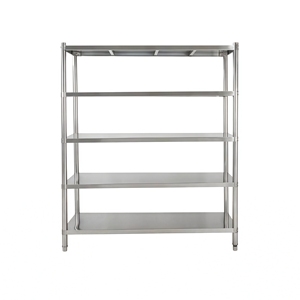
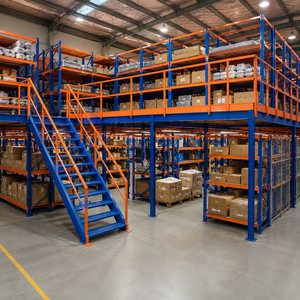
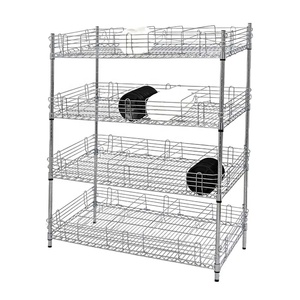
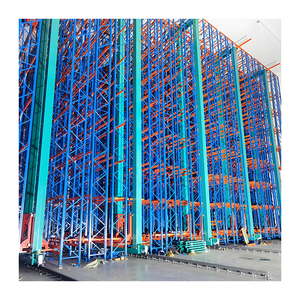
Engineering Leadership in Industrial Storage Systems
Guangzhou HEDA Shelves Co., Ltd. (Est. 2001) operates a state-of-the-art 30,000 m² manufacturing hub delivering customized, structural steel racking solutions across North America, South America, Europe, and Southeast Asia.
Custom OEM/ODM Engineering
Tailored beam profiles, column upright gauges (Q235B & Q355B structural steel), variable declination angles (3.5%–4.5%), customized roller pitch spacing, and proprietary paint formulations matching international corporate branding.
Certifications & Seismic Compliance
Fully compliant with CE Certificate No. 2435-CPR-8605159 and ISO 9001:2015 systems. Structural calculations built to satisfy EN 15512, RMI, and strict regional seismic codes including Chile NCh 433/2369 and Peru E.030.
Container Loading & Global Logistics
In-house ocean freight packing team optimizes 40ft HQ container loading efficiency up to 98% density. Protective pickling, phosphating, and electrostatic powder coating prevent maritime salt-spray corrosion.
Physics & Structural Architecture of Gravity Pallet Flow Racking
An authoritative deep dive into kinetic energy management, dynamic brake roller physics, and lane separation safety mechanisms in high-throughput warehouse logistics.
Fundamental Mechanics of Dynamic Gravity Flow
Gravity Pallet Racking, frequently classified as Pallet Flow Racking or Dynamic Live Storage, utilizes an inclined bed of heavy-duty steel rollers mounted within structural racking channels. Operating under pure gravitational force ($F_g = m \cdot g \cdot \sin\theta$), pallets loaded at the elevated charging end automatically glide toward the discharging face at a controlled slope angle typically set between 3.5% and 4.5% (approx. 2.0° to 2.6°).
This continuous dynamic movement converts static warehouse cubage into a true First-In, First-Out (FIFO) inventory engine. By consolidating access aisles into just two dedicated zones—one loading lane and one unloading lane—gravity flow systems dramatically increase storage density by up to 80% compared to conventional selective pallet racking.
Engineering Information Gain: Speed Control
Standard dynamic equations indicate that an unbraked 1,200 kg pallet traveling down a 15-meter flow lane would achieve terminal velocities exceeding 3.5 m/s upon impact at the unloading position, causing catastrophic structural failure or goods destruction.
HEDA’s proprietary Centrifugal Speed Controllers and dynamic brake rollers absorb kinetic energy, maintaining a smooth, constant velocity between 0.15 m/s and 0.25 m/s regardless of total pallet payload (from 200 kg to 1,500 kg per pallet position).
Braking Roller Metallurgy
Manufactured with internal planetary gearboxes and heat-treated steel hubs. Magnetic eddy-current non-contact brake options eliminate mechanical friction wear, extending maintenance cycles to over 500,000 pallet passes.
Ramp Stop Safety Separators
To eliminate back-pressure at the discharge position (which can reach hundreds of kilograms on long lanes), automatic mechanical separators isolate the front pallet from trailing inventory, permitting effortless forklift removal.
Entry Guidance Systems
Flared heavy-duty steel entry guides physically re-center off-axis pallets during forklift insertion. Prevents lane jamming, runner derailment, and side-channel deformation along extended 20-pallet deep tracks.
Evaluating High-Density Racking Architectures
Compare mechanical characteristics, throughput efficiency, capital expenditure, and volumetric utilization across industrial racking models.
| Storage Racking System | Rotation Method | Volumetric Space Utilization | Selectivity / Access | Forklift Interaction | Optimal Industry Application |
|---|---|---|---|---|---|
| Gravity Pallet Flow Rack | Strict FIFO (First-In, First-Out) | 80% – 85% | High per lane (Single SKU per lane) | Dedicated Entry / Exit Aisles Only | Cold Storage, FMCG, Food & Beverage, Pharma |
| Radio Shuttle Racking | FIFO or LIFO Selectable | 85% – 90% | Automated Carrier Control | Aisle Face Only (No entry) | High-Volume Warehouses, Frozen Storage |
| Drive-In Racking | Strict LIFO (Last-In, First-Out) | 65% – 75% | Low (Block SKU access) | Forklift Drives Inside Rack Channels | Raw Bulk Material, Seasonal Buffer Stock |
| Push Back Pallet Rack | LIFO (Nested Cart System) | 70% – 75% | Medium (2–6 Pallets Deep) | Front Loading Face Only | Medium SKU Diversity, General Logistics |
| Selective Pallet Rack | 100% Random Access | 35% – 45% | 100% Immediate Direct Access | Operates in Every Aisle | High-SKU Multi-Product Distribution Centers |
When to Recommend Gravity Flow Systems
Gravity flow racking excels when working with rapid inventory turnover, strict perishable expiration tracking (date-coded goods), and high pallet volumes containing fewer total SKUs. It eliminates transit times across storage aisles, allowing forklift operators to perform loading and unloading simultaneously without bottlenecking traffic.
OEM Customization Factors for Pallet Flow
Our OEM/ODM engineering team tailors roller surface material (galvanized steel vs high-impact polyurethane), roller pitch (50mm, 75mm, 100mm center-to-center based on pallet runner alignment), brake roller placement intervals, and secondary safety locks for hazardous chemical or heavy machinery storage.
Future Sourcing & Global Procurement Trends (2025–2035)
Key macroeconomic, technological, and environmental shifts transforming industrial racking procurement for warehouse developers and international exporters.
1. AGV/AMR Integration
Modern distribution hubs are retrofitting gravity racks with specialized optical entry sensors and mechanical centering guides designed for seamless interaction with Automated Guided Vehicles (AGVs) and Autonomous Mobile Robots (AMRs).
2. Green Cold Chain Logistics
With refrigerated energy costs accounting for up to 60% of cold warehouse overhead, high-density gravity racks reduce air volume requirements by 40%, directly lowering carbon footprints and operational power consumption.
3. Industrial IoT Smart Trackers
Next-generation dynamic flow channels incorporate IoT vibration and load-cell monitoring sensors in brake rollers to give logistics managers real-time visibility into pallet flow speeds, blockages, and lane utilization rates.
4. Modular OEM Sourcing
Procurement officers are shifting from off-the-shelf racking toward fully customized OEM/ODM engineering contracts. This guarantees modular expansion flexibility and strict alignment with regional structural building standards.
Frequently Asked Questions (FAQ)
Expert engineering responses to common technical, structural, and procurement inquiries regarding Gravity Pallet Racking systems.
1. How do you calculate the correct incline angle and brake roller spacing for dynamic gravity lanes?
The standard slope for gravity pallet flow lanes is engineered between 3.5% and 4.5% (a drop of roughly 35mm to 45mm per meter of lane length). However, exact calculations depend on three structural variables:
- Pallet Bottom Construction: 2-runner vs 3-runner vs full-perimeter slave boards.
- Weight Range Variability: Minimum vs maximum weight differential per pallet (e.g., 300 kg min to 1,200 kg max).
- Environmental Temperature: Ambient vs sub-zero cold storage (freezer lubricants alter friction values).
As a baseline standard, brake rollers are installed every 1.5 meters to 2.0 meters along the flow track (typically 1 brake roller per pallet position in high-capacity lanes).
2. Can gravity pallet flow racks operate effectively inside sub-zero freezer cold storage?
Yes. HEDA Shelves specifically engineers specialized cold-chain gravity racking systems capable of performing in temperatures down to -30°C (-22°F). Low-temperature steel alloys are utilized to prevent cold-embrittlement, and all roller bearings are packed with synthetic low-viscosity, non-freezing food-grade synthetic grease. Furthermore, components receive hot-dip galvanizing or high-durability epoxy-powder finishes to withstand humidity condensate cycles.
3. What mechanical mechanisms prevent pallet destruction or crushing at the discharge face?
Back-pressure in dynamic gravity racking can accumulate to approximately 8% to 10% of the total weight of trailing pallets in the lane. For example, in a 10-pallet deep lane carrying 1,000 kg pallets, the front pallet experiences nearly 900 kg of forward pushing force. To solve this, HEDA integrates a mechanical Ramp Stop Safety Separator. When the front pallet reaches the discharge face, it depresses a trip lever that locks a steel safety barrier behind it, holding back all trailing pallets by 100mm to 150mm until the front pallet is completely lifted by a forklift.
4. What information is required to receive a free custom CAD drawing and engineering quote?
To produce an engineered 3D layout, static calculation report, and quotation, our structural team requires:
- Clear warehouse floor plan dimensions and usable clear ceiling height under building trusses or sprinklers.
- Pallet dimensions (Width x Depth x Load Height, including pallet overhang).
- Maximum and minimum gross weight per loaded pallet.
- Pallet material and base design (e.g., GMA 48x40, Euro 800x1200, CHEP, plastic, steel, or wooden runners).
- Forklift specifications (minimum aisle width, mast lift height, and load capacity).
- Geismic zone parameters or regional building design codes (if applicable).
5. How does HEDA maintain quality control and structural standard compliance for OEM contracts?
All structural steel coil inputs are strictly tested for tensile yield strength (Q235B / Q355B verified with mill test certificates). Cold roll-forming dimensions undergo automated laser inspection for punch hole pitch tolerances within ±0.2mm. Welded sub-assemblies are inspected via non-destructive testing (NDT), and painted components undergo 1,000-hour salt spray testing. Production aligns with European EN 15512 standards and American RMI guidelines, backed by ISO 9001:2015 and CE certification.
6. What is the typical lead time and global export shipping process?
With a monthly output capacity exceeding 30,000 tons, standard OEM production orders are completed within 14 to 28 days following engineering drawing approval. Component bundling is organized with color-coded tags and numbered assembly labels. Ocean freight shipping is dispatched directly from South China ports (Guangzhou/Shenzhen) to global destination ports including Santos, Callao, Valparaiso, Hamburg, Los Angeles, and Jebel Ali, with typical transit periods ranging from 15 to 45 days depending on destination.
Optimize Your Warehouse Storage Density & Throughput Today
Partner directly with Guangzhou HEDA Shelves Co., Ltd. Get a custom OEM/ODM consultation, structural dynamic load calculation, and complete 3D warehouse floor layout from our senior engineering team within 24 business hours.