Industrial Grade Wire Shelving & Heavy-Duty Racking Systems
Engineered for extreme structural integrity, high load density, and seamless integration into automated distribution centers and enterprise warehouses worldwide.
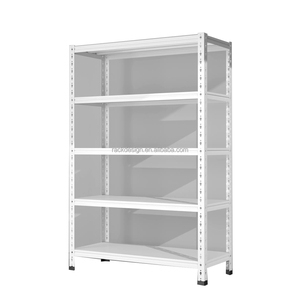
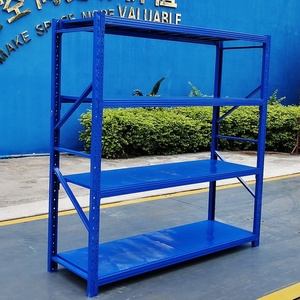
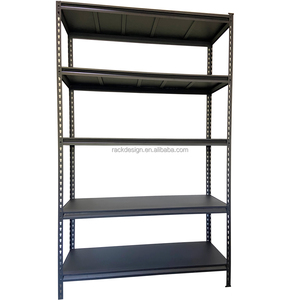
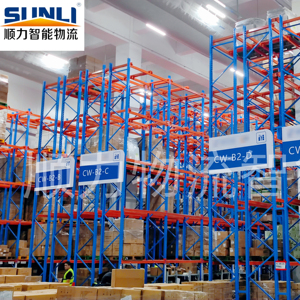
Executive Technical Overview: OEM/ODM Industrial Wire Shelving Manufacturing Landscape
In modern industrial logistics, commercial warehousing, and high-density distribution infrastructure, the procurement of OEM/ODM industrial wire shelving and heavy-duty metal racking systems serves as a foundational pillar for operational scalability. Enterprise purchasing teams, logistics architects, and facility managers face increasing pressures to optimize vertical volumetric efficiency while ensuring rigid structural safety, compliance with international seismic design codes (such as ANSI MH28.2, Eurocode 3, and FEM 10.2.02), and minimizing total cost of ownership (TCO).
Industrial wire shelving and wire deck rack inserts are fundamentally engineered structures. Unlike lightweight retail wire displays, heavy-duty commercial wire shelving utilizes cold-drawn high-tensile carbon steel rod stock (typically Q195, Q235, or SS304 stainless steel), precision resistance-welded into dynamic grid patterns. This structural matrix distributes localized point loads uniformly across supporting tubular posts or structural shelf beams, achieving uniformly distributed load (UDL) capacities ranging from 250 lbs (113 kg) to upwards of 2,000 lbs (907 kg) per level.
Metallurgical Chemistry and Surface Protection Standards
The operational longevity of industrial wire shelving depends almost entirely on the chemical pretreatment and surface finishing applied after robotic wire grid welding. Enterprise B2B procurement specifications demand rigorous corrosion resistance, anti-microbial capabilities, and impact resilience depending on the deployment environment:
- Electroplated Chrome Finish: Engineered primarily for dry storage, cleanrooms, and retail staging. Features a brilliant metallic polish over a nickel base layer, offering exceptional aesthetic clarity and scratch resistance in humidity-controlled environments.
- Thermosetting Electrostatic Powder Coating: Utilizes epoxy-polyester hybrid resins cured at high temperatures (180°C to 200°C). Provides robust chemical resistance against grease, solvents, and mild acids. Essential for automotive, manufacturing, and general logistics storage.
- Anti-Microbial Epoxy Coatings: Infused with silver-ion (Ag+) bio-inhibitors that continuously eliminate bacteria, mold, and fungal growth. Essential for pharmaceutical distribution, cold storage, and commercial food processing environments compliant with NSF Standard 2.
- Hot-Dip Galvanized & Stainless Steel (AISI 304/316): Recommended for extreme humidity, freezer applications down to -30°C, outdoor covered storage, and highly corrosive chemical storage where salt spray tests must exceed 500 hours under ASTM B117 standards.
Robotic Mesh Welding
Automated multi-point resistance welding ensures zero weld stress fractures, flawless joint alignment, and uniform load distribution across all wire intersections.
FEA Load Verification
Every custom OEM bracket, beam, and wire shelf profile undergoes digital Finite Element Analysis to guarantee safety margins up to 1.65x yield strength.
Certified NSF & CE Quality
Full production traceability certified under ISO 9001:2015, CE EN 1090-1, and NSF International safety guidelines for food and industrial storage.
Engineering Specification Matrix: OEM Wire Shelving vs. Standard Commodity Racks
To assist procurement managers and enterprise supply chain teams in making informed, data-driven decisions, the following matrix contrasts OEM/ODM custom engineered wire shelving systems against generic off-the-shelf commodity units:
| Engineering Attribute | Enterprise OEM/ODM Factory Specification | Generic Commercial Commodity Racks |
|---|---|---|
| Primary Raw Material | High-tensile cold-drawn steel (Q235B / Q355B or AISI 304) | Low-grade commercial mild steel (Q195 scrap blend) |
| Wire Gauge Specification | Custom matrix (3.5mm – 6.0mm) + reinforced truss ribs | Thin uniform wire (2.5mm – 3.2mm) prone to deflection |
| Welding Precision | Automated CNC multi-head resistance welding | Manual spot welding with variable thermal stress |
| Uniform Load Capacity (UDL) | Up to 2,000 lbs (907 kg) per shelf shelf level | 150 lbs – 350 lbs (68 kg – 158 kg) maximum capacity |
| Surface Salt Spray Resistance | 96 hrs to 500+ hrs ASTM B117 compliant coatings | Less than 24 hrs before surface oxidation begins |
| Dimensional Customization | 100% custom length, depth, height, mesh pitch, post sleeve | Fixed standardized dimensions only (e.g., 18"x36", 24"x48") |
| Structural Certification | ISO 9001, CE, ANSI MH28.2, FEM 10.2.02 Structural Audited | Uncertified, no structural calculation sheets provided |
Future Procurement Trends in Industrial Storage & Wire Racking (2025–2030)
The global warehousing and logistics ecosystem is undergoing a dramatic structural transformation driven by e-commerce density, warehouse automation, labor shortages, and stringent ESG (Environmental, Social, and Governance) mandates. Procurement directors sourcing from industrial wire shelving factories must align their multi-year equipment strategies with four dominant macro trends:
1. Seamless Integration with Automated Guided Vehicles (AGVs) & AMRs
As logistics centers transition toward Autonomous Mobile Robots (AMRs) and automated retrieval systems, wire shelving architecture is evolving from static storage to active robot-interfacing equipment. Modern OEM factories are engineering specialized wire decks, flow channels, and mobile rack structures equipped with optical sensor reflectors, barcode location plates, and precision dimensional tolerances (+/-0.5mm) to enable flawless robotic tote picking and automated pallet placement.
2. Transition to Eco-Friendly Powder Formulations and Carbon-Neutral Steel
Global enterprise procurement policies now prioritize decarbonization across supply chains. Top-tier ODM wire shelving manufacturers are adopting zero-VOC electrostatic powder coat lines, closed-loop water recycled pickling systems, and low-carbon scrap-recycled green steel. Sourcing wire racks manufactured in facilities utilizing solar power and energy-efficient robotic lines directly lowers scope 3 carbon emissions for global buyers.
3. Modular Nearshoring & Regional Multi-Sourcing Strategies
To mitigate ocean freight volatility and geopolitical disruptions, global supply chain executives are adopting hybrid procurement models. Companies establish primary OEM relationships with mega-scale factories capable of rapid high-volume containerized shipments, paired with modular flat-pack shelving designs that maximize shipping container cube utilization by up to 35%, drastically lowering per-unit ocean freight costs.
4. High-Density Dynamic Storage Hybridization
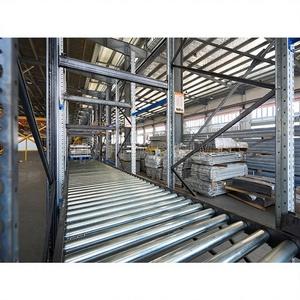
Static storage is increasingly giving way to dynamic solutions. Warehouses are combining heavy-duty wire decking inserts with Radio Shuttle electric mobile racks, gravity flow roller systems, and Very Narrow Aisle (VNA) high-bay structures. This hybrid approach yields up to 80% higher volumetric storage density compared to traditional selective racking while maintaining ventilation and sprinkler light penetration through the wire mesh matrix.
Industry & Technical Development Trends in Wire Shelving Fabrication
Advanced structural engineering and manufacturing automation are redefining the capabilities of heavy-duty industrial wire shelving factories. Understanding these innovations helps buyers specify higher-performing materials while reducing long-term lifecycle costs.
Structural Mesh Geometry & Stress Distribution Innovations
Historically, wire shelving relied on simple flat wire grids welded above longitudinal support channels. Modern OEM factory R&D has introduced progressive wave-pattern wire trusses, perimeter rim reinforcing bands, and drop-in inverted wire deck channels. By orienting support channels under tension rather than pure compression, the structural load capacity increases by up to 28% without increasing raw steel weight.
Smart Anti-Corrosion Nanotechnology
For cold storage, agricultural logistics, and coastal warehouse deployments, conventional galvanized coatings can degrade over time when exposed to harsh cleaning chemicals or condensation. Advanced OEM factories now deploy nanoceramic pretreatment coats prior to epoxy powder application. This creates a molecular bond with the raw steel, preventing rust propagation even if the outer coating suffers severe mechanical impact from heavy forklift tines.
Fire Safety & Sprinkler Compliance Optimization
Insurance regulations (such as NFPA 13 guidelines in North America) strictly mandate open surface areas in high-bay warehouse storage to ensure overhead fire sprinkler water can penetrate all shelf levels. Industrial wire decking and wire shelving provide over 50% open mesh space, surpassing solid wood or corrugated steel decks. OEM wire factories now offer custom wire pitch spacings (e.g., 2"x4" or 2.5"x4.5" grid apertures) optimized specifically to satisfy municipal fire codes while preventing small product cartons from tilting or falling through.
Industrial Procurement & OEM/ODM Factory FAQs
In-depth technical answers to critical sourcing questions asked by warehouse managers, engineers, and purchasing directors.
To generate accurate technical CAD drawings and precise structural pricing, our engineering team requires: (1) Target shelf overall dimensions (Width x Depth x Height), (2) Required Uniformly Distributed Load (UDL) per shelf level, (3) Number of shelf levels per unit, (4) Operating environment details (dry warehouse, cold room -20°C, cleanroom, or chemical exposure), (5) Preferred surface finish (chrome, powder coat, hot-dip galvanized, or SS304), and (6) Total target project quantity or container order volume.
Wire mesh decking offers three major operational superiorities: Fire Safety compliance (allows overhead sprinkler penetration per NFPA 13), Visibility & Lighting (permits ambient light to pass through upper rack levels, improving forklift operator accuracy), and Hygiene (prevents dust, dirt, and debris collection). Furthermore, wire decks feature drop-in channel supports that prevent pallet sag and eliminate wood splinter hazard in food and pharmaceutical warehouses.
Yes. Our structural engineering department performs custom load calculations incorporating local ground acceleration parameters, soil categories, and building codes such as ASCE 7, NCh 2369 (Chile), E.030 (Peru), or NSR-10 (Colombia). We supply enlarged heavy-duty base plates, seismic floor anchors, sway bracing, and reinforced column connectors engineered specifically to withstand seismic shear forces.
For standard customized wire shelving and racking orders, our monthly manufacturing capacity exceeds 30,000 tons. Standard production lead time is typically 2 to 4 weeks following CAD drawing approval and deposit receipt. Large-scale multi-tier mezzanine or high-bay automated warehouse projects are scheduled in phased container shipments to align precisely with your on-site installation schedule.
Every export shipment undergoes rigorous export packing protocols. Components are wrapped in industrial-grade moisture-barrier plastic film, equipped with desiccant bags, protected with heavy-duty corrugated edge guards, and secured onto steel pallet skids. This prevents humidity condensation, ocean salt air exposure, and transport vibration damage during 30 to 45-day maritime transits.
Absolutely. As a dedicated OEM/ODM manufacturing partner, we provide complete private label services including custom brand logo stamping on post caps and shelf clips, customized master carton printing, retail color box packaging, EAN/UPC barcode labeling, and pre-sorted hardware polybags for rapid end-user assembly.
Why Partner with Our OEM/ODM Industrial Manufacturing Base?
Choosing the right factory partner is the critical single variable that determines product structural safety, procurement budget control, and supply chain predictability. Over 25 years of engineering experience, our state-of-the-art facility combines vertical integration, certified quality assurance, and comprehensive client service:
End-to-End In-House Manufacturing
From raw steel wire drawing and cold-roll post forming to automated welding and powder coat curing, 100% of production processes are executed under one roof for complete quality control.
Free Engineering CAD & 3D Layouts
Our dedicated structural engineering team provides complete 3D BIM models, CAD floor plans, and load density calculations within 24–48 hours of layout request submission.
Rigorous Batch Quality Testing
Every production batch undergoes destructive load testing, salt spray anti-corrosion testing, cross-hatch paint adhesion testing, and dimensional tolerance checks prior to container loading.
Request a Free Technical Layout & Custom OEM/ODM Quotation
Connect directly with our senior warehouse racking engineers. Send us your building floor plan, load requirements, or product specifications to receive a customized 3D layout, CAD drawing, and competitive direct-from-factory pricing within 24 hours.
Inquire Now