Engineered OEM/ODM Pallet Racking & Shelving Systems
Heavy-duty warehouse storage racks custom-designed and precision-fabricated in compliance with international RMI, EN 15512, and AS 4084 standards. Direct container-load dispatch from our automated manufacturing lines.
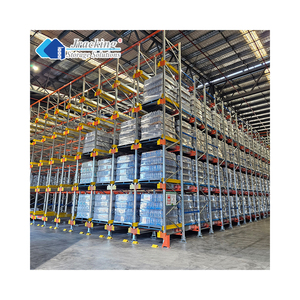
Jracking Global High-End Storage Rack Manufacture Radio Shuttle Racking System
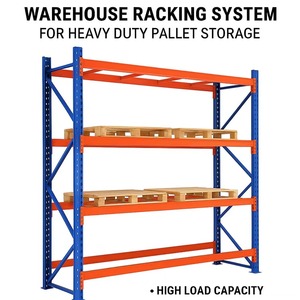
Material Handling-Warehousing-Stacking Racks & Shelves | Warehouse Racking System for Heavy Duty Pallet Storage
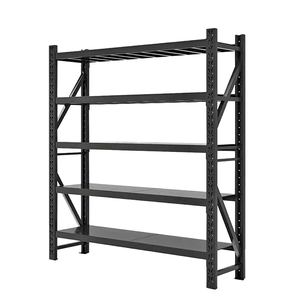
High Duty Steel 5 Adjustable Shelving Unit Slotted Angle Rack Anti-Rust Corrosion Protected Home Storage Garage Workshop
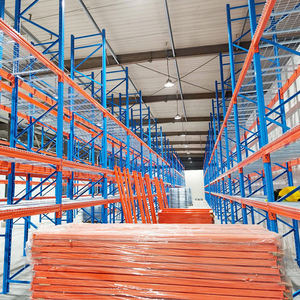
Heavy Duty Steel Mezzanine Attic Rack Multi-Level Storage Platform with Pallet-Racking Support for Warehouse Space Expansion
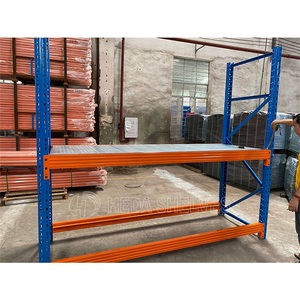
1500kg Per Layer Heavy Duty Shelves Storage Rack Warehouse Steel Pallet Racking System Industrial Racks
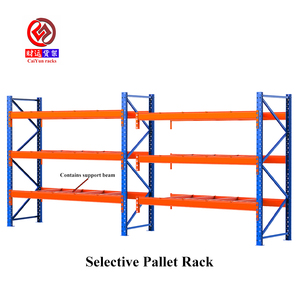
1500-4500kg Heavy Duty Durable Steel 5 Layer Powder Coated Warehouse Rack Beam Rack Support Frame Adjustable Pallet Beam Shelves
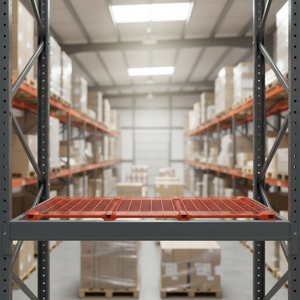
Optimized Wire Mesh Deck Pallet Racking Component Galvanized Deck Wire for Heavy Duty Warehouse Racking System Reliable
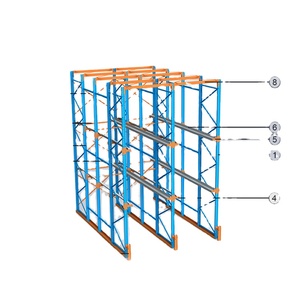
Factory Directly Provide Warehouse Storage Drive In/through Racking System Heavy Duty Steel Pallet Rack
Enterprise OEM/ODM Manufacturing Infrastructure
Founded in 2001, our 30,000 square meter intelligent fabrication base integrates cold-roll forming, robotic continuous welding, and automated surface treatment to deliver high-integrity intralogistics structures.
Metallurgical Superiority & Steel Selection
Structural integrity begins with primary coil selection. We exclusively process certified hot-rolled and cold-rolled prime structural steel coils conforming to ASTM A1011, EN 10025 S235JR, and high-strength S355JR equivalents. Every batch undergoes optical emission spectrometry and mechanical tensile testing to ensure yield strength exceeding design minimums ($f_y \ge 235 \text{ MPa}$ to $355 \text{ MPa}$) with elongation percentages above 20% to safeguard against brittle failure under cyclic dynamic loading.
- Traceable Mill Test Certificates (MTC EN 10204 3.1)
- Cold-rolled high yield variants for seismic uprights
- Strict gauge thickness tolerances (±0.05 mm)
Precision Automated Cold-Roll Forming
Our manufacturing workshops house 18 continuous automated roll-forming lines featuring up to 26 cold-rolling passes. This gradual plastic deformation mitigates residual cross-sectional stress, yielding upright profiles with exceptional torsional rigidity. Precision multi-station CNC punching achieves hole-pitch accuracy within 0.1 mm over 12-meter continuous spans, allowing interchangeable beam connectivity for both teardrop and slotted diamond configurations.
- Omega and modified C-profiles up to 120mm web
- Continuous automatic flying-shear cutting
- Robotic MAG welding per AWS D1.1 and EN ISO 15614
Corrosion Shielding & Pre-Treatment Line
To withstand diverse ambient environments—from sub-zero refrigerated distribution centers (-30°C) to humid coastal transit ports—all carbon steel components undergo an automated 7-stage chemical pre-treatment cycle. Degreasing, acid pickling, zinc phosphating, and deionized water rinsing prepare the substrate for thermoset electrostatic polyester powder application, cured at 200°C for uniform 60–90 μm film thickness and ASTM B117 salt spray endurance.
- Lead-free TGIC-free polyester resin coating
- Hot-dip galvanizing per ISO 1461 for cold storage
- Impact cross-hatch adhesion tested per ISO 2409
Engineering Architecture, Code Compliance & Finite Element Verification
An analytical breakdown of structural load validation methodologies, second-order inelastic frame analysis, and international design code compliance for mission-critical logistics facilities.
| Evaluation Parameter | European Standard (EN 15512:2020) | North American Code (RMI MH16.1-2023) | Australian Standard (AS 4084-2023) | Our OEM/ODM Factory Standard |
|---|---|---|---|---|
| Frame Calculation Method | Limit State Design (LSD), Advanced Global P-Δ Analysis | Direct Analysis Method (AISC 360 / RMI ASD or LRFD) | Limit State Analysis with second-order stiffness reduction | Full 3D FEA (ANSYS + RFEM) Verification |
| Permissible Beam Deflection | δ ≤ L / 200 (General) or L / 400 (ASRS automated) | δ ≤ L / 180 of clear span under maximum design load | δ ≤ L / 200 under unfactored live and dead loads | δ ≤ L / 250 (Exceeds baseline standards) |
| Safety Factor for Steel | γM0 = 1.0, γM1 = 1.1, γQ = 1.4 live loading | Ω = 1.67 (ASD) / φ = 0.90 (LRFD) factored resistance | Capacity reduction factor φ = 0.85 to 0.90 | Dual-Method Cross-Verification |
| Seismic Design Criteria | EN 16681 dynamic spectrum response calculation | ASCE 7-22 Section 15.5 non-building structural frame | AS 1170.4 earthquake actions verification | Site-Specific Spectral Acceleration Tailoring |
| Connector Looseness Test | Mandatory cyclical cantilever physical test | Rotational spring stiffness test required | Cyclic reverse-load testing verification | In-House Hydraulic Destructive Test Rig |
Seismic Engineering & Cyclic Load Dissipation
In seismically active territories—such as the Pacific Rim earthquake zone encompassing the western Americas (Chile, Peru, California) and East Asia—pallet shelving can no longer be conceptualized as static skeletal racking. Our engineering department treats high-bay racking systems as vertical dissipative structures under ASCE 7 and EN 16681.
Seismic force reduction coefficients ($R$) are modeled against dynamic pallet-to-beam friction values. Rather than relying on rigid anchoring that transfers destructive shear directly to warehouse concrete floor slabs, our base assemblies incorporate ductile heavy-gauge baseplates, high-embedment Hilti chemical anchors, and diagonal back-to-back channel bracing systems designed to yield plastically before structural column buckling occurs.
Automated Tolerance Compliance for ASRS & Shuttles
The accelerated transition toward Automated Storage and Retrieval Systems (ASRS), Autonomous Mobile Robots (AMRs), and Radio Shuttle multi-tier carts has revolutionized manufacturing tolerances. A deviation of just 2 millimeters in beam plumbness across a 30-meter high-bay aisle can cause shuttle optical sensor faulting, system jams, or mechanical derailment.
As an experienced OEM/ODM partner for major automated warehouse integrators, our fabrication lines operate within tightened tolerances: upright twist under 1 mm per meter, overall verticality error within 1:1000, and continuous beam level deflection constrained to $L/400$. We manufacture laser-aligned guide rails, anti-rebound end stoppers, and sensor-reflective target plates directly into our OEM shuttle rail extrusions.
Integrated 10-Stage Quality Assurance Cycle
Traceability is engineered into every production batch. From raw metallurgical assaying to final containerized ocean packing, we maintain tight ISO 9001:2015 process controls.
Metallurgical Inbound QA
Spectral chemistry analysis, coil thickness ultrasonic gauging, and tensile/yield stress validation before slit allocation.
CNC Slitting & Punching
High-speed hydraulic servo punch presses achieve exact pitch spacing without micro-fracturing surrounding cold-formed zones.
Robotic Forming & Welding
Multi-axis Panasonic arc welding systems apply uniform penetration fillets joining beam tubes to multi-claw drop-forged end connectors.
Pre-Treatment & Export Pack
7-tank phosphating, 200°C electrostatic powder cure, dimensional audit, and corrugated corner-protected steel strapping.
Global Pallet Racking Sourcing Trends (2025–2030)
Procurement executives and supply chain directors face changing tariffs, carbon reporting mandates, and automated warehouse convergence. Here is how leading distributors navigate the horizon.
Convergence of Static Steel & Autonomous Robotics
The distinction between pure static storage and automation is blurring. Modern distribution hubs require hybrid selective and shuttle systems capable of supporting autonomous reach trucks, vertical lift modules (VLMs), and 4-way deep-lane shuttles. Sourcing directors are prioritizing factories offering customized interface brackets, optical tracking markers, and sub-millimeter deflection tolerances over commodity low-spec shelving.
Decarbonized Logistics & Scope 3 Steel Reporting
With the European Union Carbon Border Adjustment Mechanism (CBAM) and US SEC climate disclosure rules tightening, warehouse developers now require documented Environmental Product Declarations (EPDs). OEM suppliers must demonstrate circular steel scrap utilization, low-emission closed-loop chemical pre-treatment, and volatile-organic-compound-free (VOC-free) electrostatic powder systems to win Tier-1 enterprise logistics tenders.
Supply Chain Regionalization & Container Cubing
Ocean freight volatility makes shipping density a primary profitability driver. Top OEM exporters design flat-pack nested beam geometry, knock-down bolted upright frames, and bundled pallet components that increase standard 40ft High Cube (HQ) container payload utilization by 25–35%, effectively reducing landed freight costs per pallet location by up to $14.50.
Frequently Asked Procurement & Engineering Questions
Concrete, technically verified answers addressing engineering calculations, international customs, lead times, and structural safety verification.
What metallurgical data and test documentation are provided with export shipments? +
How do you calculate and verify structural rack capacity under seismic operating conditions? +
What are the standard production lead times and ocean shipping packaging standards? +
Can your factory provide custom roll-forming profiles compatible with existing warehouse systems? +
What surface finish is recommended for sub-zero cold storage vs. humid tropical coastal warehouses? +
How do you assist international distributors with layout planning and engineering validation? +
Plan Your Next Warehouse Fit-Out With Direct OEM Engineering
Connect directly with our structural engineering team. Submit your warehouse floor plan and pallet specifications for a complimentary 3D spatial CAD layout, load capacity calculation report, and formal direct-export price quotation within 24 hours.