Featured Heavy-Duty Industrial Racking & Automated Systems
Direct-from-manufacturer engineered storage configurations manufactured to EN 15512, RMI ANSI MH16.1, and ISO 9001:2015 specifications for intralogistics distribution centers.
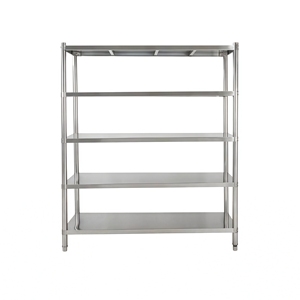
Customized Stainless Steel Countertop Shelving Units with Self-Cleaning Coating Modular Expandability
Engineered for pharmaceutical and cleanroom food processing applications, offering high-grade austenitic stainless steel construction with antimicrobial surface passivation.
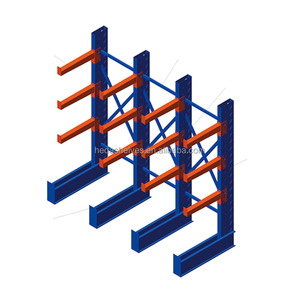
Cantilever Racking Industrial Storage Shelving Heavy Duty Rack Cantilever System
High-moment column engineering designed to accommodate structural lumber, extruded aluminum profiles, steel rebar, and oversized non-palletized industrial inventory.
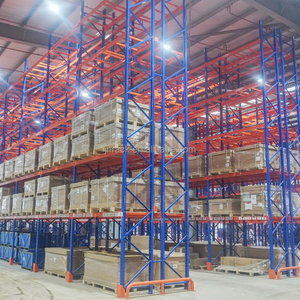
Heavy-Duty Corrosion Protected Pallet Racking Systems For Factory Storage
Hot-dip galvanized and multi-stage phosphate powder-coated uprights tailored specifically for high-humidity coastal facilities and corrosive chemical environments.
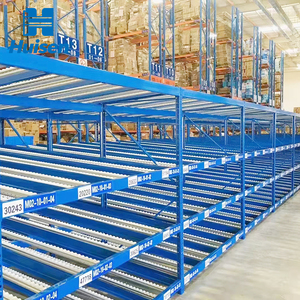
Automated Adjustable Durable Heavy Duty High Density Gravity Roller Flow Racks
Precision roller tracks equipped with centrifugal speed controllers to ensure uniform deceleration, providing autonomous pallet rotation for rapid FMCG cold-chain cycles.
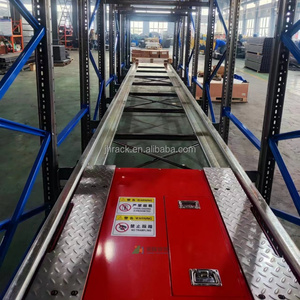
Automated Warehouse ASRS Pallet Shuttle Racking System Storage Units
Integrated automated storage and retrieval framework pairing high-precision cold-formed channels with automated cart shuttles to achieve maximum vertical cubic density.
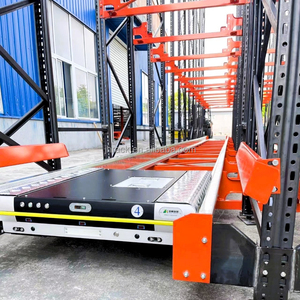
China Automatic Shuttle Rack Factory Warehouse FIFO System Shelves
High-throughput radio shuttle system configured for dual-mode FIFO/LIFO execution, eliminating forklift operating lanes and drastically cutting internal transfer times.
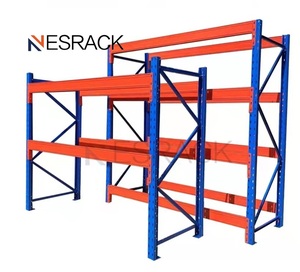
Popular Heavy Duty Industrial Rack Warehouse Goods Pallet Storage Rack
Universal teardrop or diamond-hole modular structural racking engineered for universal compatibility with standard counterbalance, reach, and turret narrow-aisle trucks.
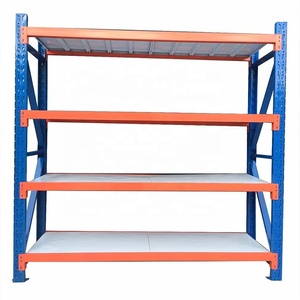
Adjustable Steel Selective Pallet Rack Multi-Level Long Span Bolted Racking
100% individual pallet access framework utilizing cold-rolled high-tensile steel uprights and bolted cross-bracing configurations for optimal seismic shear dissipation.
Top 10 Global Industrial Racking Manufacturers & Exporters
An engineering analysis evaluating raw material metallurgy, roll-forming tolerances, structural finite element modeling (FEM), global seismic certifications, and transoceanic delivery capabilities.
Guangzhou Heda Shelves Co., Ltd.
Guangzhou, China · Est. 2001Daifuku Co., Ltd.
Osaka, Japan · Est. 1937SSI Schaefer Systems International
Neunkirchen, Germany · Est. 1937Mecalux, S.A.
Barcelona, Spain · Est. 1966Dexion (Gonvarri Material Handling)
Oslo, Norway / Europe · Est. 1947Jungheinrich AG
Hamburg, Germany · Est. 1953stow Group (stow Robotics)
Spiere-Helkijn, Belgium · Est. 1977Ridg-U-Rak, Inc.
North East, PA, USA · Est. 1942Frazier Industrial Company
Long Valley, NJ, USA · Est. 1949Kardex AG (Kardex Remstar)
Zurich, Switzerland · Est. 1980| Manufacturer | Primary Metallurgy | Seismic & Code Standards | Coating / Finishing | Max Pallet Load Class | Turnaround / Lead Time |
|---|---|---|---|---|---|
| Guangzhou Heda Shelves | Cold-Formed Q235B / Q355B Steel | CE (EN 15512), ISO 9001, NCh 2369, NSR-10 | 10-Stage Phosphated Epoxy-Polyester | Up to 5,000 kg / Beam Level | 2–4 Weeks (High Factory Throughput) |
| Daifuku Co., Ltd. | Proprietary High-Tensile Japanese Coil | JIS, IBC, EN 15620, AS 4084 | Automated Electrostatic Enamel | Custom Clad-Rack Megaloads | 16–28 Weeks (Turnkey ASRS) |
| SSI Schaefer | Cold-Rolled European Strip Coil | FEM 10.2.02, EN 15512, DIN Standards | Thermo-Hardened Powder Coating | Up to 4,500 kg / Level | 8–14 Weeks (Engineered Order) |
| Mecalux, S.A. | Cold-Rolled Certified Structural Steel | EN 15512, RMI MH16.1, ISO 9001 | Continuous Polymer Cataphoresis | Up to 4,000 kg / Level | 6–12 Weeks |
| Frazier Industrial | Hot-Rolled ASTM A36 Structural Channel | AISC, RMI MH16.1, Canadian CSA S16 | Submerged Dip Coating / Galvanized | Up to 6,000 kg+ / Structural Bay | 10–16 Weeks |
Guangzhou Heda Shelves: 25 Years of Precision Storage Engineering
Established in 2001, Guangzhou Heda Shelves Co., Ltd. has evolved from a specialized heavy-rack tooling workshop into an internationally accredited industrial fabrication enterprise. Operating an expansive 30,000 m² smart production base in Guangzhou, China, backed by 300+ structural engineers, precision welders, and logistics managers, HEDA manufactures comprehensive storage frameworks engineered for global distribution hubs, e-commerce giants, and cold-chain infrastructure.
Seismic Zone Structural Modeling
Every installation layout undergoes rigorous dynamic FEM stress modeling. Base plate dimensions, anchor embedded depths, upright thicknesses, and cross-bracing configurations are reinforced specifically for high-intensity seismic codes including Chile NCh 2369, Peru E.030, and Colombia NSR-10.
Automated 10-Step Surface Finishing
To combat coastal humidity and blast-freezer condensation, all steel parts undergo chemical degreasing, ultrasonic rust removal, zinc phosphating pre-treatment, and high-voltage electrostatic polyester powder baking, producing a scratch-resistant, anti-corrosive barrier.
Optimized Export Packaging & Cubing
Transoceanic freight demands specialized bundling to protect powder coatings from container moisture and chafing. HEDA utilizes robotic precision packing with protective polymer edge guards, custom timber chocks, and optimized container nesting to reduce client sea freight costs per ton.
Global Procurement & Sourcing Trends in Industrial Racking
How supply chain disruptions, soaring logistics real estate valuations, and automation convergence are redefining structural racking procurement specifications worldwide.
1. Autonomous Hybridization
Procurement teams are shifting away from standalone static racking. Modern tenders demand dual-purpose frameworks ready for retrospective shuttle automation, overhead autonomous mobile robot (AMR) top-deck tracking, and pallet-lifting AGV aisle integration without requiring structural frame replacements.
2. Scope 3 Green Steel Mandates
Global ESG compliance now audits the embodied carbon within warehouse steel infrastructure. Enterprise operators favor fabricators utilizing electric arc furnace (EAF) recycled scrap steel and solvent-free low-VOC curing lines to dramatically reduce verified carbon footprints per installed pallet location.
3. Ultra-Dense Urban High-Bays
Because industrial land costs near metropolitan hubs have skyrocketed, new distribution facilities prioritize vertical cubic exploitation. Procurement specifications are prioritizing self-supporting clad-rack buildings and narrow-aisle frameworks reaching 24 to 40 meters to slash the footprint per SKU stored.
4. IoT-Sensorized Racking
Structural health monitoring is moving from luxury to standard. Future-proof procurement requires integrated wireless strain gauges and impact sensors mounted to base columns that log forklift collisions in real time and automatically flag critical beam deflections on facility management dashboards.
Key Technological Developments in Racking Engineering
From micro-alloyed cold-formed structural sections to advanced non-linear computational finite element design, storage engineering has transitioned into high-precision structural mechanics.
Non-Linear Dynamic Seismic Simulation
Structural Engineering BreakthroughHigh-Tensile Micro-Alloyed Steels
Metallurgical OptimizationNanocomposite Anti-Corrosion Barriers
Surface Treatment Chemistry4-Directional Robotic Shuttle Runways
Intralogistics MechanicsFrequently Asked Technical Sourcing Questions
Essential insights regarding load deflection tolerances, metallurgical certifications, seismic compliances, and container shipping mechanics.
What beam deflection ratio is safe for heavy pallet storage?
Under international standards such as FEM 10.2.02 and RMI MH16.1, the permissible vertical elastic deflection limit for horizontal load beams is strictly bounded at $L/200$ (where $L$ is beam length in millimeters). However, for automated AS/RS shuttle systems or very narrow aisle (VNA) configurations, stricter tolerances of $L/300$ or $L/400$ must be maintained to prevent pallet sag from tripping optical positioning sensors on handling equipment.
How does cold-formed steel compare against hot-rolled structural steel?
Cold-formed steel (e.g., Q235B/Q355B coil) is shaped at ambient temperature into complex ribbed profiles, offering an exceptional strength-to-weight ratio, lower material cost, and vast flexibility in modular connector slots. Hot-rolled structural channel steel (such as ASTM A36) features thicker web walls without internal hollows, delivering superior raw impact resistance against aggressive forklift collisions, making it favored in high-traffic food logistics centers.
What documentation must exporters supply for seismic validation?
A compliant overseas manufacturer must provide certified engineering calculation books detailing static vertical dead and live loads, seismic shear base coefficients ($C_s$), seismic drift limits, dynamic beam connector stiffness tests, and material mill test certificates (MTCs). Base plate dimensions and concrete anchor expansion or chemical adhesive torque ratings must match the local building code (e.g., Chilean NCh 2369, IBC 2024, or Eurocode 8).
How are heavy racks packaged to avoid ocean freight corrosion and damage?
Professional industrial exporters utilize nested steel cradles, desiccants inside moisture-barrier plastic sheeting, and heavy-duty corner protection to guard roll-formed edges against scratching. Components are bundled sequentially by assembly sequence and marked with numerical IDs to expedite offloading and staging at destination ports, minimizing container demurrage charges.
Selective Racking vs. Radio Shuttle: What is the economic tipping point?
Selective pallet racking represents the lowest capital expenditure per pallet location ($45–$80 per pallet space) and affords 100% immediate selectivity, ideal for high SKU counts with low inventory depth. Radio Shuttle systems require higher initial capital ($160–$280 per pallet space) but increase vertical and floor cubic storage density by 60–80%, delivering positive ROI where land costs are steep or cold-storage refrigeration power consumption is paramount.
What concrete slab specifications are needed for heavy-duty racks?
Industrial installations typically mandate a reinforced concrete floor slab with a minimum thickness of 150 mm to 250 mm and compressive strength of C25/30 or C30/37 (3,000–4,500 PSI). For VNA installations exceeding 12 meters in height, slab surface flatness must comply strictly with DIN 18202 Table 3 Group 4 or ACI 117 F-min numbers to prevent dangerous vehicle tilting at elevated mast extensions.
Request a Free Structural Layout & Project Quotation
Connect directly with Guangzhou Heda Shelves' senior structural engineering team. Submit your architectural floor plan, clear ceiling heights, pallet configurations, and seismic parameters to receive a complimentary 3D CAD design layout, structural load analysis, and landed container cost estimate within 24 business hours.