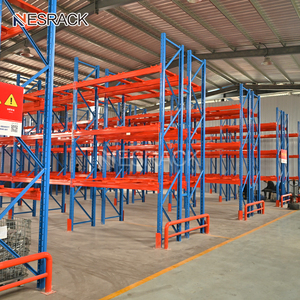
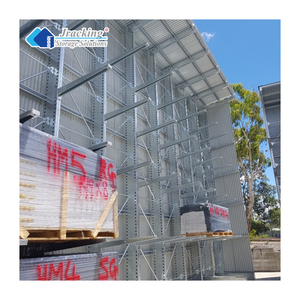
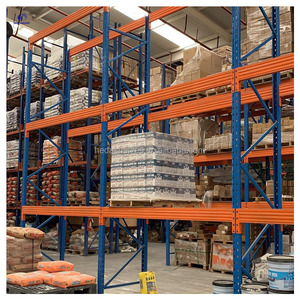
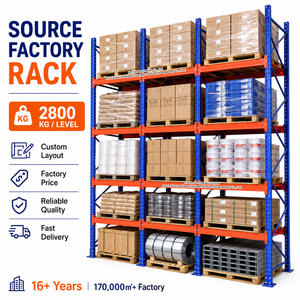
Heavy Duty Rack Steel Warehouse Rack Industrial Pallet Storage Shelf Warehouse Metal Racking System Heavy Duty Boltless Shelving
- Load Capacity: 1,000–4,500 kg / level
- Material Spec: Q235B / Q355B Steel
- Application: Multi-SKU Pallet Distribution
Manufactured strictly according to FEM 10.2.02, RMI MH16.1, and EN 15512 codes. Engineered from certified high-tensile hot-rolled and cold-formed coil steels designed to handle high-throughput supply chain operations worldwide.
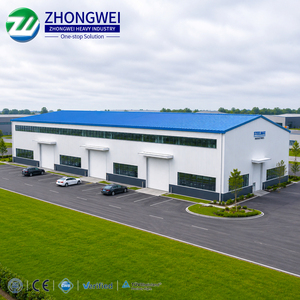
With an active manufacturing footprint spanning 30,000 square meters and certified automated cold roll-forming lines, our facility converts high-grade steel coil into mission-critical supply chain assets for global enterprise clients.
A rigorous structural, metallurgic, and supply chain assessment of the metrics procurement directors must examine when vetting high-volume industrial racking manufacturers.
Top-tier manufacturers never compromise on steel consistency. Structural upright columns and load beams require mill-certified Q235B and Q355B (equivalent to ASTM A36 and A572 Grade 50) cold-rolled structural steels with verified yield strengths and Charpy impact tests for low-temperature operations.
Continuous automated multi-station roll-forming lines guarantee upright profile cross-section uniformity across entire 12-meter lengths. Precision CNC hole-punching matrices ensure beam-connector hook engage locks engage without play, preventing systemic looseness under seismic resonance.
Leading exporters integrate finite element simulation (FEA) into layout proposals. Structural calculations incorporate geographic seismic zone factors, peak ground acceleration (PGA), building code standards (such as Chile NCh 2369, Peru E.030, or US FEMA 460), and baseplate anchor shear forces.
Long-term asset preservation hinges on pre-treatment. Components must undergo automatic 7-stage immersion or continuous spray pickling, acid degreasing, and phosphating before electrostatic polyester powder coating cured at 200°C, offering over 500 hours of ASTM B117 salt spray resistance.
International ocean freight efficiency separates elite exporters from brokers. Structural uprights and beam nests must be packaged using customized steel bundling racks, protective foam edge protectors, and high-density nesting schematics to achieve maximum weight/volume cube utilization in 40ft HQ containers.
Global logistics operators require transparent accreditation: CE conformity under EN 1090-1 / EN 15512, ISO 9001:2015 factory quality assurance, and formal ISO 14001 environmental compliance, supported by manufacturer warranties covering structural integrity and deflection parameters.
| Evaluation Criteria | Tier-1 Integrated Manufacturers (e.g. HEDA) | Regional Assembly Shops | General Trading Exporters |
|---|---|---|---|
| Raw Material Supply | Direct Mill Purchase Certified Q235B/Q355B coil with 3.1 inspection sheets | Secondary local steel service centers; variable coil batches | Third-party brokered; inconsistent steel chemistry |
| Engineering & FEA Design | In-House PE Engineers 3D BIM, CAD, and regional seismic calculations included | Third-party outsourced drafting; standardized beam tables | Generic catalog templates without site-specific loading |
| Manufacturing Scale | 30,000 t / Month Continuous roll forming, robotic welding stations | 1,000–3,000 t / Month; manual cutting and punch presses | Zero manufacturing footprint; relies on subcontracting |
| Quality Control Systems | ISO 9001 & CE Certified In-line dimensional verification and batch destruct testing | Periodic visual spot-checks during assembly | Visual post-production shipping verification only |
| Coating Durability | 7-Stage Phosphating Automated electrostatic polyester bake, 60–90μm | Single-stage solvent degreasing and manual spray | Varies by supplier; prone to flaking during transit |
| Export Packaging & Freight | Engineered Load Schemes Steel channel pallets, shrink-wrap, zero shipping loss | Loose strapping on timber dunnage; port transit damage risks | Minimal protection; high container cubic wastage |
Operating continuously since 2001, Guangzhou Heda Shelves Co., Ltd. has developed an integrated manufacturing model that eliminates supply chain friction for distributors, logistics providers, and industrial facility owners.
Founded in Guangzhou with an expansive 30,000 m² production complex and over 300 experienced engineers and skilled technicians, our company does not simply fabricate steel racking—we engineer custom storage architectures that solve warehouse spatial bottlenecks.
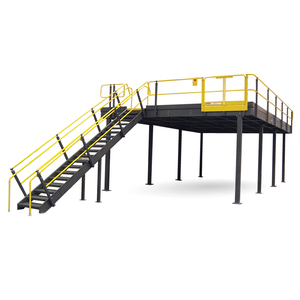
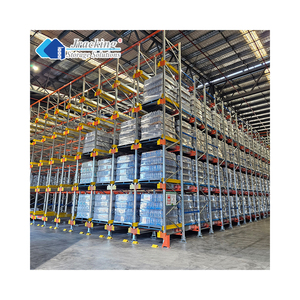
From complex multi-tier mezzanine floors to automated deep-lane radio shuttle corridors and high-bay rack systems carrying up to 14,000 kg per bay, our factory controls every production variable internally.
Every single racking upright column, box beam, bracer, and footplate produced in our factory undergoes an audited 10-stage fabrication workflow before packing:
Footplates and upright frames are reinforced with gussets and heavy-duty mechanical floor anchors engineered to resist dynamic base shear, preventing system collapse during regional seismic movements.
For refrigerated warehouses operating at sub-zero temperatures (-25°C) or high-humidity ports, we offer pre-galvanized components and hot-dip galvanizing to eliminate rust blistering.
Direct full-container shipping from Southern China export terminals with computer-modeled loading schemes slashes ocean transit cost per pallet location to Latin American, North American, and European destinations.
Every shipment arrives with bilingual installation schematics, piece-numbered component manifests, step-by-step assembly videos, and technical engineering stamp calculations for local inspectors.
Enterprise warehouse operators are fundamentally shifting how they specify and procure storage hardware. Sourcing directors must anticipate these macro transformations to preserve capital agility.
Traditional static selective pallet racking is increasingly being superseded by hybrid systems. Procurement teams are specifying racking uprights and guide rails built ready for autonomous mobile robots (AMRs) and radio shuttle systems, allowing facilities to upgrade from manual forklift operations to semi-automation without structural overhauls.
With industrial real estate lease rates climbing across primary logistics corridors globally, modern projects demand vertical expansion. Buyers are moving toward 12- to 18-meter high-bay pallet racking and multi-tier rack-supported mezzanine platforms that double or triple usable square footage within identical footprints.
Corporate ESG mandates are reshaping procurement RFP requirements. Importers are requiring low-VOC electrostatic powder formulations and verifiable carbon-accounting trails for primary cold-rolled steel coils, favoring manufacturers running energy-efficient curing kilns and circular steel reclamation pipelines.
The role of middlemen and trading markups is collapsing. Forward-thinking supply chain directors increasingly interface directly with high-capacity manufacturing facilities in China capable of handling engineering layouts, finite element seismic analysis, export shipping logistics, and remote installation guidance under one contract.
Insurance carriers in earthquake-prone regions (such as the Pacific Rim and Andean regions) now demand documented compliance certificates (CE, ISO 9001, EN 15512) before underwriting commercial warehouse facilities, making uncertified low-cost steel racking an unacceptable business liability.
Project procurement cycles have shrunk from 9 months to under 10 weeks. Leading factories utilize modular inventory buffers and automated roll-forming setups to guarantee 2–4 week production sprints, dispatching synchronized ocean container batches precisely aligned with local warehouse floor pouring schedules.
A closer look at metallurgical breakthroughs, structural geometries, and automated material handling interfaces shaping contemporary warehousing infrastructure.
The era of heavy, inefficient hot-rolled structural channels for general pallet storage is declining. Advanced engineering has optimized thin-walled, cold-formed open sections featuring multiple return bends and stiffening ribs. By strategically introducing return flanges into the profile of upright frames, manufacturers achieve significantly higher moment of inertia and torsional resistance using high-yield Q355B coil.
This metallurgical transition delivers two decisive procurement advantages: structural dead-weight is reduced by up to 18% (lowering international container freight costs), while structural load-bearing capacity and seismic acceleration tolerance increase.
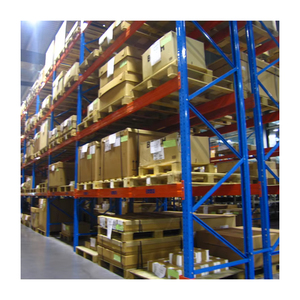
In-depth technical answers addressing engineering standards, container loading parameters, seismic considerations, and international logistics.
Connect directly with our senior structural engineering team. Submit your warehouse floor plan today to receive a fully customized 3D layout, CAD drawing, and competitive factory-direct quote within 24 business hours.