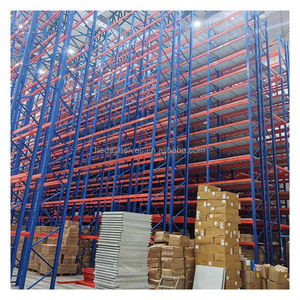
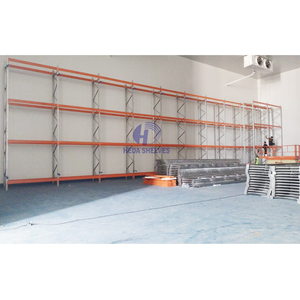
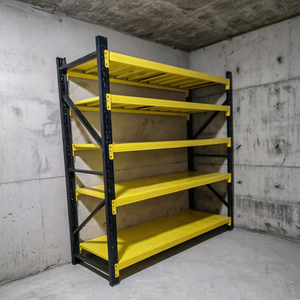
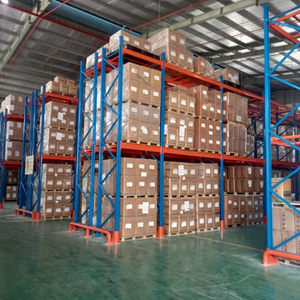
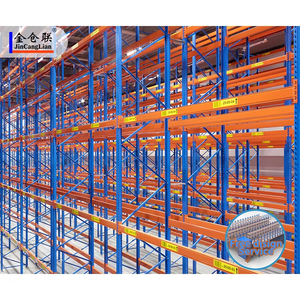
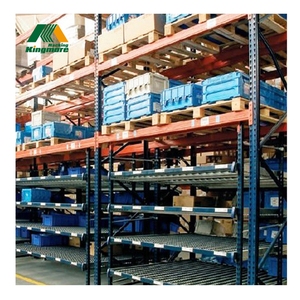
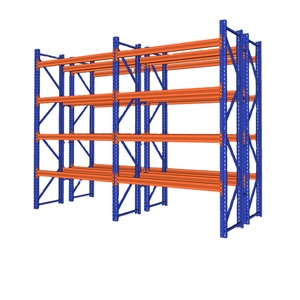
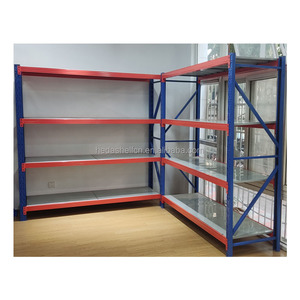
Direct In-House Mill Fabrication
We operate a 30,000 m² heavy steel production base with automated cold-roll forming lines, multi-station CNC column punching, and dual continuous electrostatic epoxy powder coating lines, bypassing intermediary trading margins.
Seismic & Structural Engineering
Custom structural design fully vetted for high seismic zones (such as Chile's NCh 433/2369, Peru's E.030, and Colombia's NSR-10). Upgraded baseplates, high-tensile anchors, and reinforced diagonal bracing are calculated natively.
Free 3D Layout & Static Simulation
Our engineering department of 300+ technical personnel supplies comprehensive CAD warehouse schematics, 3D renderings, and finite-element structural deflection reports within 24 to 48 hours without upfront commitment.
International Compliance & QC
Certified by SGS and TÜV Rheinland under CE (EN 15512 / EN 15620) and ISO 9001:2015. Every batch undergoes raw coil yield testing (Q235B/Q355B), ultrasonic weld verification, and salt-spray corrosion tests before shipment.
Top 10 One-Stop Pallet Racking Manufacturers & Industrial Factories: Global Authority Guide
Modern supply chains, omnichannel fulfillment facilities, and cold-chain logistics hubs operate under acute pressure to maximize vertical cubic storage density while minimizing construction capital expenditure. Sourcing heavy-duty storage infrastructure requires evaluating manufacturers not merely as raw commodity steel fabricators, but as end-to-end engineering partners capable of delivering integrated structural design, customized cold-roll forming, automated coating compliance, and localized installation oversight.
"A true 'one-stop' racking manufacturer integrates structural calculation, raw coil processing, robotic stamping, epoxy coating, custom crating, and field engineering into a single verifiable chain of custody."
In this engineering overview, we analyze the world's leading pallet racking manufacturers based on structural integrity standards (RMI, FEM 10.2.02, EN 15512), production capacity, seismic engineering capabilities, automated integration readiness (ASRS), and turnkey project support.
Comparative Evaluation: Top 10 Global Pallet Racking Manufacturers
HQ: Guangzhou, China
Capacity: 30,000 t / month
Certifications: CE, ISO 9001:2015
Core Focus: Heavy Pallet Racks, Mezzanines, ASRS
Founded in 2001, HEDA Shelves is a global powerhouse operating a 30,000 m² advanced manufacturing facility. HEDA distinguishes itself through comprehensive turnkey engineering, providing complimentary 3D CAD modeling, seismic calculations for demanding earthquake belts across the Americas and APAC, and complete factory-direct custom roll-forming. With over 10,000 installations globally, HEDA provides optimal cost-per-pallet economics for 3PLs, distributors, and cold storage operators.
HQ: Neunkirchen, Germany
Reach: 70+ Countries Worldwide
Certifications: ISO 9001, EN 15512
Core Focus: Automated High-Bay, Shuttle Systems
A benchmark in automated storage and retrieval systems (ASRS), SSI Schaefer offers ultra-tall clad-rack structures and automated pallet solutions. Their systems excel in massive distribution facilities requiring high throughput integration with proprietary warehouse management software, though they typically operate at a premium capital expenditure tier.
HQ: Barcelona, Spain
Facilities: 11 Production Centers
Certifications: RMI, FEM, ISO 9001
Core Focus: Pallet Shuttle, Selective, WMS
Mecalux commands substantial manufacturing footprints across Europe and the Americas. Known for its standard pallet rack designs and proprietary Easy WMS software, Mecalux provides solid, reliable racking solutions for conventional and semi-automated distribution centers across Latin America and North America.
HQ: Osaka, Japan
Global Footprint: Worldwide Direct Branches
Certifications: ISO 9001, JIS Standards
Core Focus: Unit Load ASRS, Factory Automation
Recognized as one of the highest-revenue material handling conglomerates worldwide, Daifuku specializes in turn-key automated material handling infrastructure, cleanroom automated storage for semiconductor manufacturing, and high-tolerance automated unit load pallet racking matrices.
HQ: Spiere-Helkijn, Belgium
Factories: 9 Industrial Plants
Certifications: EN 15512, ISO 14001
Core Focus: Heavy Pallet Racks, Stow Atlas Shuttle
Stow is among Europe’s foremost pallet rack producers, operating specialized facilities dedicated to cold-rolled upright columns and standardized beam connectors. Their Stow Atlas pallet shuttle platform is widely deployed for deep-lane grocery and cold chain warehouse applications throughout EMEA.
HQ: Chicago, Illinois, USA
Factories: Pontiac, IL; Melrose Park, IL
Certifications: RMI Certified, ANSI MH16.1
Core Focus: Roll-Formed & Structural Teardrop Racks
Formed through historical mergers, Interlake Mecalux provides teardrop-style selective pallet racks engineered specifically to American RMI standards. Their bolted and welded frame configurations support high-volume pallet cross-docking hubs throughout the United States, Canada, and Mexico.
HQ: Hamburg, Germany
Network: 40+ Direct Service Entities
Certifications: CE, ISO 9001
Core Focus: VNA Racking, Narrow-Aisle Forklifts
Jungheinrich combines heavy storage rack manufacturing with proprietary industrial truck design. Their Very Narrow Aisle (VNA) racking and high-bay clad racks are closely matched to wire-guided and optical-guided turret trucks, optimizing warehouse cubic space down to millimeter floor tolerances.
HQ: Madrid, Spain / UK
Brand Lineage: Inventor of Slotted Angle
Certifications: FEM, ISO 9001, EN 1090
Core Focus: Cantilever, Pallet Racks, Mobile Shelving
As part of Gonvarri Material Handling, Dexion provides engineered industrial shelving, heavy-duty cantilever systems for timber and steel profiles, and automated mobile pallet racks (MOVO) that dramatically compact floor space in frozen logistics environments.
HQ: Meisenheim, Germany
Plant: State-of-the-art European Hubs
Certifications: RAL-RG 614, ISO 9001
Core Focus: Carton Flow, Dynamic Flow Racks, Pallet Systems
BITO specializes in high-density live storage, carton flow systems, and precision-engineered boltless pallet racks. Their solutions are particularly revered in pharmaceutical fulfillment, e-commerce order consolidation, and multi-tier picking mezzanine setups.
HQ: North East, Pennsylvania, USA
Production: 400,000+ sq ft Facility
Certifications: RMI, AISC
Core Focus: Heavy Structural Channel Racks, Push-Back
Ridg-U-Rak manufactures structural channel steel pallet racks designed to absorb severe forklift impacts in high-velocity transit hubs. Their heavy-duty structural base designs, column protectors, and push-back nested cart systems offer rugged longevity in abusive operating environments.
Technical Specification Matrix: Selecting Your Racking Partner
When selecting an industrial pallet racking manufacturer, procurement directors must cross-reference raw material grades, finishing procedures, and structural calculation methodologies against warehouse operating conditions.
| Evaluation Parameter |
HEDA Shelves (Factory-Direct) |
Tier-1 Western Automators |
Regional Commodity Fabricators |
| Primary Steel Grade |
Certified Q235B / Q355B Hot-Rolled Strip |
EN 10025 S235 / S355 or ASTM A36 |
Variable / Non-standardized secondary coils |
| Seismic Verification |
Site-specific FEM / Local Code (NCh433, E.030) |
Comprehensive automated FEM packages |
Minimal or non-engineered basic uprights |
| Surface Treatment |
Acid Pickling, Phosphating + Electrostatic Epoxy (60-80μm) |
Premium Powder Coating or Pre-Galvanized |
Single-stage flash dip / Rapid peel risk |
| Design Turnaround |
Complimentary 3D CAD & Static Check in 24-48 hrs |
Paid engineering consultancy (2-4 weeks) |
Basic unverified 2D schematics |
| Total Cost of Ownership |
Direct factory pricing; 30-40% CapEx reduction |
Substantial brand & software markup |
Low initial buy, high risk of field failure |
Future Industry Trends: Pallet Racking Technological & Procurement Shifts (2025–2030)
The global warehousing landscape is experiencing structural disruptions driven by automated material handling adoption, land shortages, and strict seismic building codes. Logistics executives are transitioning away from disconnected component purchasing toward comprehensive turnkey solutions.
1. The Shift to High-Bay Clad-Rack Automation (ASRS Integration)
Industrial real estate prices in global logistics epicenters have pushed storage heights beyond 30 to 40 meters. Rather than erecting a civil concrete building and filling it with racking, engineers increasingly implement rack-supported buildings (clad-rack structures). Here, the racking uprights act as the load-bearing framework supporting exterior insulated wall paneling and roof trusses, reducing construction schedules by 25% while maximizing cubic space utilization.
2. Advanced Seismic Resilience & Ductility Engineering
Recent seismic events across the Pacific Ring of Fire (Chile, Peru, Japan, North American West Coast) have transformed structural inspections. Pallet racks are no longer treated as simple equipment, but as primary architectural storage structures under standards like RMI MH16.1 and European EN 15512. Modern manufacturing incorporates enlarged 10mm-16mm base plates, anchor bolt shear pins, wrap-around beam locking tabs, and finite-element modeling that accounts for soil-structure interaction and liquid pallet movement under seismic oscillation.
3. Low-Temperature Cold Chain Specialization
With cross-border perishable trade surging, cold storage facilities running at -25°C to -30°C face severe steel embrittlement and coating breakdown from condensation. The industry has shifted toward low-temperature-formulated hot-rolled steel treated through multi-stage zinc phosphating or continuous hot-dip galvanization. Furthermore, deep-lane radio shuttle racks have largely superseded traditional drive-in systems, eliminating forklift collisions inside refrigerated chambers and cutting thermal dissipation.
4. Total Cost of Ownership (TCO) Over Nominal Purchase Price
Procurement teams increasingly calculate racking expenses across a 15-year lifecycle. Upright impact damage, epoxy peeling, and field-weld failures quickly eclipse minor initial purchase discounts. Leading buyers now prioritize factories capable of delivering certified yield-strength batch certificates, robotic laser hole punching that guarantees alignment within 0.1mm, and standardized replacement modular components.
Industrial Buyer's Engineering FAQ: Critical Sourcing Questions
Clear, unedited technical guidance addressing common engineering, logistics, and installation dilemmas encountered when importing heavy warehouse storage systems.
What specific parameters are needed to engineer an accurate warehouse racking CAD layout?
+
To prepare an optimized static calculation and CAD schematic, an engineering factory requires: (1) Architectural floor plan showing column grid spacing, building expansion joints, clear height under roof joists, and dock door locations; (2) Pallet specifications including overall dimensions (Width x Depth x Height including cargo overhang) and maximum gross pallet weight; (3) Forklift specifications including aisle turning radius (AST), mast retracted height, maximum lift height, and chassis type; (4) Local seismic zone parameters (acceleration coefficient ground profile); and (5) Environmental conditions (ambient temperature, cold room humidity, or outdoor chemical exposure).
How does Q235B steel compare with Q355B in heavy storage rack construction?
+
Q235B provides a nominal yield strength of 235 MPa and is the international benchmark for standard selective pallet rack beams and low-bay uprights where physical deflections govern the design before yield limits are reached. Q355B possesses a yield strength of 355 MPa, delivering approximately 50% greater load capacity per unit cross-sectional area. High-tier manufacturers utilize Q355B specifically in high-bay bottom upright frames, heavy mezzanine structural columns, and cantilever uprights subjected to intense eccentric bending moments.
What structural deflection limits are acceptable under global safety standards?
+
Under both European (EN 15512) and American (RMI MH16.1) standards, the maximum allowable vertical deflection for load beams under full static pallet loading must not exceed L/200 (where L is the clear span distance between upright columns). For example, a 2,700mm beam under rated load cannot deflect more than 13.5mm. Once unloaded, the beam must return to zero residual deflection. Any permanent plastic deformation indicates structural fatigue or overloading.
How is surface coating durability ensured against humidity and scratches during container shipping?
+
Coating reliability depends heavily on automated surface pre-treatment rather than just the paint layer itself. Premium factories pass all profiled components through continuous ultrasonic de-greasing, acid pickling to eliminate mill scale, and zinc phosphating to establish an inert micro-crystalline bonding layer. Electrostatic epoxy polyester powder is then applied at 60–80 microns thickness and oven-cured at 200°C. For export shipping, components are bundled with corrugated separators, foam wrap, and heavy steel strapping to prevent ocean-voyage abrasion.
How are installation, alignment, and verticality tolerances handled internationally?
+
Every export shipment includes detailed erection drawings with color-coded component tagging, step-by-step assembly manuals, and torque specifications for anchor bolts. Factory engineers offer real-time video installation support or dispatch experienced site supervisors for turnkey erection. According to EN 15620 guidelines, upright verticality out-of-plumb tolerance must not exceed 1/500 of the total frame height. Shims, leveling plates, and non-shrink grouting are systematically detailed to correct concrete slab imperfections.