Engineered Warehouse Racking & Storage Systems
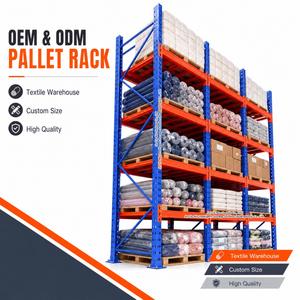
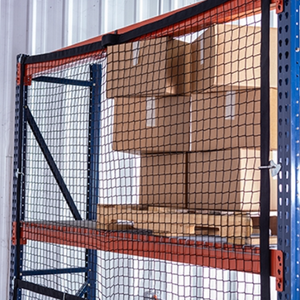
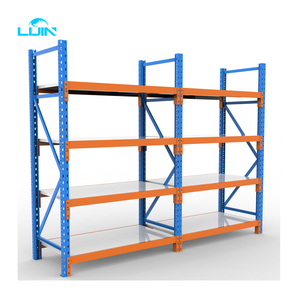
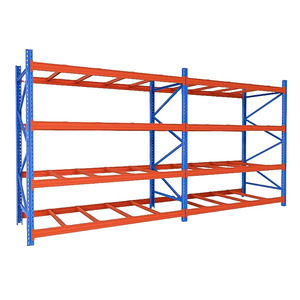
Precision-manufactured industrial pallet racks, cantilever frames, modular mezzanines, and safety netting engineered under CE and ISO 9001:2015 specifications for high-load logistics facilities.
High-Bay Very Narrow Aisle (VNA) Mechanical Principles & Spatial Economics
A rigorous examination of spatial utilization ratios, dynamic deflection limits, and floor superflatness tolerances defined by FEM 10.2.04 and DIN 15185 standards.
In modern industrial supply chains, real estate overhead constitutes one of the most critical operational expenditures. Warehousing facilities operating on traditional selective pallet rack systems inevitably compromise on density: operating aisles typically consume between 3,200 mm and 3,800 mm of floor width to accommodate standard counterbalanced or reach trucks. This spatial tax squanders up to 50% of the total cubic volume on passive vehicle maneuvering corridors.
Very Narrow Aisle (VNA) racking systems radically transform this economic equation. By restricting the net clear aisle dimension to between 1,500 mm and 1,800 mm and driving usable storage heights upward to 15 to 18 meters, VNA configurations extract the maximum volumetric density achievable without transitioning into the prohibitive capital expense of fully unmanned automated storage and retrieval systems (AS/RS). This approach enhances overall pallet capacity by 40% to 55% over standard wide-aisle configurations while guaranteeing uninhibited 100% selectivity to every stored SKU.
However, the compression of operating margins introduces critical mechanical and structural demands. Unlike standard low-bay racks, a VNA installation cannot tolerate localized systemic plumb deviations or elastic beam deflections. The dynamic interaction between high-lift man-up turret trucks (MUP) and the steel superstructure demands rigorous adherence to EN 15512:2020 (European Standard for Steel Static Storage Systems) and RMI ANSI MH16.1 specifications.
When an operator elevates a 1,500 kg unit load to 16 meters in an aisle with only 150 mm of lateral mast clearance, the slightest torsional deflection in an upright profile or settlement of a base plate could precipitate catastrophic mast strikes. Consequently, the selection of qualified VNA engineering partners requires evaluating cold-rolled roll-forming line tolerances, material yield limits ($Q235B$ vs. $Q355B$), and precise base plate anchoring mechanics capable of transferring severe dynamic overturning moments into the concrete slab.
Guide Rail & Inductive Wire Steering
Turret trucks are guided within the aisles via continuous mechanical low-profile steel guide rails (angle profiles anchored every 500mm) or floor-embedded induction wire steering. Wire guidance eliminates physical trip hazards and rail maintenance, while mechanical guide rails offer physical barrier security against high-speed lateral tracking errors.
Superflat Slab Tolerances (DIN 15185)
High-lift narrow-aisle trucks cannot compensate for floor undulations. Operating slabs must be surveyed and finished to DIN 15185 or VDMA 4c Class F-min standards. A floor level differential of only 2 mm across a 1,200 mm truck wheelbase amplifies into a 30 mm lateral tilt at a 15-meter lift elevation, risking severe structure collisions.
Portal Tie Bracing & Splice Engineering
Because VNA upright frames can surpass 18 meters in height, upright sections are spliced using certified, internal high-shear splice channels bolted through hot-dip forged connection pins. Top-tie portal overhead beams interconnect adjacent rack runs across the aisle crown, dampening longitudinal mast harmonics during rapid horizontal travel.
Top 10 VNA Racking System Manufacturers & Suppliers
A comparative structural evaluation of the world's leading VNA steel rack manufacturers, evaluating steel processing capacity, vertical tolerances, and international turnkey execution capabilities.
| Rank / Supplier | Headquarters | Steel Grade & Profiles | Maximum Max Height | Aisle Tolerance Standards | Primary Strengths |
|---|---|---|---|---|---|
| 01 HEDA Shelves | Guangzhou, China | Q235B / Q355B Cold-Rolled | Up to 22.0 m | DIN 15185, EN 15512, RMI | Custom structural seismic engineering, 30,000t/mo output, factory-direct landed cost |
| 02 SSI SCHAEFER | Neunkirchen, Germany | High-Tensile Cold Formed | Up to 30.0 m (ASRS/VNA) | DIN 15185, FEM 10.2.02 | Integrated mechatronics, large-scale automated warehousing, pan-European manufacturing |
| 03 Mecalux | Barcelona, Spain | High-Yield Micro-Alloy | Up to 20.0 m | EN 15512, ISO 9001 | Easy WMS warehouse software integration, robust presence across Europe and the Americas |
| 04 Dexion (Gonvarri) | Kastrup, Denmark / Spain | High-Yield Structural Steel | Up to 18.0 m | FEM, EN Standards | Exceptional cold-formed sectional design, extensive distributor networks throughout EMEA |
| 05 Stow Group | Spiere-Helkijn, Belgium | High-Strength Low-Alloy | Up to 24.0 m | EN 15512, CE Marking | Silostore rack-supported buildings, proprietary Atlas 2D shuttle & VNA hybrid installations |
| 06 Jungheinrich AG | Hamburg, Germany | Cold-Rolled Welded Steel | Up to 18.0 m | VDMA, DIN Standards | Single-source accountability bridging VNA turret truck navigation with the physical rack frame |
| 07 Daifuku Co., Ltd. | Osaka, Japan | Structural High-Tensile | Up to 25.0 m | JIS Standards, RMI | Heavy seismic mitigation damping devices, advanced intralogistics systems integration |
| 08 Frazier Industrial | Long Valley, NJ, USA | Structural Channel Steel | Up to 16.5 m | RMI ANSI MH16.1, AISC | Hot-rolled structural channel steel racks offering superior impact resistance against forklifts |
| 09 Interlake Mecalux | Melrose Park, IL, USA | Roll-Formed Q235/Structural | Up to 18.0 m | RMI, UBC/IBC Seismic | Dominant North American inventory distribution, rapid deployment of teardrop VNA frames |
| 10 AR Racking | Zamudio, Spain | High Elastic Limit Steel | Up to 20.0 m | EN 15512, ISO 3834-2 | Fully automated robotic roll-forming lines, advanced zinc electroplating for anti-corrosion |
Founded in 2001, Guangzhou Heda Shelves Co., Ltd. is an industrial storage powerhouse operating an expansive 30,000 m² automated production facility with monthly output exceeding 30,000 metric tons. HEDA specializes in heavy-duty VNA conversions, offering complete in-house continuous roll forming, automated laser-guided punching, shot-blasting, and automated electrostatic powder coating lines.
- Full seismic analysis (NCh 433, NSR-10, E.030, EN 15512)
- Direct containerization optimizing landed logistics costs
- Free 3D digital-twin layout & FEA structural checks
A global leader in integrated storage and intralogistics hardware. SSI Schaefer's VNA rack configurations are designed for seamless integration with complex material handling ecosystems. Their proprietary high-bay profiles offer industry-leading torsional rigidity, designed to withstand continuous high-cycle operations in multi-shift distribution centers.
- Turnkey integration with automated AGV systems
- World-class automated rack building installations
Headquartered in Spain, Mecalux boasts an extensive international operational footprint across Europe and the Americas. Their VNA pallet racking profiles use high-strength micro-alloy steels that minimize deadweight while supporting extreme pallet loads at heights above 15 meters, supported by their proprietary Easy WMS software platform.
- Comprehensive software & hardware integration
- Broad distribution network throughout Latin America
Part of the Gonvarri Material Handling group, Dexion pioneered commercial industrial storage systems. Their VNA upright designs are known for high-precision omega profiles and interlocking connector claws that distribute multi-axis forces across upright webs, mitigating local joint fatigue under repeated cyclic dynamic loading.
- Rigorous compliance with European FEM codes
- Excellent lifecycle durability in demanding climates
Operating multiple cutting-edge manufacturing plants across Europe, Stow Group delivers engineered static racking and automation-ready structures. Their narrow-aisle solutions integrate high-grade baseplate anchor assemblies engineered to resist localized shear stresses generated by rapid turret truck deceleration.
- Scalable modular pallet racking architecture
- High-bay silostore structural capabilities
Jungheinrich holds a unique market position as both a premier manufacturer of man-up turret trucks and high-precision narrow-aisle racking systems. This dual specialization eliminates integration gaps between the physical steel profiles, inductive guide wires, and the dynamic vehicle suspension geometry.
- Matched MHE truck-to-rack system validation
- Proprietary semi-automated transponder warehouse nav
Daifuku is synonymous with massive-scale automation and precision intralogistics. While known primarily for complex AS/RS stacker crane systems, their high-density VNA frames are among the most robust in the world, developed to endure severe seismic conditions across the Pacific Rim.
- Seismic damping technology integration
- Proven durability in mission-critical manufacturing
Frazier stands out in the VNA market by utilizing hot-rolled structural steel channels rather than roll-formed sheet steel. This structural profile provides unparalleled impact resistance in high-throughput environments where forklift bumper collisions frequently damage thin-walled roll-formed uprights.
- Heavy structural C-channel uprights
- High resistance to cyclic fork impact damage
As the North American arm of Mecalux, Interlake dominates domestic supply with extensive production facilities across the US and Mexico. Their VNA systems strictly incorporate RMI ANSI MH16.1 specifications, providing ubiquitous teardrop connection options for flexible reconfigurations.
- Standardized teardrop connector compatibility
- Massive stock availability across North America
Spain's AR Racking exemplifies European technological automation. Operating fully automated production lines certified to ISO 3834-2 and EN 1090, AR specializes in cold-formed high-tensile upright profiles. Their dedicated testing laboratory subjects all VNA connections to multi-directional dynamic fatigue and cyclic load stress analyses before global deployment.
- Full traceability of raw European steel coils from mill to site
- Pre-galvanized upright frames for high-corrosion agricultural and coastal warehouses
VNA Structural Design Parameters & Tolerance Tolerances
A side-by-side engineering breakdown illustrating the mechanical boundaries required when operating high-bay narrow-aisle installations.
Superflat Precision vs. Wide Aisle Racks
Transitioning from standard wide-aisle pallet storage to VNA requires a fundamental shift from general storage fabrication to precision structural engineering. Frame plumbness, vertical upright sway, and beam-to-column deflection must be calculated as a unified system under full working load.
- Vertical Plumbness: Maximum out-of-plumb tolerance along both aisle and transverse axis cannot exceed 1/500 of total frame height under load.
- Beam Deflection Thresholds: Beam deflection under full static payload must not exceed L/200, with critical high-bay VNA applications requiring L/300 to preserve mast clearances.
- Seismic Base Splices: Heavy gauge cold-rolled anchor plates with mechanical wedge or chemical capsule anchors engineered for cyclic shear resistance.
Procurement & Technological Evolution in VNA Warehousing
Emerging structural advancements, autonomous navigation crossovers, and sustainability mandates transforming global narrow-aisle logistics operations.
Autonomous VNA Turret AMRs
The rapid transition from manual man-up turret trucks to unmanned Autonomous Mobile Robots (AMR-VNAs) is transforming aisle kinematics. Without human operators in the cabin, automated turret AGVs execute pick cycles at higher sustained vertical speeds, requiring higher structural fatigue margins on beam connector teeth to endure abrupt braking forces.
IoT Structural Health Telemetry
Future high-bay installations are moving away from passive annual rack inspections. Leading VNA installations now integrate fiber-optic strain gauges and triaxial MEMS accelerometers inside critical upright channels, providing real-time data on localized column stress, unauthorized fork strikes, and building slab micro-subsidence directly to warehouse management dashboards.
Green Cold-Rolled Steels & Modular Retrofitting
Corporate ESG mandates and Carbon Border Adjustment Mechanisms (CBAM) are compelling logistics directors to procure steel racks with verified Environmental Product Declarations (EPD). Modern VNA frameworks use low-carbon recycled electric-arc furnace (EAF) steel with chemical pre-treatment stages that eliminate toxic chromates and phosphates.
Why Tier-1 Importers & Operators Rely on HEDA Shelves
Combining 25 years of specialized racking manufacturing with factory-direct supply models that protect your capital investment.
Since 2001, Guangzhou Heda Shelves Co., Ltd. has grown into an international racking and mezzanine engineering manufacturer. Headquartered in Guangzhou, our production complex exceeds 30,000 square meters, staffed by more than 300 experienced engineers, structural modelers, and production technicians. With our monthly manufacturing capacity exceeding 30,000 metric tons, we handle high-density industrial warehouse logistics projects across more than 120 countries.
Custom Seismic Engineering
We tailor structural upright thicknesses, base footings, and diagonal bracings to site-specific seismic coefficients, fully adhering to regional design criteria such as Chile's NCh 433/NCh 2369, Peru's E.030, and Colombia's NSR-10.
Certified Quality Assurance
Every structural batch is verified in our factory testing facilities under ISO 9001:2015 quality management standards and CE Certificate No. 2435-CPR-8605159, alongside strict RoHS compliance across all powder coatings.
Automated Surface Treatment
Steel profiles pass through automated multi-stage pickling and phosphating lines prior to electrostatic powder deposition. This automated process ensures maximum finish adhesion, corrosion resistance, and scratch protection in high-friction VNA lanes.
Turnkey Export Loading
We generate precision container loading models using custom 3D simulation software. Upright frames and beams are nested to maximize container volume while protecting structural edges, reducing landed shipping costs per pallet position.
Frequently Asked Questions by VNA Warehouse Planners
Direct technical answers addressing the structural, civil, and operational concerns of industrial procurement teams.
What concrete slab flatness standard is strictly mandatory for VNA systems?
VNA installations operating above 10 meters require concrete slabs finished and surveyed to DIN 15185 or VDMA 4c (Class F-min > 100) standards. Unlike wide-aisle storage where standard ASTM E1155 floor specs suffice, minute vertical deviations across the turret truck's narrow wheel track amplify exponentially at extreme heights. If a floor fails DIN 15185 specs, corrective laser grinding along the wheel paths is required before truck commissioning.
Mechanical bottom guide rails vs. wire guidance: which is better?
The choice depends on operational throughput and layout flexibility. Mechanical guide rails (typically heavy low-profile angle steel anchored along the racks) provide physical bumper protection that prevents the truck from striking the uprights, permitting faster vehicle entry speeds into the aisle. Inductive wire guidance embeds a low-frequency cable into the concrete floor, eliminating physical floor obstructions, reducing tire wear, and facilitating easy cross-aisle pedestrian transfers.
How are in-rack fire suppression systems integrated under NFPA 13?
Because VNA systems often reach 15 to 18 meters, ceiling sprinklers cannot deliver water downward through dense pallet tiers. In accordance with NFPA 13 regulations for rack storage of Class I–IV commodities, intermediate horizontal in-rack sprinkler pipework must be integrated within the transverse and longitudinal flue spaces. Pipe runs must be shielded behind internal column flanges to prevent accidental snagging during pallet elevation.
What is the difference between roll-formed and structural steel VNA racks?
Roll-formed steel racks are manufactured from high-yield sheet coil ($Q235B$ or $Q355B$) passed through cold-forming roller stands, creating stiff, complex multi-rib profiles that are lightweight and highly cost-efficient. Structural steel utilizes hot-rolled structural C-channels (ASTM A36). While structural steel offers superior resistance to severe impact, roll-formed profiles are standard in VNA due to precision manufacturing tolerances and tighter connection tolerances.
How are seismic loads accommodated in high-bay VNA structures?
Seismic design in VNA systems incorporates dynamic finite element calculations (FEA) evaluating lateral sway acceleration and P-Delta effects. We configure heavy-duty welded base plates with enlarged anchor bolt spacings, increase the gauge thickness of bottom-tier upright uprights, integrate vertical cross-bracing towers along internal spine planes, and connect aisle crowns with structural portal overhead tie beams.
What engineering inputs are required to receive a free 3D VNA layout?
To produce an actionable 3D CAD proposal and structural calculation, our engineering team requires: (1) Warehouse building DWG drawings showing clear height under trusses and column locations; (2) Pallet specifications including dimensions ($W \times D \times H$) and maximum load weight; (3) Proposed turret truck model and lift mast data; (4) Local seismic acceleration parameters; and (5) Ambient operating temperatures (e.g., ambient vs. cold chain -25°C).
Design Your High-Bay VNA Storage Facility
Submit your warehouse floor plans and load parameters today. Our senior structural logistics engineering team will deliver a comprehensive 3D layout, static load calculation, and factory-direct quotation within 24 business hours.