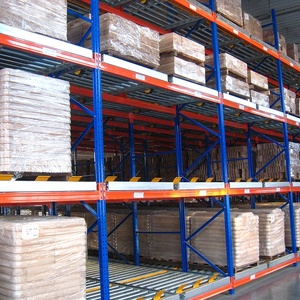
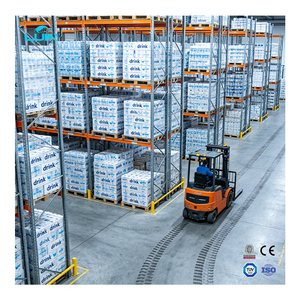
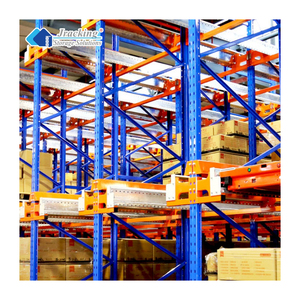
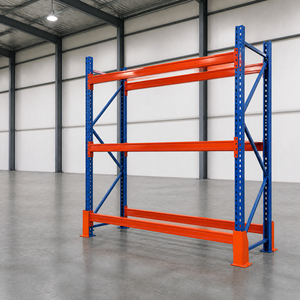
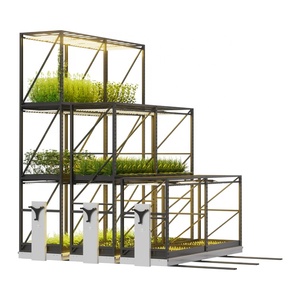
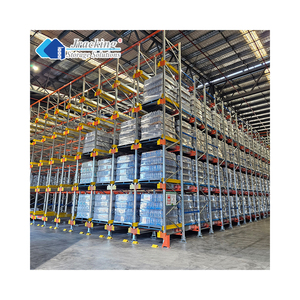
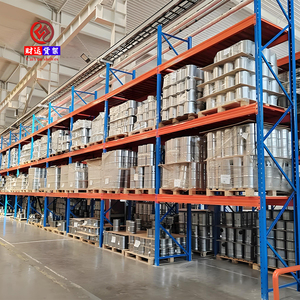
Two-Way Shuttle Pallet Racking High-Density Warehouse Storage Automatic
- Payload Capacity: 500 – 1,500 kg/pallet
- Operation Mode: FIFO / LIFO Automated
- Travel Speed: 0.8 – 1.1 m/s (Loaded)
Precision-engineered high-density storage platforms manufactured from Q235B/Q355B structural steel, optimizing spatial volumetric utilization up to 85% for distribution centers, cold chain hubs, and agricultural processing facilities.
Years of Engineering Excellence (Est. 2001)
Monthly Steel Processing Capacity
Structural Engineers & Technical Fabricators
Turnkey Projects Installed in 120+ Countries
Direct structural steel mill partnerships, continuous automated roll-forming lines, and comprehensive finite element structural analysis (FEA) assure turnkey structural safety and seamless customs clearance worldwide.
Our intelligent smart manufacturing base operates automated continuous punching presses, computerized roll-forming lines, and robotic gantry welding units, handling large containerized volume orders on guaranteed 2 to 4-week production lead times.
We hold European CE Certification (Certificate No. 2435-CPR-8605159), ISO 9001:2015 Quality Management Accreditation (No. 18624Q00169R0M), and full compliance testing against EN 15512, FEM 10.2.02, and RMI standards.
Every facility demands customized load calculations. Our engineering staff calculates dead loads, live loads, wind forces, and ground acceleration parameters for high-seismic zones (such as Chile, Peru, California, and New Zealand).
Storage structures installed in coastal, tropical, or deep freeze environments face extreme dew point condensation. We utilize a multi-stage automated pre-treatment bath followed by Swiss Gema electrostatic powder spray technology.
Structural steel shipping costs can heavily impact overall project ROI. Our logistic engineering department develops customized 3D container packing layouts for 40ft High Cube containers, preventing transport damage and lowering freight per ton.
We supply racking distributors, regional system integrators, and general EPC contractors under white-label programs. Our design team supports custom beam connector tooling, custom upright punch profiles, and color branding.
In modern high-velocity supply chains, warehouse real estate pricing per square meter and energy costs associated with climate-controlled cold storage have made conventional single-selective pallet racking economically unfeasible for high-volume inventory. High-density storage topologies represent an evolutionary shift from wide forklift access aisles (typically 3,200mm to 3,800mm) toward compact cubic storage matrixes where aisle ratios are suppressed to less than 15% of the total building footprint.
When selecting a high-density racking system from Chinese manufacturers, procurement directors must evaluate five core architectural configurations against throughput requirements, inventory SKU diversity, pallet turnover velocity (FIFO vs. LIFO), and capital expenditure amortization.
| Racking Topology | Density Index | Inventory Flow | SKU Selectivity | Forklift Travel In-Rack | Structural Risk Profile |
|---|---|---|---|---|---|
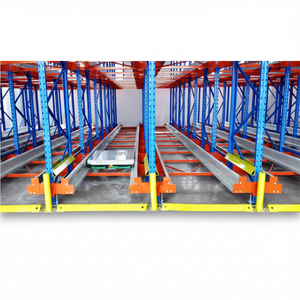
| Radio Shuttle System | Extreme (>85%) | Flexible (FIFO or LIFO) | Medium (Channel-Level) | Zero (External Lane Transfer) | Very Low (Shuttle Absorbs In-Rack Motion) |
| Drive-In / Drive-Through | High (65%–75%) | Strict LIFO / FIFO | Low (Lane-Level Batching) | High (Forklift Enters Storage Bay) | High (Frequent Upright Impact Risk) |
| Pallet Flow (Gravity Roller) | Very High (75%–85%) | Strict FIFO Automatic | Medium (Lane Dedication) | Zero (Loading/Unloading Sides Only) | Low (Brake Roller Wear Factor) |
| Push-Back Racking (Carts) | Moderate-High (60%–70%) | Strict LIFO | Medium (2–6 Pallets Deep) | Zero (Aisle Loading Interface) | Low (Mechanical Cart Centering) |
| Double-Deep Pallet Racking | Moderate (50%–60%) | LIFO (Pair-by-Pair) | Moderate (50% Immediate Access) | External Pantograph Forklift | Low (Standard Heavy Uprights) |
Structural reliability in Chinese export racking originates from raw steel metallurgy. Premium factories maintain direct procurement channels with domestic tier-one steel conglomerates (Baosteel, Shougang, Angang). For seismic and heavy-duty load conditions, Q355B (equivalent to European S355JR or ASTM A572 Grade 50) is specified over lower-grade commercial carbon steel due to its yield strength of ≥ 355 MPa and elevated tensile strength of 470–630 MPa.
High-density shuttle rails and uprights undergo continuous multi-stage roll-forming on computerized cold-roll production lines consisting of 18 to 24 forming stations. This progressive forming process minimizes residual internal stress within the steel profile's bend radii, preventing stress concentration fractures under cyclical dynamic live loading. Upright profiles utilize multi-bend omega shapes (e.g., 90×70mm, 100×70mm, 120×95mm sections with up to 12 cold-rolled folding edges), generating a high second moment of area (moment of inertia) that ensures structural rigidity with minimal steel mass per meter.
Seismic Ductility Factor: In seismic regions such as South America's Pacific Rim (Chile, Peru, Colombia, Ecuador) and Southeast Asia's Ring of Fire, racking cannot be modeled purely as a static frame. Our design office implements dynamic response spectrum analyses, upgrading base plate footprints, incorporating high-tensile anchor studs (Grade 8.8 / 10.9), and installing portal ties and longitudinal vertical bracing towers to absorb seismic ground acceleration without frame buckling.
Strategic supply chain analysis for 2025–2035: How warehouse operators and procurement executives must prepare for robotics integration, carbon footprint scrutiny, and autonomous intralogistics.
While traditional 2-way radio shuttles execute linear aisle motions, modern procurement is aggressively shifting toward 4-way autonomous shuttles capable of longitudinal and transverse lane crossing, coupled with automated vertical reciprocating lifts (VRCs). This architecture removes the necessity for manual forklift transfers between channels.
Global cold chain storage operators face escalating electricity tariffs. A compact shuttle matrix cuts refrigerated warehouse air space by 50% compared to selective racking. Future projects increasingly mandate hot-dip galvanization and low-temperature lithium iron phosphate (LiFePO4) battery packs with internal heaters.
Enterprise racking procurement contracts now demand smart sensor integration: real-time strain gauges on primary load beams, displacement sensors on uprights, and laser deflection tracking. These IoT telemetry feeds connect directly into WMS/ERP platforms, offering automated overload alarms and structural maintenance notifications.
Rather than constructing cost-prohibitive concrete civil structures, logistics hubs increasingly combine rack-supported structural steel platforms over automated shuttle lanes. This multi-tier methodology facilitates ground-level automated pallet density alongside upper-tier manual carton picking and e-commerce sortation.
International corporate sustainability mandates (ESG) require documented life cycle assessments (LCA) for industrial hardware. Top Chinese exporters now operate closed-loop wastewater recovery facilities, VOC-free electrostatic powder coating lines, and RoHS-certified non-heavy metal finishes.
Global project developers mitigate ocean freight volatility by securing standardized modular racking systems from China that allow field modifications. Standardized column punch pitches (50mm and 75mm) allow beam reconfigurations as customer pallet profiles change.
In-depth answers to critical engineering, logistics, customs compliance, and structural calculation inquiries encountered by international EPCs and logistics buyers.
Connect with our senior logistics structural engineering team. Submit your building CAD floor plan or pallet load specifications, and receive a complete turnkey 3D layout, static load analysis, and competitive factory-direct pricing within 24 hours.
Get a Quote