Heavy-Duty Storage & Dynamic Logistics Systems
Engineered cold-rolled steel solutions manufactured to European FEM 10.2.02, American RMI ANSI MH16.1, and AS4084 standards. Select verified industrial units below or contact our structural design team.
Physics, Kinematics, & Geometry of Drive-In / Drive-Through Systems
In modern logistics real estate, the cost per cubic meter of temperature-controlled or urban-adjacent warehousing represents the single largest operational expenditure outside of labor. Standard selective pallet racking configurations allocate between 50% to 62% of gross floor area entirely to operating forklift aisles. Drive-In and Drive-Through racking systems fundamentally invert this spatial equation by collapsing redundant operational aisles into continuous, uninterrupted storage tunnels, liberating up to 85% of physical warehouse footprints for active product staging.
Drive-In Configuration (LIFO Dynamics)
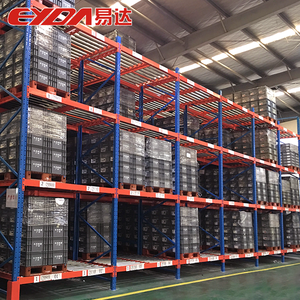
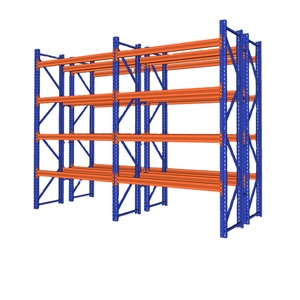
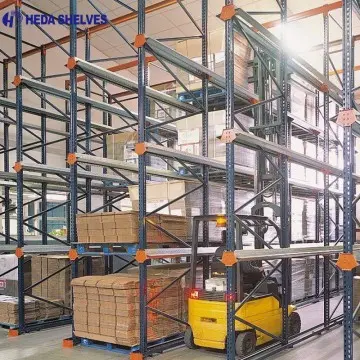
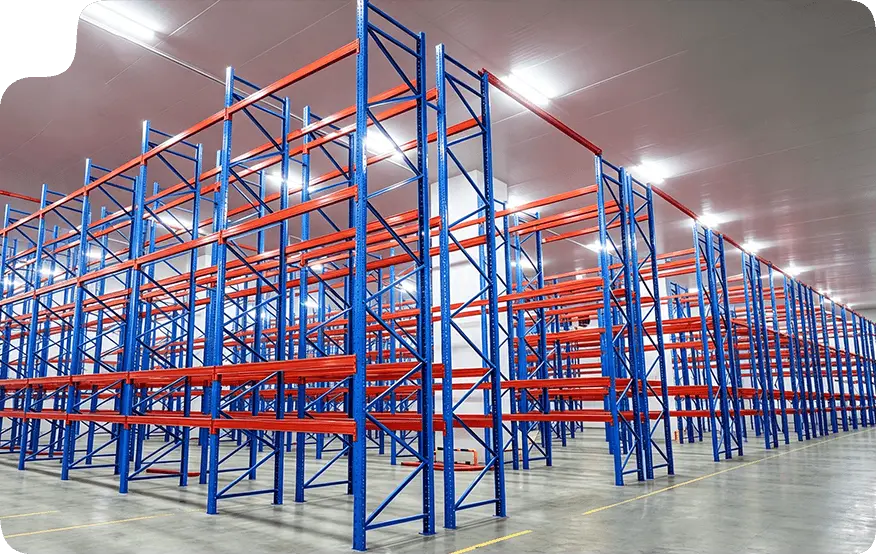
Operating on a Last-In, First-Out (LIFO) inventory protocol, Drive-In racking features a single entry and egress aisle for each storage tunnel. Counterbalanced or reach forklifts navigate physically into the inner depth of the steel bay, resting pallet payloads onto continuous horizontal side brackets known as support rail consoles. The rear end of each tunnel is stabilized by structural heavy-gauge diagonal cross-bracing (X-bracing). This setup creates an exceptionally rigid structure capable of handling massive static wind or seismic forces, making it the globally preferred standard for uniform raw ingredients, non-perishable bulk commodities, high-cube cold storage holding freezers, and closed packaging materials.
- Aisle Elimination: Replaces 5 dedicated access aisles with a single consolidated loading face.
- Back-Braced Rigidity: Full back and top structural bracing withstands heavy dynamic mast vibrations.
- Thermal Density: Dramatically lowers the kWh refrigeration demand inside sub-zero environments.
Drive-Through Configuration (FIFO Kinematics)
Conversely, Drive-Through racking provides distinct entry and exit loading faces, operating on a strict First-In, First-Out (FIFO) logistics cadence. Forklift operators deposit fresh production batches into the rear receiving aisle and pick aged stock from the forward dispatch aisle. Because the system requires unobstructed transit across both sides of the storage run, vertical back X-bracing cannot be utilized.
To counterbalance the removal of transverse rear bracing, our engineering calculation team implements overhead top portal ties, heavy-duty structural gusset box plates, and oversized base plate anchors embedded directly into concrete slabs. This design is engineered specifically for fast-moving consumer goods (FMCG), agricultural produce, poultry cold chains, pharmaceutical logistics, and chemical staging where expiration date validation is non-negotiable.
- Batch Expiration Management: Guaranteed sequential stock turnover conforming to HACCP regulations.
- Decoupled Staging: Eliminates forklift operational conflicts between intake and outgoing shipping teams.
- Overhead Portal Bracing: Reinforced top beam bridge design secures structural rigidity without rear walls.
Comparative Systems Matrix: Density vs. Selectivity Performance
Evaluating warehouse infrastructure requires balancing storage density against SKU selectivity and operational cycle times. The matrix below contrasts high-density configurations to assist logistics directors in capital expenditure (CAPEX) allocation:
| Storage Racking Architecture | Floor Density Utilization | Stock Rotation Strategy | SKU Selectivity Index | Forklift Entry Requirement | Relative Cost Per Pallet Position |
|---|---|---|---|---|---|
| Drive-In Racking | 75% – 85% | LIFO (Last-In, First-Out) | Low (Tunnel Batched) | Deep Penetration Required | Moderate (Economical High-Density) |
| Drive-Through Racking | 70% – 80% | FIFO (First-In, First-Out) | Moderate (Batch Indexed) | Dual-Sided Tunnel Entry | Moderate to Upper-Tier |
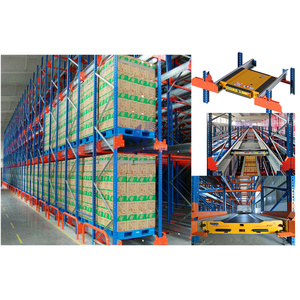
| Radio Shuttle System | 80% – 90% | FIFO / LIFO Agile | Moderate (Automated Lane) | External Aisle Only (No Entry) | High (Electromechanical Automation) |
| Gravity Pallet Flow | 75% – 85% | FIFO (Gravity Sloped Rollers) | High (Lane Dedicated) | External Loading/Unloading | High (Roller & Brake Bed Mechanics) |
| Standard Selective Rack | 35% – 45% | 100% Selective Random | Immediate 100% Access | Direct Perpendicular Lift | Baseline Economy |
Global Procurement Trends in High-Density Storage (2025–2030)
Market forces, automation integration, and localized seismic building regulations are reshaping modern high-density steel procurement. Logistics executives must incorporate these evolving parameters into current facility planning.
Hybrid Shuttle Rail Adaptability
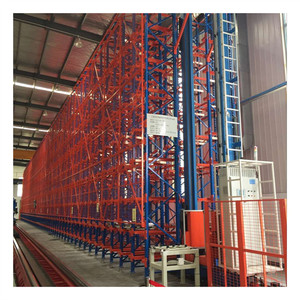
Procurement teams increasingly request Drive-In upright profiles pre-punched with universal mounting geometries. This enables warehouse operators to start with traditional forklift drive-in operations and later upgrade individual lanes to semi-automated radio shuttle carts without tearing down the existing structural steel frames.
Seismic Resilience in Coastal Rings
With massive supply chain expansions across high-risk seismic fault zones—such as the Pacific Coastline of Chile, Peru, Mexico, and Japan—procurement specifications now demand dynamic finite element analysis (FEA). Thicker base plates (≥12mm), dual chemical epoxy anchor sets, and Q355B micro-alloy high-yield steel are standard requirements.
Thermal & Sub-Zero ESG Mandates
Refrigerated warehouse power consumption drives 60% of cold chain overhead. To combat rising grid costs, international operators are adopting multi-tier Drive-In layouts extending upwards of 12 meters to optimize the cold-air envelope, backed by specialized cold-temperature powder coatings and hot-dip galvanization that prevent thermal cracking down to -30°C.
Impact Telemetry & Guided Safety
Driver fatigue during deep tunnel traversal accounts for 78% of racking damage incidents. The latest warehouse tenders mandate full-length continuous floor guide rails (structural angle or inverted steel tracks) alongside wraparound impact-resistant steel column protectors lined with shock-absorbing polyurethane dampeners.
Direct From Guangzhou: In-House Production Metallurgy
Operating a dedicated 30,000 square meter factory base equipped with automated roll-forming lines, computerized punching stations, and automated electrostatic powder coating tunnels. Every component is produced under strict ISO 9001:2015 and CE certification standards.
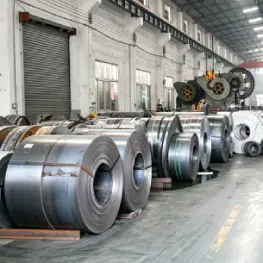
Certified Steel Ingot Inspection
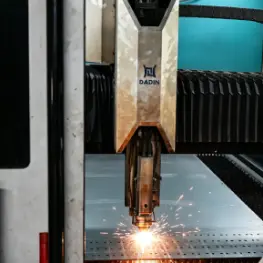
CNC High-Precision Slitting
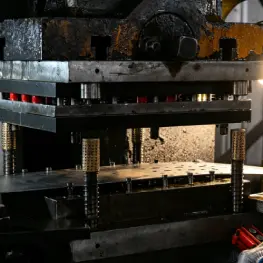
Multi-Tonnage Punching
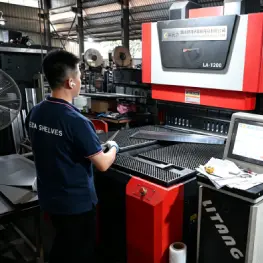
Continuous Cold Roll-Forming
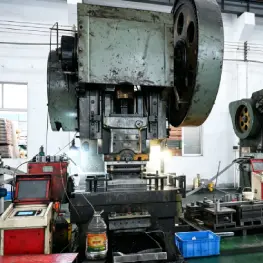
Custom Pallet Rail Profiling
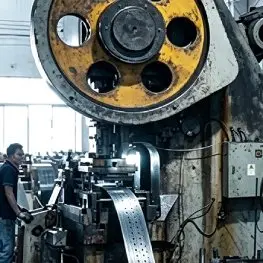
Mechanical Shot Blast Finishing
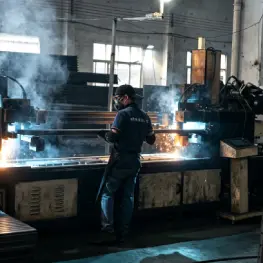
Robotic CO2 Shielded Welding
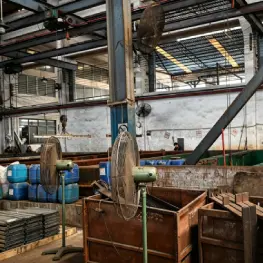
7-Stage Pre-Treatment Acid Rinse
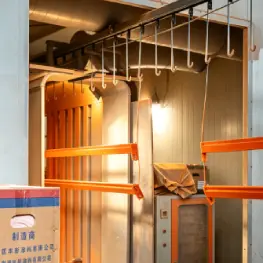
Swiss Gema Automated Powder Coat
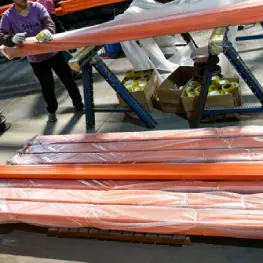
Ocean Freight Bundle Protection
Specialized South American & Global Shipping Protocols
Exporting industrial racking systems demands strict load planning and rust mitigation. Unlike standard palletized cargo, long structural upright profiles (reaching up to 11.8 meters to match 40-foot High-Cube shipping containers) are prone to transit bending, vibration rubbing, and maritime humidity corrosion during 30 to 45-day ocean voyages.
Every export shipment dispatched from our Guangzhou port facility undergoes specialized nested bundling with industrial-grade air-cushion corner caps, waterproof polyethylene wrapping, and anti-abrasion cardboard separators. Our automated container calculation software pre-plans center-of-gravity container balancing, ensuring smooth customs release and safe offloading across major global sea terminals, including Santos, Paranaguá, San Antonio, Valparaíso, Callao, Buenaventura, Cartagena, and Guayaquil.

Frequently Asked Questions: Technical & Operational Evaluation
Detailed technical responses straight from our structural design and manufacturing engineering desk to help you qualify layout parameters and prevent operational pitfalls.
What are the exact forklift mast clearance specifications required inside Drive-In tunnels?
How does Drive-In racking account for structural stability without standard beam shelf connectors?
What concrete floor slab specifications (thickness & PSI) are mandatory for high-bay installations?
What is "honeycombing" and how does it impact operational utilization rates in Drive-In storage?
Can your engineering team calculate localized seismic parameters for South American codes (NCh 2369, NSR-10, E.030)?
How do you protect Drive-In components against corrosive humidity and -25°C cold chain temperatures?
What are the lead times for containerized production and how is on-site assembly handled internationally?
Request Your Custom 3D Layout & Seismic Load Calculation
Send us your warehouse CAD floor plan, clear ceiling height, pallet dimensions, and forklift technical specs. Our senior logistics engineers will provide a complete 3D structural rendering, pallet capacity layout, and full quotation within 24 business hours.