High-Density Intralogistics & Racking Solutions for Kuwait Warehouses
Precision-manufactured in China under strict ISO 9001:2015 and CE certification standards, delivered factory-direct to Shuwaikh Port and Shuaiba Port.
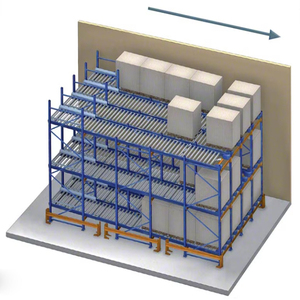
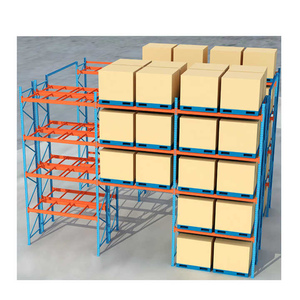
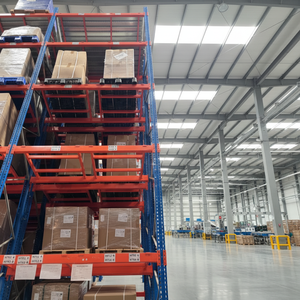
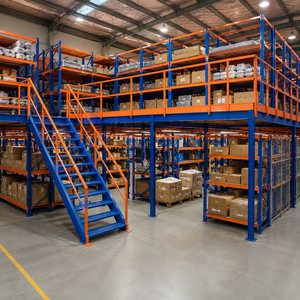
Push Back Pallet Rack Systems: Precision Engineering for the State of Kuwait
As the State of Kuwait accelerates its infrastructure realignment under the comprehensive Kuwait National Development Plan (New Kuwait Vision 2035), the nation's logistics, retail distribution, and industrial supply chain ecosystems face an urgent demand for cubic footprint optimization. In central logistics hubs such as Shuwaikh Industrial Area, Al Rai, Sabhan, Mina Abdullah, and Sulaibiya, industrial land acquisition costs have reached historic premiums. For warehouse directors, operations heads, and facility planners, the challenge is clear: how to significantly increase pallet storage density without compromising operational cycle times or requiring deep structural floor reconstructions.
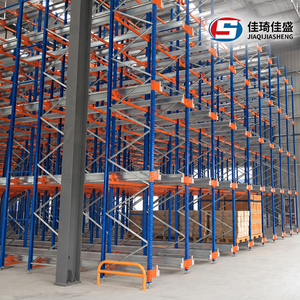
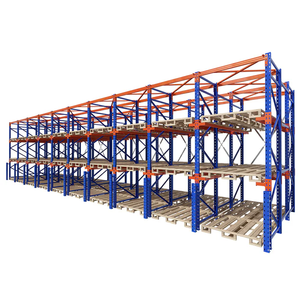
The Push Back Pallet Rack System manufactured by HEDA Shelves represents the pinnacle of nested-cart dynamic storage engineering. Operating on an inclined rail framework, push back racking offers 2 to 6 pallet-deep storage configurations. Pallets are systematically deposited on heavy-duty, low-profile rolling nested carts. When a new pallet is loaded from the front entry aisle, the forklift driver gently pushes the preexisting pallet back, exposing the next cart beneath it. Upon pallet extraction, gravitational deceleration brings the following unit load forward smoothly to the pick face. This provides optimal Last-In, First-Out (LIFO) inventory velocity, cutting overall forklift travel pathways by up to 45% compared to conventional selective pallet racking layouts.
Core Technical Dynamics: Push Back vs. Alternative High-Density Systems
Unlike drive-in racking systems where lift equipment must enter physical rack bays—frequently causing column impact damages and slowing operational cycle throughput—push back systems restrict forklift transit entirely to external access aisles. This structural segregation eliminates structural upright collisions, preserves warehouse infrastructure longevity, and substantially increases operator safety protocols.
| Engineering Attribute | HEDA Push Back Racking | Standard Drive-In Racks | Selective Pallet Racking | Pallet Flow (Live Storage) |
|---|---|---|---|---|
| Storage Density Efficiency | High (Up to 75% Space Utilization) | Very High (Up to 85% Utilization) | Moderate (35-45% Space Utilization) | Maximum (85-90% Space Utilization) |
| Inventory Flow Principle | LIFO (Last-In, First-Out) | LIFO (Last-In, First-Out) | FIFO / LIFO Direct Access | Strict FIFO (First-In, First-Out) |
| Aisle Collision Risk | Zero (Forklifts stay outside bays) | High (Vehicles operate inside lanes) | Low (Clear aisle access) | Zero (External loading & picking) |
| Cart/Lane Inclination | Calibrated 1.5% to 2.5% Pitch | Level Structural Rails | Level Load Beams | 3.0% to 3.5% Gravity Roller Beds |
| Kuwait Cold Storage ROI | Optimal (Low maintenance, dense) | Moderate (High impact repairs) | Low (Excessive chilled air volume) | High (Higher initial capital cost) |
Localized Applications Across Kuwait's Key Economic Sectors
Industrial and cold chain operators in Kuwait face distinct geographical and environmental conditions. Warehouse operations must maintain internal temperature integrity when outdoor desert ambient levels spike past 50°C (122°F) during summer peaks, alongside constant airborne saline humidity from the Arabian Gulf and high-particulate dust environments:
Refrigerated Food & Cold Logistics (Sulaibiya & Sabhan)
In cold chain and deep-freeze logistics facilities holding frozen poultry, meat, dairy products, and imported perishables, push back racking reduces empty conditioned air volume by up to 55%. Sealed, low-temperature stainless steel bearings and specialized structural grease operate seamlessly down to -30°C without mechanical seizure.
FMCG & Retail Supply Chains (Al Rai & Shuwaikh)
Designed for major supermarket chains and hypermarket distribution networks managing medium-velocity SKUs with batch lots of 3 to 10 pallets per product line. Push back allows simultaneous loading and picking across different vertical beam levels without interfering with adjacent lane inventory.
Pharmaceuticals & Petrochemical Ancillaries (Sabhan & Shuaiba)
Kuwait's strict healthcare storage regulations demand dust-sealed finishes and high load-bearing steel components. Our epoxy-polyester electrostatic powder coating prevents particle accumulation and resists industrial chemical corrosion, delivering clinical cleanability.
Material Engineering Specifications: Raw Steel, Tolerances & Surface Treatment
Every push back racking system fabricated in HEDA's 30,000 m² smart production facility starts with certified prime hot-rolled coils slitted and cold-roll formed from high-tensile Q235B and Q355B structural steel grades. Structural upright columns feature continuous multi-bend omega (Ω) profiles engineered to optimize moment of inertia, torsional resistance, and vertical buckling thresholds.
Our multi-tiered nested carts are laser-cut from reinforced plate steel, ensuring dimensional squareness down to ±0.5mm tolerances. This absolute precision prevents cart binding, wheel derailment, or eccentric load tilting along the sloped nested track. The rolling assembly incorporates high-capacity deep-groove flanged steel wheels shielded with heavy-duty dirt seals, ensuring smooth rolling performance under constant 1,500kg per pallet unit weights.
End-to-End Certified Factory Manufacturing Workflow
From mill raw materials to final export crating, HEDA applies strict 10-phase production quality controls before any structural package departs for Kuwaiti sea terminals:
Material Inbound QC
Spectrographic alloy verification, yield point testing, and thickness micrometric inspection.
Precision CNC Slitting
Automated cutting coils into structural coil strips with zero burr and exact edge squareness.
Automated Hole Punching
50mm/75mm pitch diamond and teardrop punching utilizing high-speed continuous CNC presses.
Cold Roll Forming
Gradual 18-station cold roll profiles ensuring zero stress fracturing across column corners.
Robotic Mig Welding
Automated multi-axis robotic welders for beam connectors and push back cart frames.
Degreasing & Pickling
Deep multi-tank chemical pre-treatment removing surface oxides, mill oils, and scale.
Zirconium Phosphating
Nanotech chemical passivation layer ensuring extreme powder coating adhesion and rust prevention.
Electrostatic Coating
Automated Swiss Gema powder spray systems curing at 200°C for superior abrasion durability.
Trial Pre-Assembly
Cart tracking calibration and structural load simulation checking tolerances under load.
Heavy Export Packaging
Steel strapping, protective bubble cushions, corner protectors, and container dunnage packing.
Logistics, Customs Clearance & Shipping Route to Kuwait
Shipping heavy-gauge structural racking systems from Guangzhou or Shenzhen to Kuwait requires deep freight management expertise. With over 25 years of international export pedigree, HEDA Shelves engineers our bundling dimensions and weight balances around 40-foot High Cube (40HQ) maritime containers. Upright frames are custom-nested, while step beams and push back tracks are bundled on steel runners, allowing rapid forklift unloading at warehouse staging yards in Shuwaikh or Shuaiba.
Our documentation department prepares comprehensive Kuwait General Directorate of Customs and Public Authority for Industry (PAI) compliance sets, including Certificate of Origin (COO), Chamber of Commerce verification, Commercial Invoices, Packing Lists with component labeling, and CE Structural Conformance Certificates (EN 15512:2020 / EN 15620). Full maritime transit typically spans 20 to 28 days via direct Arabian Gulf shipping lines.
Frequently Asked Questions: Sourcing Push Back Racks for Kuwait
Detailed technical, logistical, and commercial answers for Kuwaiti procurement managers, engineers, and project developers.
Can push back racks withstand Kuwait's 50°C+ summer climate and dust?
Yes. All HEDA steel structures undergo multi-stage pickling, phosphating, and electrostatically applied thermo-curing powder coating (60-80 microns thickness). Unlike wet spray coatings that soften and bubble in Kuwait's high ambient heat and humidity, our cross-linked epoxy-polyester powder finish remains solid, abrasion-resistant, and non-reactive across temperature ranges from -30°C to +65°C.
Are special forklifts required to operate push back systems?
No special material handling equipment is required. Push back racking operates efficiently with standard counterbalance forklifts and reach trucks already present in Kuwait warehouses. The push back slope (calibrated at 1.5% to 2.5%) requires only minimal additional vehicle pushing force, easily supplied by standard 1.5-ton to 3.0-ton electric or diesel lift trucks.
How do nested carts accommodate different Kuwaiti pallet sizes?
We engineer our nested rolling carts around specific client pallet footprints, including European standard pallets (1200x800mm), ISO standard pallets (1200x1000mm), and Middle Eastern timber skids (1100x1100mm). The steel cart surfaces feature cross-decking and safety stops that prevent weak or broken pallet boards from snagging on the incline tracks.
What is the typical manufacturing lead time and ocean shipping transit?
Standard fabrication for a multi-lane push back project takes 2 to 4 weeks after drawing and structural calculation approval. Maritime transit from South China export ports (Guangzhou, Shenzhen, Foshan) to Shuwaikh Port or Shuaiba Port ranges from 20 to 28 days depending on the selected ocean carrier.
How is mechanical installation handled inside Kuwait?
Every shipment arrives with numbered components, 3D exploded layout drawings, and step-by-step assembly guides. Kuwaiti project contractors can easily install the modular system using local rigging teams. In addition, HEDA provides continuous video engineering supervision and can dispatch certified overseas commissioning engineers on-site upon request.
What information is needed to obtain a free 3D CAD design & structural proposal?
Please share your warehouse architectural DWG/PDF drawings, clear overhead ceiling height (excluding fire sprinklers and AC ducts), exact pallet dimensions and maximum loaded weights, forklift mast lift parameters, and inventory throughput velocity. Our structural team returns complete 3D renderings and price quotes within 24 business hours.
Ready to Maximize Your Kuwait Warehouse Cubic Capacity?
Connect directly with HEDA Shelves' senior structural storage engineers. Receive a complete 3D warehouse layout, technical load calculation sheets, and factory-direct export quotation within 24 hours.