25+ Years
OEM/ODM Manufacturing Authority
30,000 t
Monthly Structural Output Capacity
NTC-RCDMX
High-Ductility Seismic Compliant
10,000+
Global Warehousing Implementations
Industrial Product Catalog
Featured Warehouse Storage & Material Handling Systems
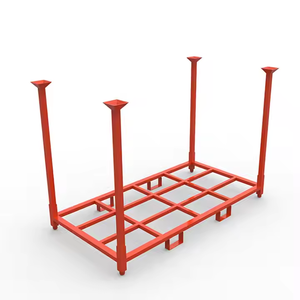
Customized steel pallet racking, heavy-duty stacking frames, dynamic gravity roller rails, and industrial shelving engineered to accommodate high vertical clearances and demanding cycle duties.
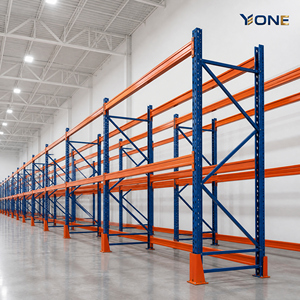
Certified Q235B / Q355B Steel
Heavy Duty Pallet Racking Warehouse Storage Rack System Q235B Steel for Freight Distribution With Pitch Levels
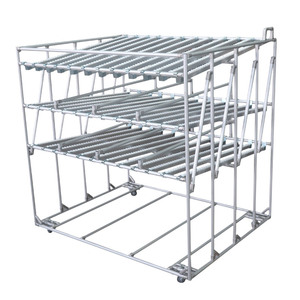
First-In First-Out Gravity
Roller Track Pipe Rack System Flow Roller Rack Assemble Aluminum Flow Rails for Shelf
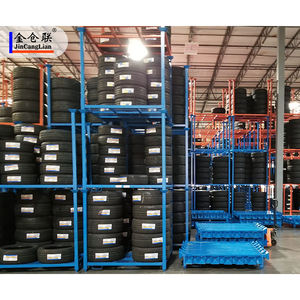
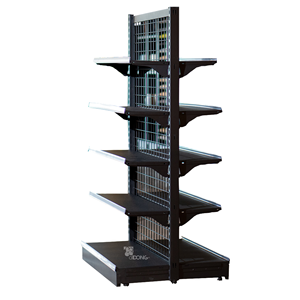
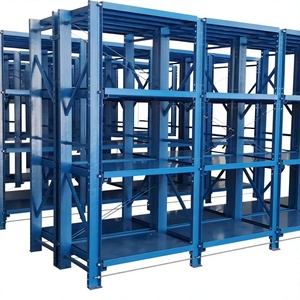
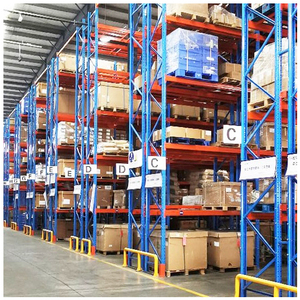
Seismic Engineering Criteria for CDMX Soft-Soil Basins (Zona del Lago)
Structural compliance with NTC-RCDMX (Normas Técnicas Complementarias) & RMI ANSI MH16.1 specifications.
Warehousing operations situated across Mexico City (CDMX) and the adjacent Estado de México metropolitan belt—encompassing Cuautitlán, Tultitlán, and Tepotzotlán (the CTT corridor)—operate within one of the most structurally complex geotechnical zones on earth. Due to the high plastic lake-bed clay formations (Zona III / Zona del Lago), seismic wave resonance poses a catastrophic threat to tall, unbraced industrial racking configurations during high-magnitude, distant-epicenter seismic events.
As a seasoned OEM/ODM manufacturer, our engineering team does not apply generic structural designs to Mexican facilities. We integrate direct dynamic response spectra analysis calibrated to the geotechnical coordinates of your site. Uprights are fabricated from cold-rolled Q235B and high-yield Q355B structural steel, featuring enlarged oversized baseplates, multi-anchor anchoring patterns using heavy-duty chemical capsules or mechanical wedge anchors, and proprietary heavy cold-formed bracing matrices. Every high-bay selective pallet rack or drive-in system calculated for Mexico City is optimized to sustain base shear amplifications, preventing joint shear rupture and plastic frame buckling under intense spectral acceleration.
01
Ductile Frame Joints
Multi-tang connector pins and thick end-plates provide high rotational ductility, absorbing cyclic seismic excitation without premature weld shearing along longitudinal moment frames.
02
Subsoil Footing Analysis
Thickened baseplate profiles (12mm–20mm) disperse dynamic point loads across industrial concrete slabs, mitigating concrete punch-failure on soft-bed clay foundations common to Texcoco basins.
03
Dynamic Back-Bracing
Structural horizontal and vertical X-bracing sets transfer cross-aisle and down-aisle seismic forces safely into the primary slab anchor points, reducing lateral drift and progressive collapse.
Application Scenarios Across Mexico City's Industrial Corridors
Targeted material handling strategies for Nearshoring manufacturing hubs, 3PL giants, and national FMCG supply lines.
The Greater Mexico City logistics infrastructure is split between high-velocity fast-moving consumer goods (FMCG) distribution centers, cross-docking cold stores, e-commerce fulfillment megahubs, and precision automotive tier-1 fabrication lines. Each sector demands exact racking kinematics:
| Logistics Hub Zone | Primary Industrial Sector | Recommended Racking Architecture | Load Duty & Structural Benefit |
|---|---|---|---|
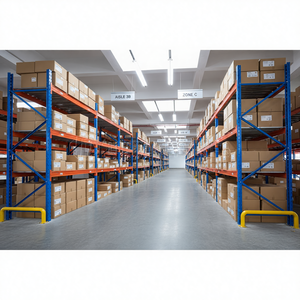
| CTT Corridor (Cuautitlán, Tultitlán, Tepotzotlán) | E-commerce Fulfillment (Mercado Libre, Amazon) & Retail 3PLs | Selective Pallet Racking & Multi-Tier Rack Supported Mezzanines | 100% SKU selectivity, 1,000 to 3,500 kg per beam level; maximizes 12-14m vertical warehouse clearance. |
| Vallejo Industrial Zone (Azcapotzalco) | Last-Mile FMCG, Food & Beverage Urban Logistics | Push Back Carts & Gravity Flow Roller Rails | High-density FIFO/LIFO turnover; reduces internal forklift travel distances in space-constrained inner-city warehouses. |
| Toluca - Lerma & Tlanepantla Corridor | Automotive Tier-1 & Stamping, Plastic Injection Molding | Adjustable Die/Mold Racks & Heavy Cantilever Systems | Up to 3,000 kg per shelf on pull-out slide decks; open horizontal arms for steel bars, extruded tubes, and dies. |
| Iztapalapa & Central de Abasto Surroundings | Perishable Goods Cold Storage & Frozen Seafood/Produce | Semi-Automated Radio Shuttle & Galvanized Drive-In Racks | Sub-zero operational resilience down to -30°C; maximum thermal volumetric cube utilization, minimal lane wastage. |
By engineering specialized racking configurations, operations in these critical zones achieve up to 65% higher storage density while maintaining strict compliance with local NOM and safety protocols.
Emerging Warehouse Trends in the Valley of Mexico
The convergence of nearshoring expansion, vertical space maximization, and automated material handling.
Driven by foreign direct investment and nearshoring reshoring from Asia to North America, class-A industrial real estate in Mexico City and surrounding states maintains unprecedentedly low vacancy rates (< 1.5%). This land scarcity has created clear macro trends across modern warehouse design:
1. Vertical High-Bay Optimization: Traditional 8-meter clear heights are obsolete in new speculative distribution parks. Modern facilities regularly clear 12 to 15 meters. Our OEM/ODM capabilities produce monolithic, roll-formed continuous upright columns up to 12+ meters without splicing, drastically enhancing structural stiffness and lowering labor installation timelines in industrial parks like San Martin Obispo and CPA Logistics Center.
2. Semi-Automated Radio Shuttle Convergence: Labor productivity and forklift aisle safety are paramount. Mexican supply chain operators are rapidly replacing wide-aisle counterbalance drive-in layouts with semi-automated radio shuttle pallets. These systems cut driver handling times by up to 50% and virtually eliminate structural upright column impacts caused by forklift collisions inside drive-in tunnels.
3. Advanced Anti-Corrosive Electrostatic Finishing: Operating conditions in temperature-controlled pharmaceutical warehouses or produce facilities near central transport axes demand non-toxic, long-lasting surface treatments. We utilize fully automated ten-stage pickling, phosphating, and nano-ceramic pre-treatments followed by thermosetting electrostatic powder coating. This results in an impact-resistant, scratch-proof surface tested beyond 500 hours of salt spray exposure, preserving warehouse assets indefinitely.
Factory Direct Value
Why Major Industrial Importers Rely on Our Factory
Full-chain internal manufacturing, global quality audits, and end-to-end container logistics delivered directly from our 30,000 m² integrated plant to Veracruz, Manzanillo, and dry inland terminals across Greater Mexico City.
⚙
25+ Years Industrial Mastery
Founded in 2001, providing advanced structural calculations and cold roll-forming reliability across 120+ countries worldwide.
📐
Complimentary 3D & CAD Engineering
We draft complete warehouse layouts, structural load assessments, and seismic displacement models tailored to your Mexican site at zero charge.
🛡
Certified Quality Control
CE Certified (No. 2435-CPR-8605159) & ISO 9001:2015 approved production line with strict raw material batch yield testing and dimensional tolerances.
🚚
Logistics & Container Optimization
Pre-sorted, palletized components numbered for swift on-site mechanical erection, maximizing 40HQ container cube volume and cutting landed freight costs.
10-Stage Precision Production Assurance
Complete in-house control from coil slitting to protective maritime packaging.
Unlike trading intermediaries, our factory houses automated continuous multi-station cold roll-forming lines, computerized CNC punching arrays, and robotic welding cells. Our 10-stage process includes:
1. Prime Steel Slitting & Inspection: Mill-certified high tensile strip coils (Q235B / Q355B).
2. CNC High-Speed Punching: Precision 50mm and 75mm pitch diamond/teardrop slot arrays.
3. Progressive Cold Roll-Forming: Uniform beam and omega-profile upright fabrication.
4. Robotic Jig Welding: High-penetration seam welding on box beams, baseplates, and load brackets.
5. Surface Shot Blasting & Polishing: Elimination of mill scale and weld spatter.
6. Acid Pickling & Phosphating: Complete grease removal and chemical iron-phosphate bonding.
7. De-ionized Water Rinsing: Clean substrate preparation prior to coating.
8. Electrostatic Powder Coating: Automated reciprocal spray booth applying lead-free epoxy-polyester resins.
9. High-Temperature Curing Tunnel: 200°C polymerization ensuring scratch-proof mechanical elasticity.
10. Structural QC & Export Bundling: Thickness inspection, ultrasonic weld checks, and timber-cushioned maritime container packing.
Procurement Clarity
Frequently Asked Questions by Mexico City Buyers
Direct answers addressing maritime transit, customs clearance, seismic documentation, and turnkey installation support.
Q
What shipping routes and transit times apply to Mexico City imports?
We ship Full Container Loads (FCL 20GP/40HQ) from major South China ports directly to Manzanillo (Pacific) or Veracruz (Gulf). Typical ocean transit takes 20 to 28 days. From port, intermodal rail (Ferromex/KCSM) or bonded motor freight delivers directly to CDMX industrial parks, Pantaco inland dry port, or Toluca customs bonded warehouses within 2 to 4 days.
Q
How do you handle seismic structural calculations for Mexico City permits?
Our structural department compiles formal mechanical calculation dossiers based on RMI and Eurocode principles, calibrated against the seismic spectral acceleration coefficients required by the Mexico City Construction Regulations (Reglamento de Construcciones para el Distrito Federal and its Normas Técnicas Complementarias). We provide load capacity plaques, anchor calculations, and full engineering diagrams for review by your local DRO (Director Responsable de Obra).
Q
Can you manufacture custom dimensions to fit existing warehouse columns?
Yes. As a pure OEM/ODM industrial manufacturer, we customize frame depths (e.g., 1,000mm, 1,100mm to match 48x40" GMA or standard 1,200x1,000mm Mexican pallets), clear beam lengths, column profiles, baseplate sizing, and clear portal aisle ties to navigate building roof trusses, fire sprinklers, and internal building column bays without losing pallet positions.
Q
How is on-site installation managed across the State of Mexico (Edomex)?
Every container arrives with clear color-coded packaging, labeled part identifiers, and high-definition CAD mechanical erection schematics. Mexican 3PLs and general contractors can install our modular click-and-bolt systems using standard local rigging crews. Alternatively, our factory engineers deliver real-time remote technical coordination or dispatch seasoned installation supervisors for large-scale logistics centers.
Q
What documentation is supplied for Mexican customs importation?
We provide clean, fully compliant international trade files: Commercial Invoices, detailed Packing Lists with net/gross weights and HS Code designations (such as 7308.90 for steel structures), Original Bills of Lading, Mill Test Certificates (MTC 3.1) proving steel yield strengths, and Certificate of Origin documents to streamline import clearance at Manzanillo or Veracruz through your chosen Mexican customs agent (Agente Aduanal).
Q
What is the standard production cycle and steel warranty?
Backed by our 30,000-ton monthly capacity, standard medium-to-large warehouse orders are fabricated within 2 to 4 weeks following 3D CAD drawing approval. All steel components are guaranteed against structural failure, weld defects, or premature coating delamination under standard operating loads with a comprehensive multi-year warranty.
Transform Your Warehouse Volumetric Efficiency Today
Send our senior engineering team your warehouse architectural floor plan, target pallet specifications, and forklift operational clear heights. We deliver comprehensive 2D/3D CAD layouts, structural load ratings, and an itemized factory-direct quote within 24 hours.