Factory-Direct Push Back & Pallet Racking Systems Ready for Russia
Engineered with Q355D cold-resistant structural steel, telescopic low-profile nesting carts, and high-precision sealed bearings designed for smooth operation from -35°C to +40°C.
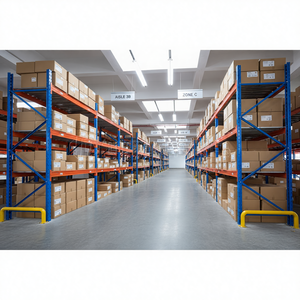
Wholesale Warehouse Racking System Heavy Duty Metal Iron Shelving Push Back Pallet Systems
- Load capacity: 500–1,500 kg / pallet
- Structural nesting nested cart design
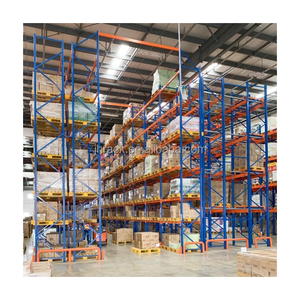
Non-Standard Customized Heavy Duty Warehouse Pallet Shelving Push Back Rack
- Tailored for EUR (800x1200) & FIN (1000x1200)
- Galvanized wire decking & rail integration
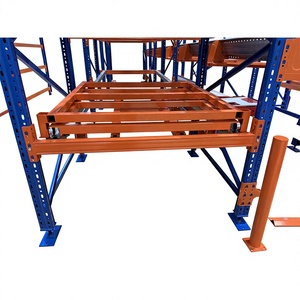
Factory Industrial Push Back Rack For High-Density LIFO Warehouse Storage System
- 75% floor footprint space utilization
- Low-slope engineered rolling rail (2.5°)
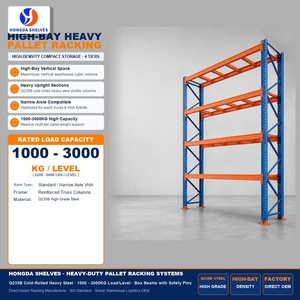
Push Back Pallet Rack Heavy Duty Multi-Tier High Density for Logistics Centers
- Multi-tier configurations up to 12m height
- Forklift collision protection frame barriers
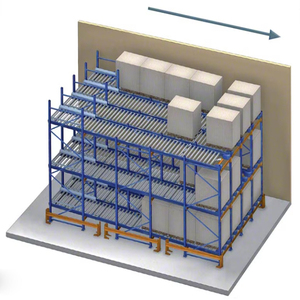
Industrial Heavy-Duty Gravity Roller Conveyor & Push Back Food Storage Racking
- Food-grade powder finish (RoHS compliant)
- Integrated centrifugal speed safety controllers
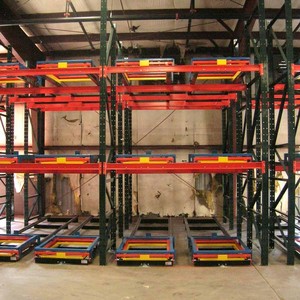
Peterack CE Heavy Duty Warehouse Racking Storage Shelf Push Back Pallet System
- EN 15512 & CE 2435-CPR-8605159
- Certified Q235B & Q355B cold-rolled steel
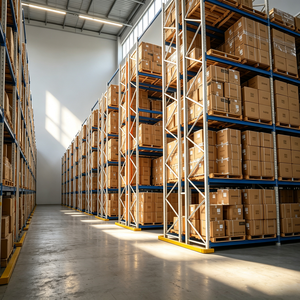
Industrial Heavy Load Selective Pallet Racking Adjustable Beam Height System
- 100% selectivity for mixed SKUs
- Pitch adjustable by 50mm / 75mm increments
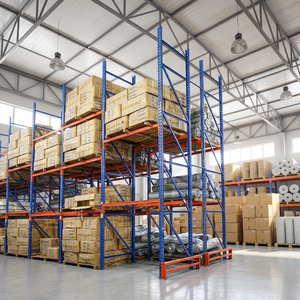
Galvanized Steel Pharma Industrial Warehouse Heavy Duty Pallet Rack
- ISO 1461 Anti-corrosion treatment
- Designed for cold stores (-30°C) & pharma GDP
Kinematics & Engineering Principles of Push Back Dynamic Racking Systems
In high-throughput Class-A logistics facilities throughout the Moscow metropolitan area, real estate scarcity along the MKAD (Moscow Ring Road) and TsKAD (Central Ring Road) logistics corridors has driven modern warehousing toward ultra-high cubic density. Push back pallet racking represents the premier dynamic mechanical solution that eliminates dead aisle space while avoiding the mechanical fragility and power reliance of automated shuttle systems.
A push back racking system functions on an inclined nested cart trolley chassis operating inside deep-storage lanes. Pallets are deposited sequentially onto structural steel nesting trolleys that travel along dedicated structural C-profile or boxed structural steel rails. The first unit pallet is placed directly onto the top cart by the material handling forklift operator. When staging the second pallet, the forklift operator pushes back the first pallet gently, exposing the second nesting cart nested immediately underneath. In a 4-deep configuration, the process repeats until the final pallet is positioned directly onto the structural support rails at the bay entry. When a pallet is unloaded from the front picking face, gravity automatically propels the remaining pallets forward at a controlled rate, guaranteeing immediate pick-face replenishment under a Last-In, First-Out (LIFO) inventory management protocol.
Critical to reliable push back operation in Russian logistics centers is the precise mathematical calibration of the gravity slope. HEDA Shelves calculates rail inclination at strictly 2.5% to 3.2% (approx. 1.5° to 1.8°) depending on the total unit load mass and the pallet bottom timber geometry. Insufficient slope creates cart stalls (“dead bays”), while excessive slope generates excessive impact force against front structural beam stop dampers. By deploying high-precision multi-roller flanged bearing assemblies sealed against dust and congealed low-temperature grease, our systems achieve absolute operational stability with minimum friction coefficients.
Technical Specification Comparison: Push Back Lane Depth Configurations
| Lane Depth | Trolley Configuration | Standard Pallet Compatibility | Rail Inclination Gradient | Operating Temperature Range | Aisle Space Saving vs Selective |
|---|---|---|---|---|---|
| 2-Pallet Deep | 1 Nested Trolley + 1 Rail Position | EUR (800x1200) / FIN (1000x1200) | 2.5% Slope (1.43°) | -35°C to +40°C | +30% Storage Density |
| 3-Pallet Deep | 2 Nested Trolleys + 1 Rail Position | EUR (800x1200) / Standard Russian | 2.8% Slope (1.60°) | -35°C to +40°C | +45% Storage Density |
| 4-Pallet Deep | 3 Nested Trolleys + 1 Rail Position | Dual-Flange Multi-Spec Carts | 3.0% Slope (1.72°) | -30°C to +40°C | +60% Storage Density |
| 5 to 6-Pallet Deep | 4–5 Low-Profile Steel Chassis Carts | Customized Stamped Steel Runners | 3.2% Slope (1.83°) | -25°C to +40°C | +75% Storage Density |
Metallurgical Resiliency & Russian Cold-Chain Applications (-35°C)
A primary failure mode of structural steel racking imported into Moscow, the Urals, and Siberian distribution centers is ductile-to-brittle transition embrittlement caused by severe sub-zero winter temperatures. Standard structural carbon steels (such as conventional commercial Q235B) experience a drastic reduction in Charpy V-notch impact toughness when ambient temperatures fall below -15°C, introducing catastrophic crack propagation risks under the shock loads of forklift loading and unloading.
To eliminate this hazard for Russian cold storage operators and unheated dry distribution facilities in the Moscow Oblast (such as logistics hubs in Podolsk, Chekhov, and Noginsk), HEDA Shelves engineers structural push back uprights and load-bearing cart chassis using normalized low-alloy structural steel Q355D or Q355E. These grades are strictly tested to verify minimum impact energy ratings of ≥34 Joules at -20°C and -40°C respectively, in full alignment with Russian GOST 19281-2014 and building standard SNiP II-23-81. Furthermore, every rolling bearing utilizes synthetic fluorosilicone or ester-based low-temperature lubricants that prevent grease crystallization and seizure down to -45°C, guaranteeing unimpeded cart translation in deep-freeze ice cream, meat, and frozen seafood cold stores.
Moscow Application Scenarios & Strategic Deployment Profiles
How leading logistics operators, FMCG retailers, and pharmaceutical distribution networks across the Moscow agglomeration optimize warehouse ROI with push back racking.
Deep-Freeze & Cold Chain Distribution Hubs
Refrigerated warehouse facilities around Domodedovo and Sheremetyevo face massive electricity costs per cubic meter of chilled volume. Push back systems eliminate 60% of forklift travel aisles required by standard selective racks, maximizing cubic storage density for frozen poultry, dairy products, and imported perishables without the maintenance downtime of automated radio-shuttle batteries in sub-zero environments.
Operational Temp: -18°C to -30°CE-Commerce Sorting & Fulfillment Staging
Supplying the relentless fulfillment demands of Russian e-commerce giants (such as Wildberries, Ozon, and Yandex Market) in industrial parks along the TsKAD. Push back racks serve as high-density cross-dock staging buffers at outbound loading docks. 3 to 4-deep lanes allow palletized batches of fast-moving SKUs to be rapidly staged and dispatched with zero forklift travel inside the rack bay.
High Throughput Batch BufferPharmaceutical & FMCG Clean-Room Buffers
Russian GDP regulations demand strict batch segregation and zero floor-level contamination. In pharmaceutical logistics warehouses located in Khimki and Podolsk, push back systems engineered with hot-dip galvanized or electrostatic thermosetting powder coatings provide total hygienic wash-down capabilities while maintaining strict individual SKU lane dedication for audited quarantine and release batches.
GDP & Sanitization CompliantEmerging Warehouse & Logistics Racking Trends Across Moscow
Key economic and supply-chain drivers reshaping racking specifications in Russia's central economic territory.
Record Class-A Rental Rates
With Class-A warehouse vacancy rates in the Moscow region dropping below 1.2%, industrial rental rates have surged to historic highs. Warehouse operators can no longer afford wide, inefficient forklift aisles. Converting traditional selective layouts to high-density push back increases storage capacity by 45% to 75% without expanding building footprints.
Floor Space ROI MaximizationForklift Operating Cycle Compression
Unlike drive-in racking where forklifts must navigate deep inside structural rack bays—substantially increasing pallet cycle times and vehicle collision damage—push back racking restricts forklift activity strictly to the outer aisle. Cycle times decrease by over 40%, safeguarding structural steel columns from vehicle impact.
Asset Protection & SpeedChina-Europe Freight Rail Logistics
Direct containerized rail freight via the Manzhouli-Zabaikalsk and Khorgos-Altynkol railway corridors into Vorsino, Bely Rast, and Silikatnaya logistics terminals in the Moscow Oblast has cut transit times from South China to 16–22 days, making factory-direct Chinese racking systems significantly more agile than European legacy brands.
Direct Rail Delivery: 18 DaysRigorous GOST Safety Auditing
Russian occupational safety regulations (Rostekhnadzor) enforce strict adherence to GOST R 55525-2017 standards for dynamic racking load calculations, column verticality tolerances, and annual static load certification testing. Chinese manufacturers must deliver full engineering calculation passports to pass state inspection.
GOST R Structural ValidationGuangzhou HEDA Shelves: 25 Years of Global Racking Engineering
Founded in 2001, Guangzhou Heda Shelves Co., Ltd. operates a state-of-the-art 30,000 m² manufacturing facility with an output capacity exceeding 30,000 metric tons per month. Serving over 120 countries, our dedicated Russian engineering department delivers fully customized push back, pallet racking, and mezzanine systems with end-to-end technical accountability.
10-Step Controlled In-House Manufacturing Protocol
Frequently Asked Questions: Importing Racking to Moscow
Direct, engineering-backed answers addressing structural conformity, customs clearance, transit logistics, and sub-zero operational reliability.
Can your push back racking systems obtain Russian GOST R 55525-2017 certification?
Yes. All HEDA Shelves warehouse systems are engineered in strict compliance with the structural calculation requirements of Russian standard GOST R 55525-2017 (“Storage equipment. Demountable (collapsible) racking. General technical specifications”) as well as European standard FEM 10.2.02. We provide our Russian clients with full mechanical design documentation, structural strength calculation passports, welding quality certificates, and raw material mill sheets required by Russian accredited certification agencies for technical passport issuance and annual safety inspection commissioning.
How do you safeguard push back carts against sticking or failure in unheated winter warehouses?
In unheated dry logistics centers and sub-zero cold rooms in the Moscow region, low temperatures can cause standard industrial lubricants to freeze and steel components to contract. We solve this problem via three specific engineering safeguards: first, we specify specialized low-temperature, deep-groove ball bearings lubricated with aerospace-grade fluorosilicone greases rated down to -45°C; second, we engineer generous lateral wheel-to-rail clearance tolerances to accommodate thermal contraction; third, our structural cart tracks utilize an open C-channel profile with self-cleaning debris diverters so that pallet debris, ice crystals, and dust cannot jam the cart wheels.
What container shipping methods and rail routes do you utilize for delivery into Moscow?
For shipments originating from our factory in Guangzhou/Foshan, we provide two primary logistics routes into the Moscow region. The fastest and most reliable route is direct multimodal containerized rail freight (China-Europe Railway Express) crossing through the Manzhouli or Zabaikalsk border ports directly into Moscow freight hub stations, including Vorsino (Kaluga region), Silikatnaya, Khovrino, and Bely Rast. Typical rail transit duration is 16 to 22 calendar days. For larger, budget-sensitive bulk shipments, we route 40ft High Cube (40HQ) containers by sea to the port of Vladivostok or St. Petersburg, transshipping via broad-gauge rail directly to your designated customs clearance bonded warehouse.
Can your nesting carts support both EUR-pallets (800x1200mm) and Russian standard pallets (1000x1200mm)?
Yes. Many Russian 3PL and FMCG distribution warehouses handle an irregular mix of standard European pallets (EUR1, 800×1200 mm) alongside wider Finnish pallets (FIN) and Russian GOST 9078-84 standard pallets (1000×1200 mm), as well as occasional damaged wood skids. HEDA Shelves engineers universal wide-chassis nesting trolleys fitted with welded cross-flange steel supports or integrated heavy-duty galvanized wire mesh decking. This design ensures both 800mm-wide and 1000mm-wide pallet footprints rest securely across the cart chassis without the danger of bottom-board deflection or cart hang-ups.
How is mechanical installation handled on-site in Moscow logistics facilities?
Every racking system dispatched from our factory is engineered for modular bolt-together assembly with zero on-site welding required. All structural upright frames, beam tiers, inclined rails, and nesting carts are CNC-numbered with matching reference tags corresponding directly to our detailed CAD erection assembly drawings. We provide comprehensive step-by-step 3D visual manuals and bilingual video guidance. For major warehouse installations exceeding 2,000 pallet positions, we can dispatch factory field engineers directly to Moscow to supervise local Russian installation teams or coordinate turnkey erection through our certified local Russian installation partners.
What documentation and customs codes (TN VED) do you provide for Russian customs clearance?
We supply a complete export documentation suite to facilitate seamless customs clearance at Moscow regional customs terminals (including Sheremetyevo, Domodedovo, and Vorsino customs posts). Our documentation includes official Commercial Invoices, detailed bilingual Packing Lists with precise gross/net component weights, Certificates of Origin (Form A or General), Mill Test Certificates, and Certificate of Conformity drafts. We strictly declare our systems under standard Eurasian Economic Union (EAEU) Harmonized Customs Codes (TN VED 7308 90 590 0 • “Other structures and parts of structures of iron or steel”), ensuring smooth clearance without administrative delays.
Request a Customized Push Back Racking Layout & Engineering Quotation
Provide your warehouse floor dimensions, ceiling clear heights, pallet load characteristics, and storage volume targets. Our structural engineering department will deliver a complimentary 3D spatial layout, structural load analysis, and complete CIF Moscow budget breakdown within 24 hours.
- Free CAD floor plan & 3D layout rendering
- Structural calculations matching GOST R 55525
- High-grade Q355D cold-resistant metallurgy
- Direct container rail shipment to Moscow (18 Days)
Connect with Senior Engineering
Direct technical consultation with zero intermediaries. Speak directly to our senior structural racking engineers.
Send an Inquiry