Engineered Racking Systems & High-Density Pallet Solutions
Precision-manufactured cold-rolled Q235B/Q355B structural steel systems engineered for global supply chains, cold storage facilities, and high-throughput distribution hubs across Israel.
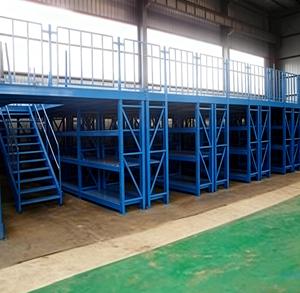
Industrial Multi-Layer Mezzanine Floor Warehouse Storage Rack Kits with Staircase Systems
Technical Specs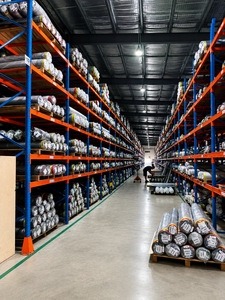
Multi-Level Warehouse Heavy Duty Rack System High-Stack Storage Steel Pallet Racks
Technical Specs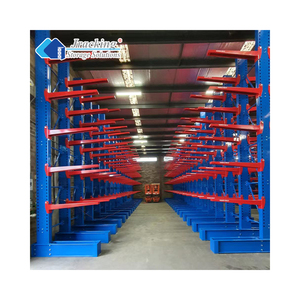
Heavy Duty Steel Cantilever Storage Rack System For Steel Pipe and Industrial Profile Stacking
Technical Specs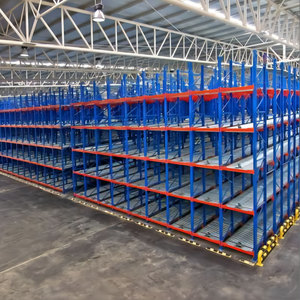
Warehouse Pallet Flow Racking System Steel Gravity Roller Shelving with Continuous Braking
Technical Specs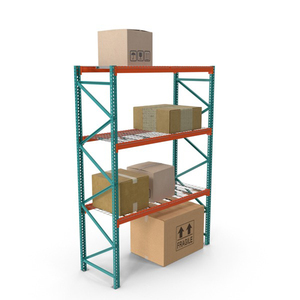
Heavy Duty Steel Beam Pallet Racking System Industrial Customizable 3000kg Load Tiers
Technical Specs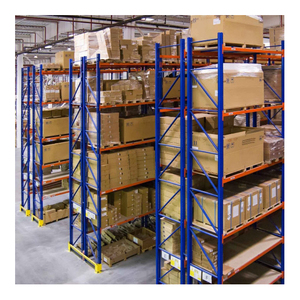
Peterack CE Certified Heavy Duty Selective Pallet Racking Warehouse Storage System
Technical Specs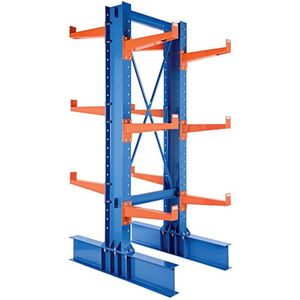
Adjustable Arm Height Heavy Load Cantilever Rack Solid Wood Timber Pallet-Free Storage
Technical Specs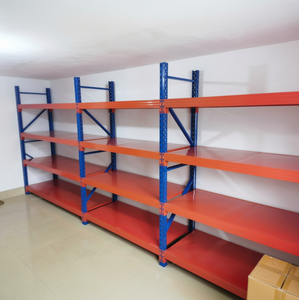
Industrial Heavy Duty Racking with Steel Shelf Decking Screw Assembly Storage Shelving
Technical SpecsThe Mechanics of Double Deep Pallet Racking in High-Density Logistics
Double Deep Pallet Racking serves as the definitive structural equilibrium between traditional 100% selective accessibility and hyper-dense, non-selective block stacking. By placing two pallet loads back-to-back in 4-deep aisle structures, operations eliminate up to 43% of redundant access aisles, vastly driving down real estate capital expenditure per stored pallet.
Footprint Compression (30%–40%)
By restructuring the storage grid from single-row access (1 pallet deep per aisle interface) into paired back-to-back configurations, the building volume utilization jumps from a typical 40% in standard selective setups to over 60–65%. In land-constrained logistics zones such as Israel's Central District, this directly slashes fixed cost overhead per square meter.
Pantograph & Reach Truck Kinematics
Double deep operations employ specialized pantograph extenders or telescopic deep-reach fork attachments. Our upright frames and beam profiles are engineered with tight deflection limits (strictly adhering to L/200 under static rated loads and L/300 under dynamic seismic accelerations) to ensure forks seamlessly enter rear pallets without binding or snagging upright flanges.
Stock Rotation & SKU Partitioning
Double deep operates under a Last-In, First-Out (LIFO) protocol per individual lane, yet delivers 50% immediate pallet selectivity across unique SKUs. It represents the mathematically optimal configuration for operations holding 2 to 10 pallets per SKU—ideal for high-volume FMCG, dry food distribution, packaging, and cold-store batch staging.
| Storage System Type | Floor Space Utilization | Direct Pallet Selectivity | Forklift Compatibility | Seismic Vulnerability Index | CapEx per Pallet Position |
|---|---|---|---|---|---|
| Standard Selective Racking | 35% – 42% | 100% Instantaneous | Standard Counterbalance / Reach | Low / Standard Bracing | Baseline ($) |
| Double Deep Racking (HEDA) | 58% – 66% | 50% (Two-Deep LIFO) | Pantograph / Deep Reach Mast | Medium (SI 413 Reinforced) | Optimal ROI ($$) |
| Drive-In / Drive-Through | 65% – 75% | < 15% (Tunnel Bound) | Narrow Counterbalance | High (Requires Top Portal Ties) | Moderate ($$$) |
| Radio Shuttle Automation | 75% – 85% | Strict Lane Batch LIFO/FIFO | Standard Forklift + Automated Cart | Medium / Low Track Drift | Substantial ($$$$) |
Engineered Specifically for the Logistics Realities of Israel
Designing warehouse storage for Israel requires acute technical alignment with extreme municipal land costs, stringent seismic parameters along the Syrian-African Rift Valley, and distinct regional microclimates ranging from Mediterranean humidity to dry desert heat.
Land Scarcity & E-Commerce Micro-Hubs: In industrial estates across Modi'in, Petah Tikva, and Rishon LeZion, soaring lease rates demand maximum cubic capacity. Double deep setups maximize pallet count in buildings with 8m to 14m clear heights without requiring million-dollar full-automation investments.
Containerized Freight Staging: Positioned around the new Gulf Port (Haifa Bayport) and Ashdod Port logistics parks, double deep configurations facilitate high-turnover staging of standard 40ft High Cube import containers, rapidly de-stuffing maritime pallets into dedicated high-capacity storage bays.
Kosher Perishables & Cold Storage: Cold stores in Caesarea and Emek Hefer maintain energy-intensive blast freezers (-18°C to -25°C). Utilizing double deep racking drastically reduces the refrigerated airspace per pallet, driving down thermal loss and kilowatt-hour cooling expenditure.
Industrial Chemicals & Raw Material: Large-scale processing hubs in Neot Hovav and Negev logistics parks demand robust, corrosion-resistant upright frames equipped with heavy-duty baseplates, engineered for high-weight IBC totes and oversized bulk pallet profiles.
Seismic Verification Under SI 413 & Eurocode EN 15512
Israel's geographic vulnerability along the Dead Sea Transform fault requires precision seismic modeling for free-standing steel structures. Racking collapses pose catastrophic occupational and business continuity hazards. Guangzhou Heda Shelves Co., Ltd. incorporates site-specific ground acceleration coefficients into every layout.
- Enlarged, Ductile Baseplates (Min 10mm Steel)
- Multi-Anchor Expansion Wedge Anchoring
- Heavy Omega Upright Cold Roll Form Profiles
- Boxed-Beam Interlocking 4-to-5 Hook Connectors
Market Dynamics & Structural Trends in Israel (2025–2030)
How progressive warehouse managers from Tel Aviv to Ashdod are adapting infrastructure to handle geopolitical supply disruptions, surging import volumes, and labor automation.
Buffer Staging & Strategic Inventory Resilience
Recent maritime shipping volatility has caused Israeli retail, defense, and manufacturing importers to abandon brittle "just-in-time" (JIT) delivery. Companies are pivoting to strategic "just-in-case" (JIC) warehousing, storing 30 to 60 days of extra buffer stock. Double deep systems deliver the necessary volume scaling without expanding warehouse footprints.
Pallet Dimension Hybridization (Euro vs. Israeli Industrial)
Israeli warehouses encounter an acute mix of standard European pallets (1200 x 800 mm EPAL) from EU sea routes and wider industrial pallets (1200 x 1000 mm ISO/Israel Standard). Our customized beam layouts incorporate integrated support bars and stepped pallet stops, allowing dual-depth loading of diverse pallet bases without risk of tipping or structural misseating.
Convergence with AGV & Guided Turret Trucks
As Israeli warehouse labor rates climb, operations are transitioning to wire-guided or LiDAR-navigated reach trucks and double-deep automated guided vehicles (AGVs). This technological transition necessitates strict manufacturing tolerances on beam hole punching, plumbness, and upright straightness—precision standards reliably delivered by our automated CNC roll-forming lines.
10-Stage Precision Manufacturing Protocol
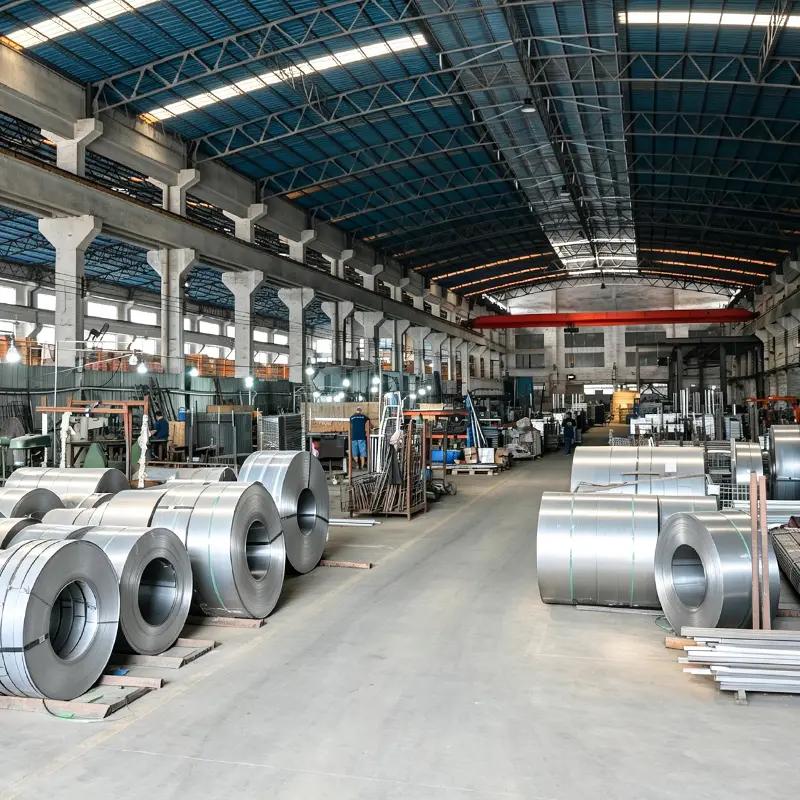
Every component destined for Israeli ports undergoes strict internal validation within our 30,000 m² factory in Guangzhou, China. From raw coil metallurgical inspection to high-bake electrostatic finishing.
Raw Materials
Certified Baosteel Q235B and Q355B coils tested for yield strength and ductility.
Precision Slitting
High-speed automated decoiling and slitting with ±0.1mm dimensional tolerance.
CNC Punching
High-tonnage continuous punching machines ensuring 50mm/75mm slot alignment.
Cold Roll Forming
Multi-roller continuous profiling for superior structural rigidity of upright columns.
Beam Profiling
Interlocking box-beam welding with seam integrity inspection for maximum load ratings.
Robotic Welding
Automated multi-axis robotic welders joining beam connectors without slag or cold joints.
Surface Polishing
Shot blasting and automated mechanical cleaning to remove all scale and micro-burrs.
Pickling & Phosphating
Multi-stage chemical pre-treatment creating an anti-corrosive conversion layer.
Powder Coating
Electrostatic thermosetting epoxy-polyester powder baked at 200°C (60–80μm thickness).
Packaging & QC
Protective bundling, corner cushioning, and container loading plans for marine transit.
Why Israeli Importers Partner with Guangzhou Heda Shelves Co., Ltd.
Founded in 2001, Guangzhou Heda Shelves Co., Ltd. operates as a leading high-precision warehouse engineering manufacturer. With over 300 technical engineers, designers, and manufacturing specialists, we eliminate middlemen and provide direct engineering accountability.
Free 3D Layout & Static Calculations
Our engineering division produces comprehensive AutoCAD floor plans and 3D virtual walkthroughs within 24 to 48 hours. We calculate beam moments, upright axial loads, and baseplate pressure distributions tailored to your exact Israeli facility specs before contracts are signed.
Efficient Container Loading & Sea Logistics
Shipping to Ashdod or Haifa requires meticulous container cubic utilization. Our logistics division employs proprietary 3D packing software to nest uprights and beams into 40ft High Cube containers, protecting finished coatings with non-abrasive interleaves while preventing transit shifting.
Long-Term Warranty & Component Availability
All HEDA double deep racking components carry extensive factory warranties alongside guaranteed dimensional repeatability. Should your Israeli facility expand in three or five years, our standardized tooling guarantees that add-on uprights, beams, and safety barriers fit seamlessly.
Frequently Asked Questions by Israeli Warehouse Engineers & Buyers
Direct, technically transparent answers concerning Israeli customs, Standards Institution of Israel (SII) clearance, freight routing, and equipment compatibility.
1. What documentation is provided for Standards Institution of Israel (SII) customs clearance?
2. Can your double deep frames be designed for Israeli Seismic Standard SI 413?
3. What forklift equipment is required for double deep racking operations?
4. How is the freight transit handled from Guangzhou to Ashdod or Haifa?
5. What finish do you recommend for cold stores or humid coastal facilities in Israel?
6. How do you handle on-site installation guidance within Israel?
Transform Your Warehouse Density with HEDA Double Deep Engineering
Send us your warehouse CAD floor plan, clear ceiling height, pallet load parameters, and handling vehicle specs. Our certified engineering division will return a free 3D design rendering, seismic calculations, and an export quotation within 24 business hours.