Engineered Warehouse Storage Racks & Dynamic Systems
Precision-fabricated utilizing premium Q235B and Q355B structural steel, conforming strictly to EN 15512, RMI, and ISO 9001:2015 specifications. Select your operational configuration below or request technical calculations.
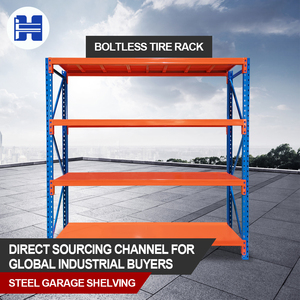
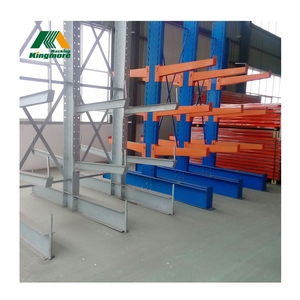
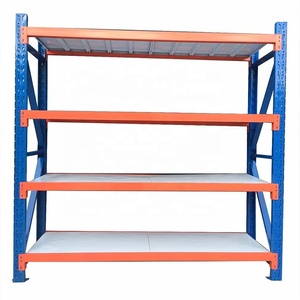
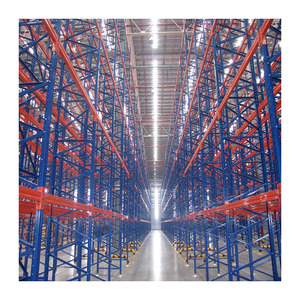
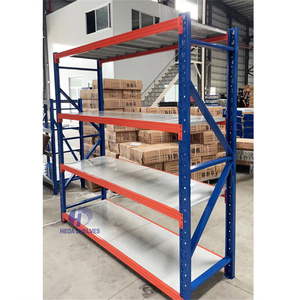
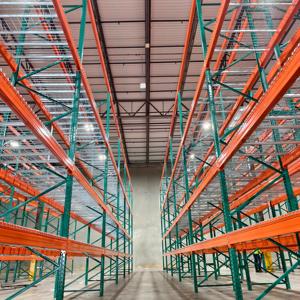
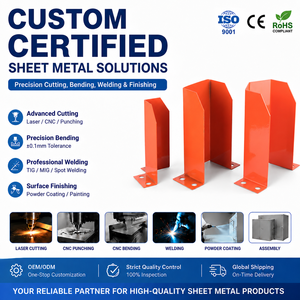
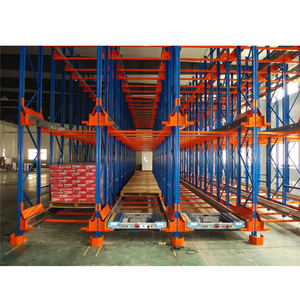
Guangzhou Heda Shelves Co., Ltd. — Turnkey Factory Direct Authority
Founded in 2001, HEDA Shelves operates a state-of-the-art 30,000 square meter intelligent manufacturing facility in Guangzhou, China. Backed by 300+ structural engineers, precision machine operators, and logistics specialists, our factory processes over 30,000 metric tons of certified structural steel monthly for distribution across 120+ countries.
In-House Structural Fabrication & Regulatory Conformance
As a premier direct manufacturer and global exporter, Guangzhou Heda Shelves Co., Ltd. eliminates third-party trading intermediaries, passing engineered precision and cost advantages directly to global distribution centers, third-party logistics (3PL) providers, and regional material handling integrators. Every Pallet Flow racking structure is built upon certified high-grade hot-rolled and cold-formed micro-alloy steels (Q235B and Q355B yield points).
Our facility operates under rigorous international quality frameworks validated by CE Certificate No. 2435-CPR-8605159 under the European Construction Products Regulation (CPR 305/2011/EU) and harmonized standards EN 15512 (Steel static storage systems – Adjustable pallet racking systems – Principles for structural design) and EN 15620. Environmental and fabrication disciplines are governed through certified ISO 9001:2015 Management Systems (Certificate No. 18624Q00169R0M) and RoHS-compliant electro-coating chemistry.
The Engineering Anatomy of a Certified Pallet Flow System
Pallet Flow (Gravity Flow) racking operates on an inclined dynamic plane (typically between 3.0% and 4.0% slope gradient), utilizing gravitational potential energy to autonomously propel unitized pallet loads from the rear loading face to the front picking face. Achieving zero-failure continuous dynamic rotation demands exacting mechanical tolerances.
Centrifugal Magnetic Speed Retarders
Uncontrolled acceleration down extended flow lanes causes catastrophic impact kinetic force at the discharge face. HEDA integrates self-governing centrifugal eddy-current or internal friction brake rollers spaced at calculated 1-pallet intervals along each lane.
These speed retarders maintain an invariant terminal velocity of 0.25 to 0.30 meters per second, irrelevant of whether the moving pallet weighs 300 kg or 1,500 kg.
- Velocity range: 0.25 m/s – 0.30 m/s regulated
- Maintenance-free internal planetary gear sets
- Cold-room rated non-freezing synthetic damping
Mechanical Pallet Separation Separators
Line pressure in deep-lane configurations (up to 25 pallets deep) multiplies rapidly due to gravitational gradient force. Without separation, back-pressure pins the lead pallet against discharge stops, preventing safe forklift extraction.
HEDA's heavy-duty floor-mounted mechanical separator locks the trailing pallet row 150mm away until the lead unit is raised and pulled clear, auto-releasing the queue smoothly.
- Automated pneumatic or spring-trip reset
- Eliminates forklift mast strain & load tipping
- Rated for heavy industrial cycles (50,000+ drops)
Precision Galvanized Track & Rollers
Dynamic friction variances cause pallet tracking skew, which leads to lane jamming. HEDA rolls heavy-gauge structural channel bed rails paired with heavy-duty galvanized tubular rollers outfitted with dual precision sealed ball bearings (6204-2RS class).
Full-width or 3-track poly-wheel systems are matched specifically to the bottom runner configuration of wooden, plastic, or metal skids.
- Tubular steel rollers: Ø 50mm to Ø 76mm, 2.5mm wall
- Electro-galvanized or hot-dip zinc corrosion proofing
- Entry guides & dynamic ramp stops for impact absorption
Comparative Engineering Analysis: Storage Topology & Efficiency
Evaluating storage systems requires weighing space utilization, FIFO strictness, cycle throughput velocity, and capital payback periods. The table below details operational metrics across high-density storage alternatives.
| Storage Topology | Rotation Principle | Floor Footprint Utilization | Throughput Cycle Velocity | Honeycombing Risk | Forklift Operating Travel |
|---|---|---|---|---|---|
| Pallet Flow (Gravity Flow) | Strict FIFO (First-In, First-Out) | Up to 85% volumetric density | Highest (Simultaneous load/pick) | Zero (Pure live dynamic queue) | Lowest (Dedicated load/retrieve aisles) |
| Drive-In Racking | LIFO (Last-In, First-Out) | Up to 70% volumetric density | Low (Forklifts drive into structural bays) | High (Dead slots during batch shifts) | High (Slow in-bay maneuvering) |
| Push-Back Racking | LIFO (Last-In, First-Out) | Up to 72% volumetric density (2-6 deep) | Moderate (Front-face loading only) | Medium (Requires batch replenishment) | Moderate (Front aisle only) |
| Radio Shuttle System | FIFO / LIFO Flexible | Up to 88% volumetric density | High (Semi-automated battery carts) | Low (System-managed mapping) | Low (Cart operates deep in rack) |
| Selective Pallet Racking | Random Access (100% Selectivity) | 35% – 45% volumetric density | High per single pick / Low per volume | Zero | Highest (Travel down every individual aisle) |
10 Controlled Manufacturing Stages at HEDA Shelves
Structural integrity depends on microscopic metallurgy, continuous cold-roll forming stability, and uniform weld penetration. Every component that enters our shipping containers passes 10 strict in-house inspection gates.
Raw Steel Verification
Tensile and chemical testing of certified Q235B/Q355B coil stock.
Laser Precision Slitting
Automated CNC decoiling and edge trimming to ±0.2mm tolerance.
Continuous Punching
High-speed press stamping of teardrop or metric omega hole patterns.
Cold Roll Profile Forming
Multi-station continuous roll stands form high-moment upright profiles.
Robotic Beam Welding
Multi-axis automated CO2 shielded welding of beam end connectors.
Acid Pickling & Phosphating
Multi-bath pre-treatment removing mill scale and applying zinc phosphate.
Electrostatic Powder Coat
Nordson automated electrostatic guns bake epoxy-polyester at 200°C.
Dynamic Roller Bed Assembly
Calibrated fitting of brake retarders, entry guides, and safety trips.
Load Testing & Metrology
Batch destructive load checks, coating thickness (80-100µm), and runout.
Export Container Packing
Heavy timber dunnage, protective plastic wrap, steel strapping for sea-freight.
Product Technical Development Trends in Dynamic Racking
As automated warehousing converges with environmental sustainability and ultra-deep inventory demands, Pallet Flow systems are advancing beyond purely passive mechanical steel structures into smart, responsive fulfillment channels.
Smart IoT-Monitored Dynamic Brake Retarders
Modern mega-hubs are integrating low-power wireless sensors inside brake roller assemblies. These magnetic sensors monitor real-time pallet transit velocity, axle temperature spikes, and bearing friction wear. Warehouse Management Systems (WMS) receive predictive maintenance alerts before a damaged skid or failed bearing can cause a mid-lane jam in 20-pallet-deep lanes.
Cryogenic Cold-Chain Formulations (-30°C)
Driven by skyrocketing international trade in pharmaceuticals, biologics, premium beef, and frozen salmon, flow lanes must endure persistent sub-zero environments without mechanical seizure. Technological advances include fluorosilicone cryogenic lubricants, synthetic polymer roller wheels that resist embrittlement, and hot-dip zinc galvanizing that prevents oxidation in high-condensation zones.
Automated Guided Vehicle (AGV) & AMR Handshake
Pallet Flow systems are increasingly engineered with precise automated entry funnels and magnetic optical targets at the pick face. Autonomous Mobile Robots (AMRs) and automated reach trucks can locate, index, and extract discharged pallets with millimeter-level laser repeatability, creating continuous 24/7 dark-warehouse operations with zero human forklift drivers.
Future Procurement Trends for Industrial Racking Importers
Global supply chain disruptions, changing customs tariffs, and localized building safety standards have permanently altered how procurement directors, engineering consultancies, and facility developers source warehouse equipment.
Direct EPC Engineering Contracting
Enterprise logistics developers are bypassing local middleman resellers to contract directly with certified Chinese manufacturing plants like HEDA Shelves. Direct factory communication ensures customized CAD engineering, custom hole-pitch adaptations, raw mill material certs, and up to 30% savings on capital equipment expenditure without sacrificing structural warranty protection.
Harmonized Multi-Code Compliance
Global operators now mandate equipment designs engineered to satisfy overlapping regulatory jurisdictions simultaneously: EN 15512 (Europe), RMI ANSI MH16.1 (United States), and regional seismic mandates such as Chile's NCh 2369, Peru's E.030, and Colombia's NSR-10. Structural calculation packages accompanied by finite element analysis (FEA) are now mandatory procurement prerequisites.
High-Cube Container Load Nesting & Landed TCO
Skyrocketing ocean freight rates require intelligent container space engineering. Advanced exporters utilize 3D parametric container loading software to nest upright frames, nested beams, and pre-assembled roller lanes. By maximizing 40-foot High Cube (40HQ) container cubing efficiency to over 92%, landed freight costs per pallet position drop significantly.
Frequently Asked Technical Questions (FAQ)
Real-world engineering, customs clearance, structural certification, and operational parameters answered directly by Guangzhou Heda Shelves senior structural engineering division.
What specific standards must a Pallet Flow System meet to obtain CE Certification under EU CPR?
How is lane incline slope calculated for diverse pallet types (Wood, Plastic, Metal Skids)?
How does HEDA engineer racking systems to endure major seismic activity (Chile, Peru, California)?
What is the functional purpose of a mechanical pallet separator, and when is it required?
How are components protected against ocean corrosion during 30 to 45 days of sea shipping?
What data does the engineering team require to provide a free 3D layout, CAD drawing, and structural quote?
Request Your Custom Pallet Flow Layout & Structural Calculations
Connect directly with Guangzhou Heda Shelves engineering department. Receive complete 3D layout drawings, finite element load reports, and factory direct container pricing within 24 business hours.
- Free 3D AutoCAD & BIM Models
- CE & ISO Certified Direct Pricing
- Seismic Code Static Analysis
- Container Nesting Load Optimization