Featured Industrial Warehouse Storage & Flow Racking Systems
From dynamic push back accumulator carts to heavy-duty drive-in and structural gravity flow systems, explore our factory-direct, CE and ISO-certified warehouse racking assemblies designed to optimize cubic storage volume, pallet safety, and throughput efficiency.
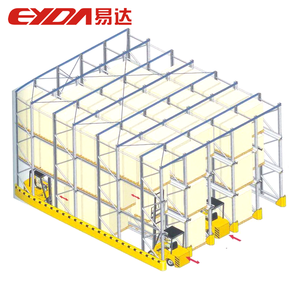
Heavy Duty 5 Layer Drive in Pallet Storage Racking System Drive-Thru Warehouse Pallet Rack LIFO FIFO Method Adjustable Shelves
View Specifications →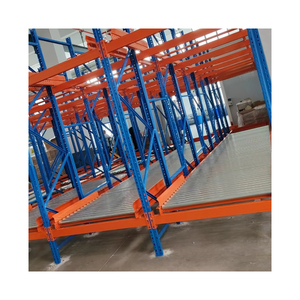
High Quality FIFO Gravity Carton Flow Rack Pallet Rack System Pallet Flow Racking Warehouse Equipment
View Specifications →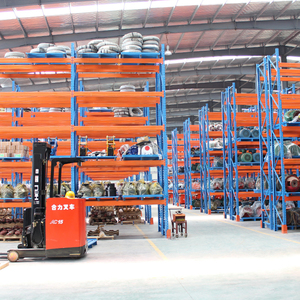
Best Selling Customized Warehouse Drive in Rack Steel Pallet Racking System Heavy Duty Industrial Warehouse Steel Rack
View Specifications →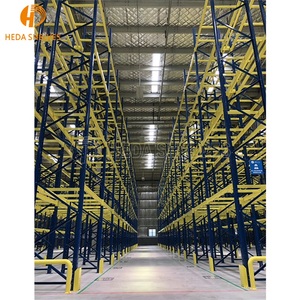
Factory 4-Layer Medium Duty Rack 100kg Corrosion Protected Garage Warehouse Heavy Duty Racks & Industrial Shelving Units
View Specifications →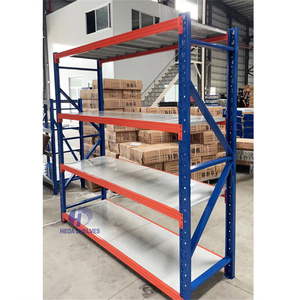
Customized Factory Supply Industrial Workshop Display Shelving Iron Shelves Storage Rack in Warehouse Light Iron Rack
View Specifications →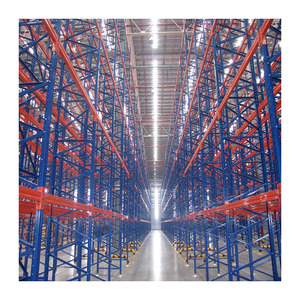
Mracking Heavy Duty Industrial Palletized Racking with a Capacity of 1000-4000kg Industrial Storage Racking
View Specifications →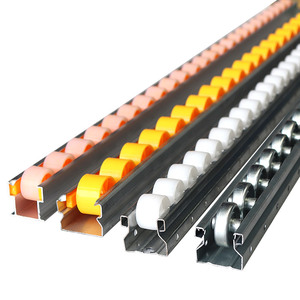
Industrial Storage Shelves Roller Track Large Load Capacity Rolling Rails Aluminium Fluent Strip Flow Rack
View Specifications →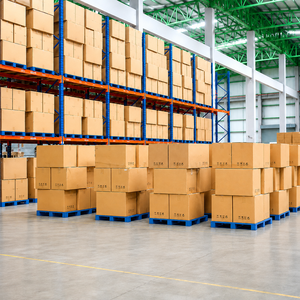
Steel Storage Rack 2000kg Heavy Duty Q235B Pallet Rack Warehouse Storage Rack High Density Industrial Shelving Solution
View Specifications →Anatomy of Industrial Push Back Racking Systems
Push back racking bridges the gap between ultra-dense bulk storage and accessible SKU selectivity. Operating on an inclined structural rail system featuring nested, low-profile rolling carts, pallets are stored 2 to 6 deep on a strictly governed Last-In, First-Out (LIFO) inventory methodology.
Nested Cart Architecture
The core mechanism comprises layered, color-coded, precision-welded steel carriages. The top pallet sits directly on the uppermost cart. When the subsequent pallet is pushed backward by the forklift operator, it engages the nest of underlying carts along heavy-gauge structural angle rails.
- Zero mechanical inter-binding tolerances
- Reinforced bumper safety back-stops
- Color-coded nesting for depth monitoring
Gravity Incline Calibration
Our structural calculation models calibrate rail incline gradients between 2.5% and 3.5% (approx. 0.35 to 0.45 inches per foot). This provides sufficient dynamic momentum for smooth pallet descent upon retrieval while preventing uncontrolled surging or pallet impact shock against front stops.
- Precision stamped inclined channel tracks
- Calculated friction-decay deceleration
- Fail-safe heavy-duty cart stops
Sealed High-Capacity Bearings
Each cart is mobilized via machined, hardened steel flanged wheels with permanently sealed deep-groove ball bearings. Factory-lubricated with low-temperature synthetic greases rated to -35°C, ensuring flawless duty cycles in both ambient warehouses and deep-freeze facilities.
- Up to 1,500 kg capacity per pallet position
- Zinc-chromate electroplated hardware
- High-shock radial load resistance
Push Back Racking vs Alternative High-Density Systems
Choosing the right high-density warehouse racking configuration demands an objective operational trade-off among storage density, SKU accessibility, capital expenditure (CapEx), forklift maintenance, and cycle throughput speeds.
| Evaluation Metric | Push Back Racking | Drive-In Pallet Racking | Pallet Flow (Gravity FIFO) | Radio Shuttle Racking |
|---|---|---|---|---|
| Operating Methodology | LIFO (Dynamic Cart) | LIFO / FIFO (Tunnel Drive) | FIFO (Full Roller Bed) | LIFO / FIFO (Automated Shuttle) |
| Lane Storage Depth | 2 to 6 Pallets Deep | Up to 10+ Pallets Deep | Up to 20+ Pallets Deep | Up to 40+ Pallets Deep |
| SKU Selectivity | High: Each lane/level can hold different SKUs | Low: Whole bay is blocked for 1 SKU | Moderate: 1 SKU per deep channel | Moderate-High: Lane-by-lane assignment |
| Forklift Entry into Structure | NO — Operates in outer aisle | YES — Higher collision risk | NO — Loading & picking on ends | NO — Shuttle enters internal track |
| Structural Collision Risk | Very Low (Forklift stays in aisle) | High (Frequent upright impacts) | Very Low (External access) | Extremely Low (External aisle handling) |
| Picking Cycle Speed | Fast (Automatic gravity replenishment) | Slow (Navigating deep tunnels) | Very Fast (Separated pick/load faces) | Moderate to Fast (Shuttle retrieval) |
| Initial Capital Cost (CapEx) | Moderate (Cart/track hardware) | Low (Static steel structure) | High (Full roller & brake lanes) | High to Very High (Robotic units + batteries) |
| Annual Maintenance Overhead | Minimal (Sealed mechanical bearings) | Moderate-High (Frame damage repairs) | Moderate (Roller/brake inspections) | High (Sensors, PLC software, batteries) |
Future Procurement Trends in Warehouse Storage Systems
Global supply chain shocks, escalating industrial real estate lease rates, and sustainability mandates are radically transforming how enterprise logistics directors procure storage racking. Here is what leading operations are engineering for the decade ahead.
Escalating Real Estate & Cubic Optimization
With prime warehouse lease costs rising 7–12% annually across urban gateway hubs (such as São Paulo, Rotterdam, Dallas, and Singapore), procurement teams are abandoning standard selective racking in favor of push back configurations that increase floor density by up to 75% without requiring high-maintenance automation.
Seismic-Certified Engineering Protocols
International structural compliance has tightened. Racking buyers in high-seismic zones (Chile NCh 2369 / NCh 433, Peru E.030, Colombia NSR-10, and US RMI MH16.1) now demand FEA (Finite Element Analysis) verification, heavy-gauge baseplates, anchored ductile frames, and dynamic cart retainers to prevent dislodgement during seismic ground acceleration.
Cold Chain & Sub-Zero Food Logistics
Refrigerated space consumes up to 5x more power per cubic meter than dry warehouses. Importers in agro-export, salmon, seafood, and pharmaceutical sectors are standardizing on push back cart systems hot-dip galvanized or treated with thermoset low-VOC anti-corrosion coatings to eliminate thermal-loss honeycombing and cart-wheel condensation freezing.
Direct Factory OEM/ODM Standardization
To combat middleman markups, global rack distributors and multi-site 3PL operators are partnering direct with high-volume Chinese manufacturing exporters capable of bespoke punching patterns (50mm / 75mm / teardrop pitch), custom upright sections, container load optimization, and comprehensive third-party batch traceability.
Technological Advancements in Push Back Racking Hardware
Recent breakthroughs in metallurgy, cold-roll profile roll forming, and mechanical guidance systems have significantly increased the service life, dynamic stability, and safety margins of push back racking systems.
Laser-Guided Telescopic Cart Nesting
Earlier generation push back racks suffered from vertical clearance waste, where stacked carts ate up 150–200mm of precious bay height. Contemporary multi-axis CNC laser-cut frames utilize ultra-low-profile nested carts with staggered axle alignments. This preserves vertical clearance, allowing 5-deep and 6-deep configurations inside standard 8-meter clear-height structures.
Dynamic End-Stop Dampening & Friction Locks
To guard against operator acceleration errors when retrieving the front pallet, modern tracks integrate progressive mechanical impact dampening or magnetic eddy-current brake pads at the pick face. These governors arrest residual gravity momentum, preventing sudden cart jerk, pallet tipping, or load deformation while centering the pallet on its retrieval cradle.
High-Strength Q355B Steel & FEA Modeling
By substituting standard mild steels with certified Q355B micro-alloyed structural coil steel, our engineering division achieves a yield strength above 355 MPa. Using sophisticated 3D Finite Element Analysis (FEA), beam deflection ratios are engineered strictly beyond RMI MH16.1 limits (exceeding L/200, typically achieving L/250 under full static deadweight and live seismic loading).
Why Importers & Engineering Contractors Partner with Us
Founded in 2001, Guangzhou Heda Shelves Co., Ltd. has grown from a specialized metal fabrication shop into a world-class manufacturing exporter, delivering engineered storage systems across 120+ countries, with specialized structural project deployments in South America, North America, Southeast Asia, and Europe.
CE & ISO 9001:2015 Verified
Every batch is manufactured under rigorous ISO 9001:2015 (Cert. No. 18624Q00169R0M) quality management systems. Our structural warehouse racking holds full European CE Certification (Cert. No. 2435-CPR-8605159) and RoHS chemical compliance across all coating pre-treatments.
Free 3D Layout & Structural CAD
Our team of 30+ in-house structural engineers delivers complete warehouse CAD layout plans, 3D photorealistic renderings, and seismic load calculation sheets within 24 hours of receiving your floor plan, column grids, forklift turning radii, and pallet weight profile.
Full In-House Manufacturing
From slitting, multi-stand cold profile roll forming, automated CNC column punching, robotic seam welding, to an automatic Swiss Gema electrostatic powder-coating line with 4-stage chemical pickling and phosphating, 100% of the manufacturing value chain is retained in-house.
Global Port & Landed-Cost Control
Experienced container load engineers maximize every cubic meter inside 40ft HQ containers with bundled strapping and anti-abrasion cardboard protection. Shipped smoothly to global ports including Santos, Callao, San Antonio, Valparaíso, Buenaventura, Rotterdam, Houston, and Los Angeles.
The 10-Stage Production Process Behind Every Custom Rack
Tolerances of less than 0.5mm are maintained across all uprights, beams, and cart nesting assemblies to eliminate binding and structural deflection over decades of high-volume cycles.
Certified Steel Inflow
Strict chemical and tensile testing of mill-certified Q235B & Q355B coils for yield strength and elongation.
Laser Slitting & Blanking
High-speed CNC slitting lines cut structural coil steel to precise channel widths with zero burrs or edge warp.
Automated CNC Punching
Continuous punch presses punch 50mm, 75mm, or teardrop pitch patterns with ±0.1mm cumulative tolerance.
Continuous Roll Forming
24-stand progressive roll formers form heavy-duty omega upright profiles with multi-rib stiffening bends.
Cart Precision Forming
Nested cart channels are hydraulic brake formed to guarantee parallel squareness and wheel track alignment.
Robotic Seam Welding
Automatic robotic weld cells fuse beam connectors, baseplates, and cart chassis under Argon-CO2 shielding.
Surface Pickling Pre-treatment
Total immersion pickling and phosphating removes mill scale and oils, creating a rust-resistant crystalline base.
Electrostatic Powder Coating
Swiss Gema electrostatic guns apply 70–100μm thermoset epoxy-polyester powder, cured at 200°C.
Dynamic Cart Nesting QC
Every cart stack is pre-assembled on test tracks to verify bearing glide, incline tracking, and lock stops.
Export Container Stacking
Components are bundled in rust-inhibiting plastic, labeled by engineering tag, and loaded for global transit.
Frequently Asked Questions on Push Back Racking Procurement
Detailed technical answers to common questions asked by supply chain engineers, logistics consultants, and warehouse operations directors.
What is the maximum practical storage depth for a push back racking system?
The industry standard for push back racking ranges from 2 to 6 pallets deep per lane. While 2, 3, and 4-deep systems are the most popular due to standard forklift push-force capacities, 5 and 6-deep systems are engineered using our ultra-low friction bearing wheel assemblies. Beyond 6 pallets deep, the push-back resistance on the forklift mast and the loss of vertical bay clearance usually make Radio Shuttle or Pallet Flow systems more economical.
Can standard counterbalance or reach forklifts operate with push back racks?
Yes. Standard counterbalance forklifts, reach trucks, and articulated trucks operate seamlessly with push back systems. Unlike drive-in racks, the forklift never enters the rack structure. However, the forklift mast must have sufficient pushing power to overcome the gravity resistance of 2 to 5 stacked pallets. Our engineering team calculates the required mast force based on your max pallet payload so your existing fleet is fully verified before order placement.
How does push back racking perform in cold storage and freezing environments?
Push back racking excels in refrigerated and deep-freeze logistics (down to -35°C) because it maximizes refrigerated cubic density without requiring the electrical sensors or lithium batteries of shuttle carts. For cold storage deployments, we equip all carts with stainless steel axles, sealed low-temp bearings packed with synthetic fluorosilicone greases, and specify hot-dip galvanizing (HDG) or heavy epoxy-polyester coatings to prevent condensation rust.
Can weak, damaged, or irregular pallets be handled safely in a push back system?
Push back carts provide a continuous, rigid structural perimeter support basket that supports the pallet around its outside blocks and bottom stringers. This makes push back racking far more forgiving of non-standard, euro, or slightly damaged wooden pallets than drive-in racking (which relies on narrow perimeter rails where defective pallets can crack and fall through). Full wire mesh or solid steel bottom plates can also be integrated into custom carts for plastic pallets or skids.
What seismic codes and calculation standards do your engineering calculations follow?
Our engineering division computes structural static and dynamic load matrices according to US ANSI/RMI MH16.1, European EN 15512 / FEM 10.2.02, and regional seismic codes including Chilean NCh 2369 / NCh 433, Peruvian E.030, and Colombian NSR-10. We deliver certified engineering dossiers including seismic spectral acceleration calculations, slab shear pin sizing, and baseplate dimensions ready for local engineer-of-record approval.
What is the typical production lead time and export delivery schedule?
Standard push back orders of 1 to 5 full container loads (FCL) are fabricated within 2 to 4 weeks following final CAD and cart test sign-off. Major logistics distribution center projects (10 to 50+ containers) are scheduled in phased production tranches to correspond directly with building slab pouring schedules. Ocean transit from Guangzhou or Shenzhen ports takes approximately 25–40 days depending on the global destination port.
Request a Free Engineered 3D Layout & Project Quotation
Send us your warehouse CAD floor plan, ceiling clear height, pallet dimensions, and operational throughput targets. Our senior engineering division will provide a detailed 3D design, structural calculation dossier, and direct factory FOB/CIF pricing within 24 hours.