Engineered High-Density Pallet Racking & Industrial Storage Systems
Explore our factory-direct catalog engineered to RMI, FEM 10.2.02, and EN 15512 structural standards. Each system delivers verifiable load-bearing reliability, surface durability, and flexible dimensional OEM customization.
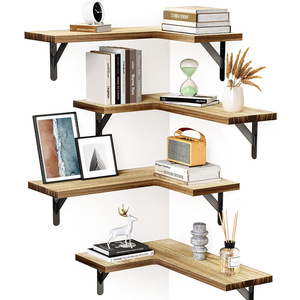
Bathroom Wall-mounted Rack Floating Partition Decorative Storage Rack
- Custom metal-wood hybrid fabrication
- High-adhesion anti-rust coating finish
- Modular commercial & utility mounting
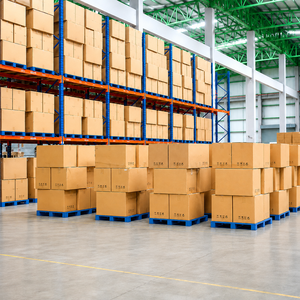
Steel Storage Rack 2000kg Heavy Duty Q235B Pallet Storage Rack
- High-yield certified Q235B cold-rolled steel
- Safety factor ≥ 1.5 against structural yield
- Electrostatic powder cure (60–80μm)
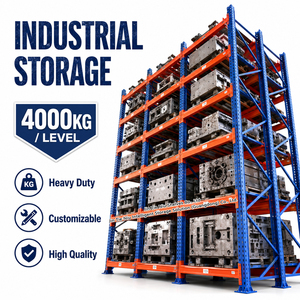
4000KG Heavy Duty Warehouse Rack Pallet Storage System
- Dual-C interlocking box-beam profile
- Engineered 75mm / 50mm pitch adjustability
- Robotic seamless continuous seam welding
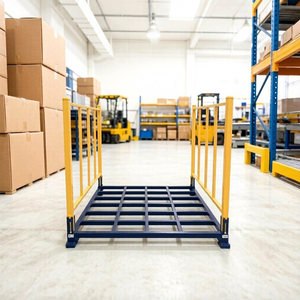
Industrial Light Duty Steel Selective Pallet Rack Brushed Surface
- High adaptability for manual picking & light pallets
- Zinc-phosphating pickled surface anti-corrosion
- Tool-less rivet & safety lock installation
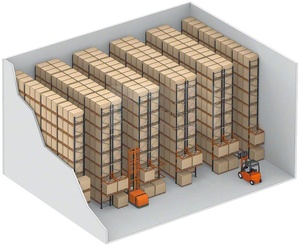
URGO Very Narrow Aisle Pallet Rack / VNA Racking System
- Aisle width minimized to 1.5–1.8m
- Increases storage cube efficiency by 45%+
- Integrated floor-mounted magnetic/rail guide lines
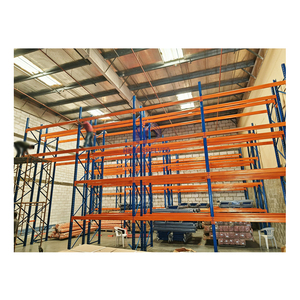
Double Deep Selective Pallet Rack Warehouse Heavy Pallet Rack
- Stores pallets 2-deep on single aisle access
- Eliminates 50% of conventional access aisles
- Engineered for reach trucks with pantograph extenders
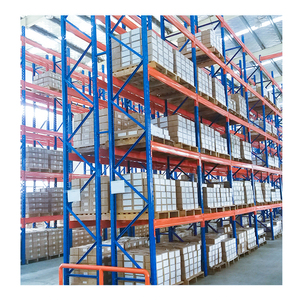
Heavy Duty Selective Steel Pallet Racking System
- Universal immediate access to every pallet position
- Cold-formed omega-profile structural uprights
- Fully compatible with standard counterbalance forklifts
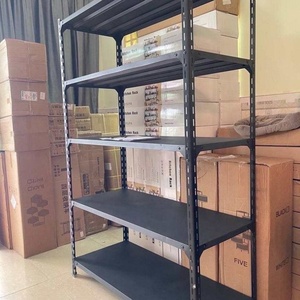
Slotted 5 Level Angle Steel Rivet Rack Storage Metal Warehouse Rack
- Boltless keyhole interlocking assembly mechanism
- 150–400 kg per tier uniform distributed loading
- Galvanized or heavy powder-coated shelf decking
Guangzhou Heda Shelves: 25+ Years of Racking Engineering Excellence
Established in 2001, Guangzhou Heda Shelves Co., Ltd. has developed into an internationally certified powerhouse in heavy-duty racking design, structural calculation, automated fabrication, and export logistics fulfillment.
End-to-End In-House Manufacturing
Every structural profile is processed entirely under one roof. Our state-of-the-art facility operates automated cold-roll forming lines, precision multi-head CNC punch presses, robotic dual-torch welding cells, and an environmentally compliant multi-stage pickling, phosphating, and electrostatic powder coating line. This direct oversight guarantees dimensional tolerances within sub-millimeter margins.
Seismic-Aware Structural Calculation
Warehousing operations across seismic belts (such as Chile's NCh 2369, Peru's E.030, Colombia's NSR-10, and US UBC/IBC parameters) demand precise structural resilience. Our in-house structural engineers utilize advanced finite element analysis (FEA) to verify upright buckling limits, connector rotational stiffness, and ground-anchor shear resistances before fabrication starts.
Global Certifications & Auditable Quality
HEDA Shelves products are validated through rigorous international testing protocols. Holding active European CE Certification (Certificate No. 2435-CPR-8605159), ISO 9001:2015 Quality Management Accreditation, and full material test report (MTR) traceability back to major steel mills (Baosteel, Shougang), we provide the compliant technical documentation procurement managers and audit boards demand.
Structural Engineering Rigor: Metallurgy, Section Modulus & Deflection Criteria
In high-density pallet racking systems, the threshold between operational longevity and catastrophic rack collapse rests entirely upon material yield strength, cold-rolling accuracy, and connector stiffness. Unlike general architectural steel framing, cold-formed thin-walled steel profiles exhibit complex localized buckling behaviors under high axial and bending stresses.
Primary Steel Composition: At HEDA Shelves, we employ premium hot-rolled and cold-rolled steel coils matching Chinese National Standard GB/T 700 (Q235B) and GB/T 1591 (Q355B), equivalent to European EN 10025-2 S235JR and S355JR, or ASTM A36 and ASTM A572 Grade 50. Q355B steel, offering a minimum yield strength of 355 MPa and tensile strength between 470–630 MPa, is explicitly specified for high-bay upright columns exceeding 8 meters and heavily loaded beam profiles supporting in excess of 3,500 kg per pallet level.
Engineering Deflection Limits (EN 15512 & RMI MH16.1):
- Vertical Beam Deflection: Max deflection ≤ L/200 under 100% rated uniform distributed load (UDL), ensuring zero permanent plastic deformation after repeated loading cycles.
- Upright Framing Drift: Sway deflection in unbraced frames limited to H/500, preserving verticality and eliminating secondary P-Delta buckling moments under maximum static capacity.
- Beam-End Connector Safety Pins: High-tensile locking pins withstanding a minimum vertical upward dislodgement shear force of 5.0 kN to prevent accidental forklift mast hook disengagements.
Upright Profile Geometry & Work-Hardening: The upright column utilizes an intricate omega multi-flange section. During our continuous 18-stage roll-forming process, the cold deformation induces work-hardening along each bend radius, elevating the local yield point by up to 15% compared to flat plate raw stock. Precision CNC punching creates multi-tooth tear-drop or diamond slots at consistent 50mm or 75mm pitches, engineered for high wedging friction with the beam end connector plates to achieve high semi-rigid rotational spring constants.
Warehouse Storage Density vs. Selectivity Matrix
Determining the optimal pallet racking configuration requires a strategic evaluation between volumetric cube utilization, throughput velocity, inventory handling machinery, and capital expense. The comparative matrix below outlines key engineering trade-offs across common high-density systems.
| Racking Topology | Floor Area Utilization | Direct Selectivity | Standard Rotation | Required Forklift Equipment | Capital Cost / Pallet |
|---|---|---|---|---|---|
| Selective Pallet Racking | 35% – 40% | 100% Immediate | FIFO / LIFO Flexible | Standard Counterbalance / Reach | Low Baseline ($) |
| Double Deep Racking | 50% – 60% | 50% Direct Access | LIFO (per lane) | Pantograph Double-Reach Truck | Low to Moderate ($$) |
| Very Narrow Aisle (VNA) | 55% – 65% | 100% Immediate | FIFO / LIFO Flexible | Specialized VNA Turret Truck | Moderate to High ($$$) |
| Drive-In / Drive-Through | 65% – 75% | 10% – 20% (Batch) | LIFO (Drive-In) / FIFO (Drive-Thru) | Standard Counterbalance (Cab-in) | Moderate ($$) |
| Push Back Racking (2-5 Deep) | 60% – 70% | 20% – 50% (Per Lane) | Strict LIFO | Standard Reach / Counterbalance | Moderate to High ($$$) |
| Radio Shuttle Automation | 75% – 85% | High (Lane Controlled) | Configurable FIFO / LIFO | Any Forklift + Semi-Auto Shuttle | High ($$$$) |
Future Procurement Trends: 2025–2035 Industry Shifts
Global supply chain logistics are undergoing rapid structural transformations driven by e-commerce velocity, sky-rocketing industrial land lease rates, and stringent carbon-emission tracking. Procurement executives and supply chain directors are moving away from transactional spot buying toward strategic direct-from-factory partnerships characterized by the following developments:
1. Escalating Floor Space Costs & The Vertical Density Mandate: In tier-1 logistics hubs across North America, Latin America, Europe, and Southeast Asia, warehouse leasing costs per square meter have experienced double-digit annualized increases. In response, modern distribution center designs are specifying clear roof heights upward of 12 to 18 meters. Procuring high-bay narrow aisle and multi-tier rack-supported platforms allows operators to quadruple physical pallet positions without expanding their facility footprint.
2. Direct-from-Factory Container Cube Optimization: Intermediate distributors frequently impose 35% to 55% markups on imported structural steel racking. Modern multinational procurement desks now bypass domestic middlemen to procure factory-direct from certified OEM facilities in China. By engaging manufacturers capable of sophisticated 3D container nesting algorithms, buyers maximize container weight and volume limits—stuffing up to 26–28 metric tons into 40ft High Cube containers while eliminating damage to pre-treated powder-coated surfaces.
3. Low-Carbon Metallurgy & Circularity Mandates: Global ESG compliance (including the EU's Carbon Border Adjustment Mechanism - CBAM) is compelling warehouse developers to account for the embodied carbon in steel structures. Major buyers are demanding full Environmental Product Declarations (EPDs), raw material scrap quotas, and closed-loop recyclability documentation, ensuring that steel assets retain value over a 30-year lifecycle.
Technological & Material Science Advancements in Pallet Racking
Modern pallet racking has evolved far beyond passive steel frameworks into precision-engineered, dynamic, and automated structural environments. The integration of modern manufacturing robotics and material science provides measurable efficiency dividends:
Micro-Alloyed High-Tensile Steels
Adoption of Niobium-Vanadium micro-alloyed hot-rolled strips allows a reduction in nominal wall thickness by 12–18% while maintaining identical ultimate buckling loads, dramatically decreasing freight dead-weight.
Duplex Pre-Treatment & Anti-Corrosion
For cold-chain facilities operating at -30°C or tropical coastal facilities subjected to high humidity and salinity, zinc-nickel electro-galvanizing combined with TGIC-free polyester powder coats delivers 1,000+ hours of ASTM B117 salt spray resistance.
IoT Impact & Deflection Telemetry
Smart racking deployments incorporate integrated fiber-optic strain sensors and upright impact accelerometers. Real-time telemetry alerts facility managers to forklift collision energy above permissible plastic deformation thresholds.
Comprehensive Pallet Racking Procurement FAQ
Essential technical, logistic, and structural answers to simplify engineering approvals and international factory direct contracting.
Request Your Free 3D Warehouse CAD Layout & Structural Quote
Provide your warehouse floor dimensions, clear ceiling height, pallet specifications, and target seismic location. Our senior structural engineers deliver a complete DWG CAD layout, load capacity calculation, and direct factory pricing within 24 business hours.