Heavy-Duty & High-Density Industrial Shelving Systems
Engineered for extreme load capacities, space optimization, and seamless integration with modern logistics infrastructure.
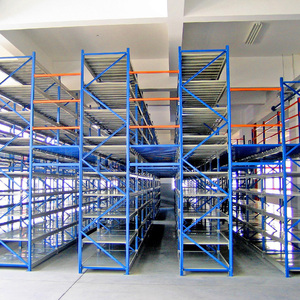
Industrial Customized Steel Mezzanine Attic Platform Warehouse Storage Shelves
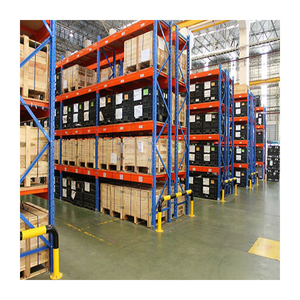
OEM ODM Warehouse Industrial Metal Heavy Duty Pallet Storage Rack Steel Shelving Unit
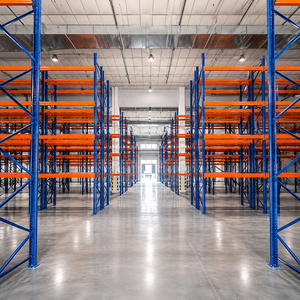
Heavy Duty Pallet Rack 1000KG 2000KG Per Level Metal Free 3D Design Q235B Steel Shelving
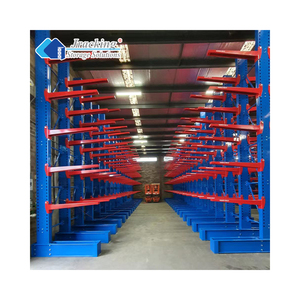
Industrial Shelving Racks Heavy Duty Steel Cantilever Storage System For Pipe & Metal
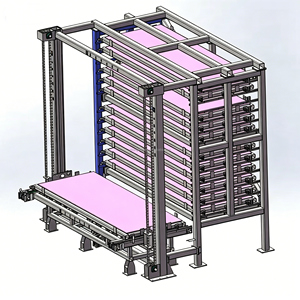
Durable Anti-Rust Electric Sheet Metal Rack Drawer Storage System Automated Retrieval
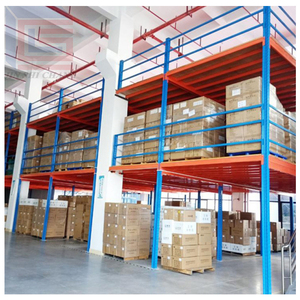
Heavy Duty Mezzanine Racking System Custom Industrial Storage Shelves and Platform
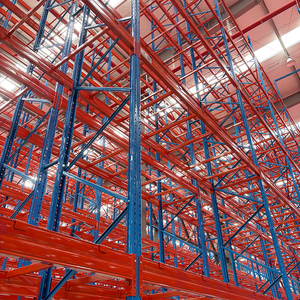
EURO Standard Industrial Vertical Warehouse Storage Shelves Heavy Duty Pallet Racking
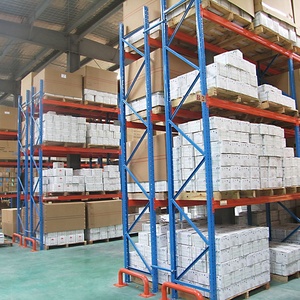
Customizable Boltless Steel Double Deep Selective Pallet Racking For Warehousing
Executive Overview: The Paradigm Shift in Industrial Shelving Procurement
In the contemporary globalized supply chain ecosystem, warehouse infrastructure is no longer evaluated as static physical real estate or basic steel storage framework. Industrial shelving solutions have evolved into high-performance, dynamic intralogistics assets directly tied to throughput velocity, operational safety, cubic space utilization, and Total Cost of Ownership (TCO). As global supply chains face volatile demand cycles, rapid e-commerce expansion, and labor cost inflation, enterprise procurement leaders must look beyond structural steel unit prices and evaluate original equipment manufacturers (OEMs) through a comprehensive engineering and operational lens.
The global industrial shelving market is undergoing an unprecedented structural transition driven by automated retrieval integration, cold-rolled steel metallurgy advancements, finite element analysis (FEA) structural optimization, and stringent international seismic safety standards (such as RMI in North America, EN 15512 in Europe, and NCh 2369 / E.030 across South American seismic zones). Selecting an industrial shelving manufacturer requires evaluating raw material sourcing standards, automated cold roll-forming capabilities, surface pre-treatment chemistries, and direct engineering layout capabilities.
Information Gain Key Takeaway: Procurement optimization is rarely achieved by minimizing steel gauge thickness. Strategic cost reduction stems from custom profile engineering (e.g., Q355B vs standard Q235B steel utilization), structural load-to-weight optimization, standardized beam connector hook pitch, and direct factory-level CAD/3D integration that eliminates installation re-work.
Top 10 Industrial Shelving Solutions Manufacturers & Factory Benchmarks
To provide enterprise buyers, supply chain consultants, and warehouse infrastructure managers with an objective evaluation model, the following comprehensive profile details the top 10 global industrial shelving manufacturers and tier-1 production factories. This benchmark evaluates direct manufacturing footprint, engineering customization capabilities, structural steel certifications, and regional deployment advantages.
Guangzhou HEDA Shelves Co., Ltd. (HEDA Shelves)
Established in 2001, HEDA Shelves has scaled into a premiere industrial shelving manufacturer operating a 30,000 m² state-of-the-art production base with an excess of 30,000 tons monthly throughput capacity. Specializing in end-to-end industrial storage solutions—ranging from heavy-duty selective pallet racking, cantilever systems for raw materials, to complex multi-tier rack-supported mezzanine platforms—HEDA stands out for its rigorous quality assurance (CE, ISO 9001:2015) and full OEM/ODM agility. HEDA provides full structural load calculations, custom seismic bracing, advanced zinc-phosphate electrostatic powder coating, and free 3D/CAD layout designs within 24 hours for global warehouse operators.
SSI Schaefer Group
A powerhouse in global logistics automation, SSI Schaefer offers extensive modular industrial shelving and high-bay racking systems engineered for automated storage and retrieval systems (AS/RS). Their solutions cater heavily to massive automated distribution hubs, offering precision-engineered structural profiles designed to integrate seamlessly with robotic shuttles and AGVs.
Mecalux, S.A.
Mecalux is one of the leading global storage solution providers with a extensive international footprint across Europe and the Americas. Their product line includes conventional pallet racking, drive-in systems, and automated shuttle systems, backed by proprietary warehouse management software to optimize inventory placement and flow.
Jungheinrich AG
Widely recognized for material handling equipment, Jungheinrich manufactures robust structural shelving systems designed specifically to match narrow aisle (VNA) forklifts and reach trucks. Their systems focus heavily on safety, load capacity compliance, and energy-efficient warehouse footprints.
Stow Group
Stow Group operates multiple specialized manufacturing plants across Europe, producing heavy-duty racking, drive-in, and shuttle storage frameworks. Their focus centers on standardized high-density cold-formed structural steel components that facilitate rapid deployment in commercial distribution facilities.
Interroll Group
Interroll focuses primarily on dynamic shelving and racking solutions, including pallet flow and carton flow modules. Utilizing high-precision gravity roller lanes and magnetic speed controllers, their industrial shelving extensions excel in strict First-In, First-Out (FIFO) inventory rotation environments.
Modula S.p.A.
Modula specializes in enclosed, automated vertical lift shelving systems that maximize clear ceiling heights. Designed for high-density small parts picking and industrial maintenance storage, Modula’s automated systems drastically reduce physical warehouse footprint compared to traditional static shelving.
Dexion (Constructor Group)
Dexion is a historical pioneer in slotted angle shelving and adjustable steel racking systems. Offering a wide range of longspan shelving, archive storage, and medium-duty industrial racks, Dexion serves automotive, retail aftermarket, and healthcare logistics.
Dematic (KION Group)
As part of the KION Group, Dematic designs and integrates massive automated material handling systems supported by structural rack-clad building architectures, where the industrial racking itself forms the primary load-bearing frame of the warehouse building.
Kardex Remstar
Kardex Remstar develops dynamic vertical carousels, buffer modules, and enclosed industrial shelving units optimized for high-speed order fulfillment, cleanroom parts storage, and dense tooling storage in aerospace and electronics manufacturing.
Key Factory Advantages: Why Strategic Buyers Partner Directly with OEMs
When procuring industrial shelving for large-scale logistics centers, manufacturing facilities, cold storage complexes, or distribution hubs, sourcing directly from a vertically integrated original equipment manufacturer (OEM) like HEDA Shelves provides significant technical, financial, and structural guarantees over purchasing through middle-layer trading entities.
Certified Steel Metallurgy & Roll-Forming
Direct factory control ensures high-tensile Q235B and Q355B cold-rolled steel profiles with continuous automated multi-stage roll forming, yielding uniform load distribution and resistance to beam deflection.
Seismic & FEA Structural Calculations
In-house structural engineering teams conduct Finite Element Analysis (FEA) to customize upright column baseplates, floor anchor bolt diameters, and horizontal bracing to pass rigorous local seismic building codes.
Pre-Treatment Chemical Anti-Corrosion
All structural components undergo 8-stage automatic pickling, zinc-phosphating, and electrostatic epoxy-polyester powder coating cured at 200°C, delivering salt-spray resistance ideal for humid coastal and cold storage environments.
Free Rapid 3D & CAD Layout Engineering
Eliminate guesswork with 24-hour turnaround on complete floor layout designs, 3D spatial renderings, forklift turning radius simulations, and detailed load capacity schedules.
Container Load Optimization
Direct factory loading utilizes custom bundling jigs, protective corner guards, and mathematically optimized container packing algorithms that minimize ocean freight volume and prevent transit damage.
Global Standards Compliance (CE/ISO)
Fully compliant with ISO 9001:2015 and CE certifications (Certificate No. 2435-CPR-8605159), providing full audit documentation required by international safety compliance agencies and commercial insurers.
Future Procurement Trends in Industrial Shelving (2025–2030)
As enterprise buyers project their warehouse infrastructure requirements over the next decade, industrial shelving procurement strategies are evolving rapidly. Understanding these macro trends allows logistics directors and procurement teams to future-proof their capital investments against premature obsolescence.
1. Transition from Static Pallet Storage to Semi-Automated Radio Shuttle Systems
Rising land costs and warehouse rental rates across urban logistics corridors are driving a massive shift from conventional selective pallet racking to deep-lane high-density storage. Radio shuttle racking systems—where semi-automated battery-powered shuttles carry pallets along channel tracks—allow up to 85% cubic space utilization compared to 40-50% in standard layouts. By eliminating inner aisle space required by forklifts, operations achieve vastly superior storage density while drastically cutting operating cycle times and forklift collision risks.
2. Multi-Tier Rack-Supported Mezzanine Platforms for E-Commerce Fulfillment
E-commerce order fulfillment requires high-density piece-picking, carton sorting, and rapid manual handling. Rather than constructing expensive multi-story buildings, procurement trends overwhelmingly favor multi-tier rack-supported mezzanine floors and attic platforms. By utilizing the vertical clear height of existing single-story structures, multi-tier industrial shelving platforms double or triple usable floor area at a fraction of the cost of new building construction.
3. High-Tensile Steel Profiles and Weight-Reduction Metallurgy
Advancements in cold-rolled steel manufacturing now allow high-yield strength steel grades (such as Q355B or higher alloy cold-formed steel) to replace thicker, heavier Q235B sections. This metallurgical evolution reduces structural steel dead weight while maintaining or increasing beam safety factors (such as 1.5 to 1.65 structural load factors). Lower steel mass translates directly into reduced material costs and decreased ocean freight charges for international procurement projects.
4. Specialized Cold-Chain and High-Humidity Anti-Corrosion Treatments
The rapid expansion of global cold-chain logistics for agricultural exports, pharmaceuticals, and fresh protein supply networks demands specialized shelving surfaces. Conventional liquid spray paint degrades quickly under sub-zero temperatures and high condensation, leading to structural rust and health audit failures. Modern procurement specifies hot-dip galvanizing or dual-layer electrostatic epoxy powder coating designed specifically to endure temperature cycling down to -30°C without flaking or micro-cracking.
Technological Evolution & Engineering Innovation in Shelving Fabrication
The manufacturing of industrial shelving has progressed from manual punch-press operations and basic arc welding to fully automated, digitally controlled manufacturing centers. Leading manufacturers employ continuous automated roll-forming lines integrated with real-time laser measurement gauge sensors to ensure that upright column profile dimensions maintain tolerances within fractions of a millimeter across 12-meter continuous lengths.
Furthermore, robotic welding cells now perform 100% of beam end-connector welds, ensuring complete weld penetration and eliminating human fatigue defects. In surface pre-treatment, environmentally friendly, zero-VOC powder coating lines featuring automated reciprocators deposit precise 60 to 90-micron epoxy coating layers. This technological precision ensures that every upright, beam, and shelf connector locks together seamlessly during site installation, reducing site assembly labor costs by up to 30%.
Industrial Shelving Procurement FAQ
Below are authoritative answers to the most frequent technical, structural, and logistics questions encountered by enterprise buyers when procuring industrial shelving systems globally.
Accelerate Your Warehouse Efficiency with Factory-Direct Engineering
Partner directly with HEDA Shelves for zero-cost 3D warehouse layout design, structural load calculations, and competitive factory-direct pricing for your next expansion project.