Engineered Warehouse Storage & Flow Rack Systems
Explore our precision-formed structural components, boltless medium-duty shelves, sheet-metal storage units, and high-density selective pallet racking designed to integrate seamlessly into complete carton flow picking tunnels and dynamic fulfillment modules.
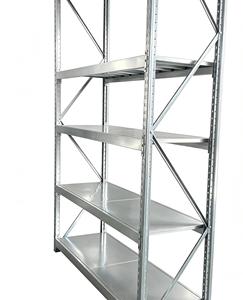 Medium Duty
Heavy Load Medium Duty Storage Rack Boltless Adjustable Shelving Unit with Steel Panels for Warehouse Workshop Use
- Load Capacity: 200 - 800 kg / Level
- Pitch Adjustability: 50mm Increments
- Material: Cold-Rolled Steel Q235B
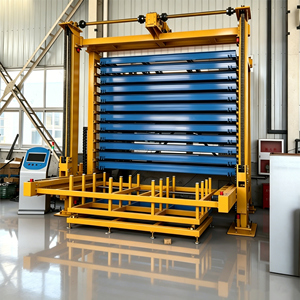 Automated
Intelligent Steel Sheet Metal Multi-Level Heavy Duty Storage Rack System High Load Capacity Automated Warehouse Solution
- Load Rating: Up to 3,000 kg / Drawer
- Handling: Cranes & Vacuum Lifters
- Frame: Structural Hollow Sections
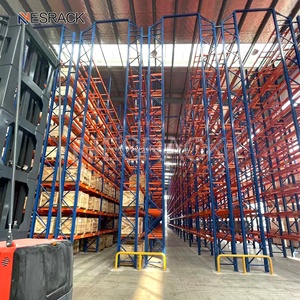 High Bay
Heavy Duty Warehouse Rack Boltless Storage Shelving Heavy Duty High Pallet Racking For Industry Warehouse
- Upright Height: Up to 12,000 mm
- Bay Load: Up to 18,000 kg Total
- Safety Locking: Drop-In Steel Pins
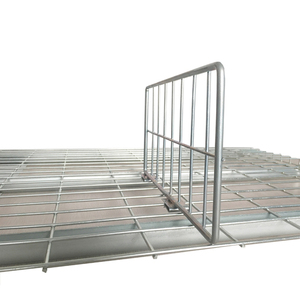 Divider Accessory
Galvanized Snap in Pallet Rack Bay Vertical Wire Mesh Dividers
- Finish: Electro / Hot-Dip Galv
- Mesh Grid: 50 x 50 / 50 x 100 mm
- Compatibility: Snap-in Flange Fit
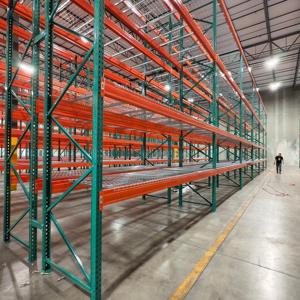 US Teardrop
Industrial US Standard Warehouse Shelving Storage Racks Heavy Duty Pallets Racking System for Retail Distribution Center
- Standard: RMI ANSI MH16.1 Conformance
- Compatibility: Universal Teardrop Interchange
- Coating: Epoxy Polyester Powder
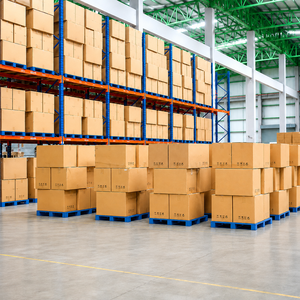 Heavy Duty
Steel Storage Rack 2000kg Heavy Duty Q235B Pallet Rack Warehouse Storage Rack High Density Industrial Shelving Solution
- Capacity: 2,000 kg / Beam Pair
- Profile: Box Beam with Claws
- Steel Certification: Q235B Mill Verified
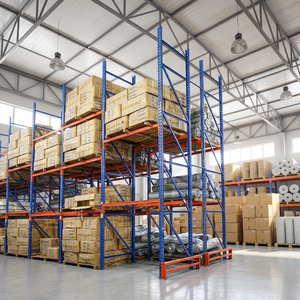 Pharma Grade
Galvanized Steel Pharma Industrial Warehouse Heavy Duty Pallet Rack
- Environment: Cleanroom, Cold Store, GMP
- Corrosion: Rustproof Hot-Dip Zinc
- Hygiene: Washdown Safe Non-Flaking
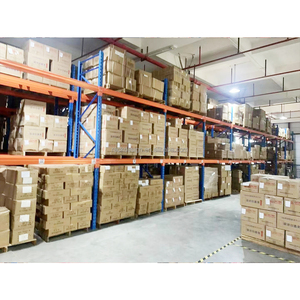 Selective Bay
Warehouse Disassembled Industrial Rack High Bay Selective Pallet Rack Heavy Duty Pallet Rack for Sale Storage Racking Systems
- Access Ratio: 100% Direct SKU Selectivity
- Shipping Form: Knockdown Flat Pack (90% Cube)
- Seismic Anchor: Heavy-Duty Expansion Bolts
Physics & Kinematics of Dynamic Carton Flow Racks
An in-depth structural review of gravity roller beds, friction coefficients, pick-face tilt angle mechanics, and First-In, First-Out (FIFO) split-case fulfillment efficiency for modern distribution centers.
In modern high-velocity distribution centers (DCs) and rapid omnichannel fulfillment hubs, carton flow rack systems—frequently designated as gravity feed racks, roller track shelving, or dynamic live storage—represent the technological bridge between heavy pallet reserves and high-speed manual case picking. Operating entirely via the passive force of gravitational acceleration, a precision carton flow installation completely decouples replenishment personnel in the rear charging aisle from active order pickers in the front retrieval aisle. This separation eliminates intra-aisle forklift traffic conflicts, elevates SKU pick line densities by up to 300%, and enforces an unbroken, natural First-In, First-Out (FIFO) inventory rotation protocol vital for fast-moving consumer goods (FMCG), pharmaceuticals, automotive components, and ambient food logistics.
The core structural mechanics rely upon an engineered bed of inclined roller tracks suspended between horizontal step beams or structural channel crossbars. When a carton or plastic tote is placed at the upper charging aperture, it overcomes static friction and glides smoothly forward down a calculated declination gradient towards the discharge pick face. To maintain predictable conveying velocity and suppress kinetic run-away of dense loads, precision China carton flow rack manufacturers must tightly calibrate four mechanical variables: the declivity angle ($\theta$), roller center-to-center pitch ($P_r$), roller axle bearing friction, and the deflection limit ($L/200$) of the support bed under maximum distributed live payloads.
Declination & Incline Math
Standard Slope: Typically calibrated between 2.5° and 4.0° (a 3.5% to 6.5% grade). Plastic returnable totes (KLTs) utilize a lower 2.0°–2.5° slope due to minimal rolling resistance, while corrugated boxes with slight sagging require 3.5°–4.5°.
Tangential Gravity Formula: $F_g = m \cdot g \cdot \sin(\theta)$. Movement initiates when $F_g > \mu_r \cdot m \cdot g \cdot \cos(\theta)$, where $\mu_r$ is the rolling resistance coefficient of the polymer roller bearing assembly.
Roller Pitch & Point Loads
3-Roller Principle: At every instantaneous point in transit, carton integrity dictates that a minimum of 3 consecutive roller axles must support the contact bottom surface ($P_r \le L_{carton} / 3$).
Track Channels: Roll-formed high-strength galvanized steel (thickness 1.0mm - 1.5mm) or extruded anodized aluminum alloys, fitted with impact-resistant polypropylene (PP) or virgin ABS wheels rated at 15–25 kg per wheel.
Ergonomic Pick-Face Trays
Tilt Trays: Front presentation shelves tilted at 15° to 22° angles orient split-case cartons directly toward the picker's field of view, minimizing lumbar strain and neck flexion.
Pick Speed Metrics: Reduces reach distance by 250mm, accelerating piece picking rates from 80-120 picks/hour on static shelving up to 250-400 picks/hour with zero aisle congestion.
Intralogistics Benchmark: Carton Flow vs. Alternate Case-Picking Methodologies
Specifying the optimal order picking infrastructure necessitates balancing capital expenditure (CAPEX), operating expenditure (OPEX), picking throughput velocity, and cubic warehouse volume utilization. The comprehensive matrix below illustrates how China-manufactured carton flow rack systems outperform static shelving and bridge the operational gap before fully automated AS/RS installations:
| Evaluation Parameter | Carton Flow Rack System | Static Industrial Shelving | Pallet Flow Rack (Case Pick) | Mini-Load Tote AS/RS |
|---|---|---|---|---|
| Pick Velocity (Lines / Man-Hour) | 250 - 450 Lines / Hr | 70 - 120 Lines / Hr | 120 - 180 Lines / Hr | 500 - 800 Lines / Hr (Crane) |
| Inventory Rotation Compliance | Strict FIFO (Physical Roll) | LIFO or Manual FIFO Search | Strict FIFO (Heavy Pallet) | Software Managed FIFO |
| Aisle Redundancy & Travel Waste | Zero Cross-Aisle Interference | Severe (Shared Load/Pick Path) | Zero Cross-Aisle Interference | Eliminated (Goods-To-Person) |
| Floor Area Space Savings | 40% - 60% vs. Static Shelves | Baseline (Requires Multiple Aisles) | 50% - 70% (Full Pallet Density) | 70% - 85% (High Bay 20m+) |
| Initial Capital Outlay (CAPEX) | Moderate ($45 - $95 / Case Face) | Low ($15 - $30 / Level) | High ($120 - $220 / Pallet Face) | Extremely High ($800k - $3M+) |
| Maintenance & Electrical Demand | Zero Power (Pure Gravity) | Zero Power | Zero Power (Brake Rollers) | High (Servos, PLC, Sensors) |
| Pick-to-Light / WMS Integration | Native Channel Mounting Slots | Cluttered Magnetic Strip Add-ons | Pallet-Level Display Only | Fully Native Sensor Network |
Guangzhou HEDA Shelves Co., Ltd.: 25 Years of Heavy-Industry Precision
Founded in 2001, HEDA Shelves stands as an industry-leading Chinese designer and exporter of warehouse storage systems, operating a 30,000 square-meter production facility supplying top logistics hubs worldwide.
Procuring carton flow racks and warehouse infrastructure directly from Guangzhou HEDA Shelves Co., Ltd. eliminates intermediary trading surcharges and secures direct engineering collaboration from day one. Unlike lightweight commercial shelving fabricators, HEDA’s industrial carton flow systems are built upon structural steel racking standards. Our upright frames utilize high-tensile Q235B cold-rolled steel coils (with Q355B high-yield alloy available for severe seismic or heavy load duty), roll-formed with omega-ribbed profiles that resist impact torsion and asymmetric dynamic loading from heavy roller beds.
Our quality management framework is verified by world-accredited credentials: CE Certificate No. 2435-CPR-8605159, compliant with European structural steel racking design codes EN 15512, EN 15620, EN 15629, and EN 15635; and ISO 9001:2015 Quality Management System Certificate No. 18624Q00169R0M (valid through June 2027). Furthermore, all organic surface coatings strictly comply with RoHS non-toxic standards, ensuring safe deployment within pharmaceutical distribution hubs and cleanroom ambient food facilities.
The 10-Stage Precision Manufacturing Workflow Behind Every HEDA Racking System
Raw Steel QC
Mill inspection of Q235B/Q355B coils for yield strength and chemical composition.
Precision Slitting
High-speed CNC longitudinal slitting of steel coils to exact profile strip widths.
Automated Punch
Multi-station mechanical press punching teardrop, butterfly, or diamond pitch holes.
Cold Roll-Forming
Continuous 18-to-24 pass roll mills forming rigid upright posts and step beams.
Robotic Welding
Shielded gas robotic arms weld beam connectors and base plates with zero slag.
Shot Blasting
Centrifugal shot blasting to remove scale and achieve surface roughness Sa 2.5.
Acid Pickling
Multi-stage chemical immersion removes oxides; silane phosphating seals pores.
Powder Coating
Nordson automated electrostatic guns apply 70–90µm thermosetting polyester.
Bake Curing
200°C continuous curing tunnel polymerizes powder into an impact-resistant skin.
Nesting & Pack
Heavy-duty strapping, corrugated buffers, and wooden bunks ready for 40HC containers.
Future Procurement Trends for Global Racking Buyers (2025–2030)
How international supply chain leaders, logistics 3PLs, and warehouse project developers in South America, North America, Europe, and Australasia are mitigating landed costs and procurement risk.
Disintermediation & Direct Factory OEM/ODM
Tier-1 procurement heads are bypassing local re-sellers to partner directly with primary Chinese manufacturers like HEDA. Direct access to factory engineering teams allows rapid custom roll-tooling, tailored flow-bed depths (from 1,000mm up to 4,500mm), and private labeling for domestic distribution networks with 25–40% CAPEX savings.
Volumetric Ocean Stowage Optimization
With ocean freight representing up to 20% of landed costs, forward-looking buyers mandate high-cube container nesting designs. HEDA’s knockdown carton flow sub-assemblies, pre-nested upright frames, and bundled roller tracks achieve over 92% container volume utilization, packing up to 26–28 tons per 40HC shipping container from South China ports.
Seismic Engineering & Region-Specific Codes
Importers across the Pacific Rim—notably Chile (NCh 2369 / NCh 433), Peru (E.030), Colombia (NSR-10), and the western United States (RMI ANSI MH16.1)—require dynamic ground acceleration verification. Leading manufacturers must provide finite element structural calculations, upsized heavy base plates, and oversized seismic wedge anchor specs.
Raw Steel Hedging & Traceability Compliance
Supply chain volatility mandates raw steel grade traceability back to primary state-owned Chinese mills (Baosteel, Ansteel). Procurement contracts increasingly incorporate index-linked steel pricing with guaranteed tolerance certificates (thickness ±0.05mm), ensuring structural integrity is never compromised by secondary, uncertified coils.
Technological Evolution in Carton Flow Racking Systems
Discover how autonomous mobile robotics (AMRs), digital Pick-to-Light (PTL) sensor arrays, and cryogenic cold-chain polymer wheels are redefining carton gravity flow architectures.
AMR & AGV Charging Tunnel Integration
Modern mega-fulfillment centers combine rear-charging autonomous mobile robots (AMRs) that automatically deliver full totes into carton flow lanes with front human pickers. This hybrid topology minimizes floor labor while retaining the zero-power, fail-safe gravity transit of traditional flow beds.
Digital Pick-to-Light (PTL) Channel Slots
Custom aluminum front beams feature integrated extrusion channels that protect low-voltage DC power busbars and optical LED indicators. Pick-to-Light systems sync with enterprise WMS software, boosting picker pick rates to over 400 lines/hour with picking error rates below 0.01%.
Sub-Zero Cryogenic Polymer Rollers
As frozen food and cold chain e-grocery delivery expands, conventional plastic wheels become brittle and crack at -25°C. HEDA utilizes advanced low-temperature impact copolymers blended with ultra-slick solid lubricant additives that roll without stiffening down to -40°C in blast freezers.
Universal Snap-in Modular Lane Dividers
Rapid SKU dimension churn requires flow beds that reconfigure in seconds without tools. Patented spring-loaded full-length lane dividers snap into laser-notched bed ribs every 10mm, permitting instant warehouse slotting adjustments for promotions, seasonal peaks, or box downsizing.
Frequently Asked Questions: Sourcing Carton Flow Racks from China
Expert answers to technical calculations, customs paperwork, sea freight load safety, and warehouse layout optimization for international procurement professionals.
1. How do you calculate the optimal slope angle and roller pitch for non-standard corrugated cartons?
2. What are the key structural differences between retrofitting selective pallet racks vs. dedicated carton flow units?
3. How does Guangzhou HEDA Shelves prevent corrosion in high-humidity or coastal warehouse sites?
4. Can your engineering department provide stamped seismic calculations for earthquake zones along the Pacific Rim?
5. What is the typical production lead time and minimum order quantity (MOQ) for custom carton flow configurations?
6. How are carton flow beds packed to prevent transit deformation during multi-week ocean crossings?
7. How does HEDA support on-site installation and assembly for international buyers?
8. What data inputs are needed to receive a complete 3D warehouse layout and structural quote?
Request Your Free 3D Carton Flow Rack Layout & Structural Load Calculation
Connect directly with senior structural engineers at Guangzhou HEDA Shelves Co., Ltd. We transform your warehouse architectural blueprints and carton dimensional profiles into an optimized, high-throughput dynamic storage module engineered for peak fulfillment efficiency.
- Free 3D Rendering & CAD Layouts
- Seismic Load Stamped Calculations
- Direct OEM & ODM Factory Pricing
- Optimized 40HC Nesting Stowage
Live Engineering Desk
Typical response time within 24 business hours. No broker markups.
Get a Quote